Mold in the Bathroom: Complete Guide
The bathroom is the room where mold shows up most often. It’s warm, it’s wet several times a day, and it’s often small and poorly ventilated. Black spots in the grout, a gray film on the ceiling or a pink ring around the drain are problems almost every home deals with at some point.
Quick answer: bathroom mold grows because of steam, standing water and poor ventilation. Most of it can be cleaned at home with a simple cleaner, a brush and good drying. The key to keeping it away is controlling moisture: run the exhaust fan during and after showers, dry wet surfaces, and fix leaks quickly. Call a professional if mold covers a large area, comes back after cleaning, or is growing inside walls, ceilings or under the floor.
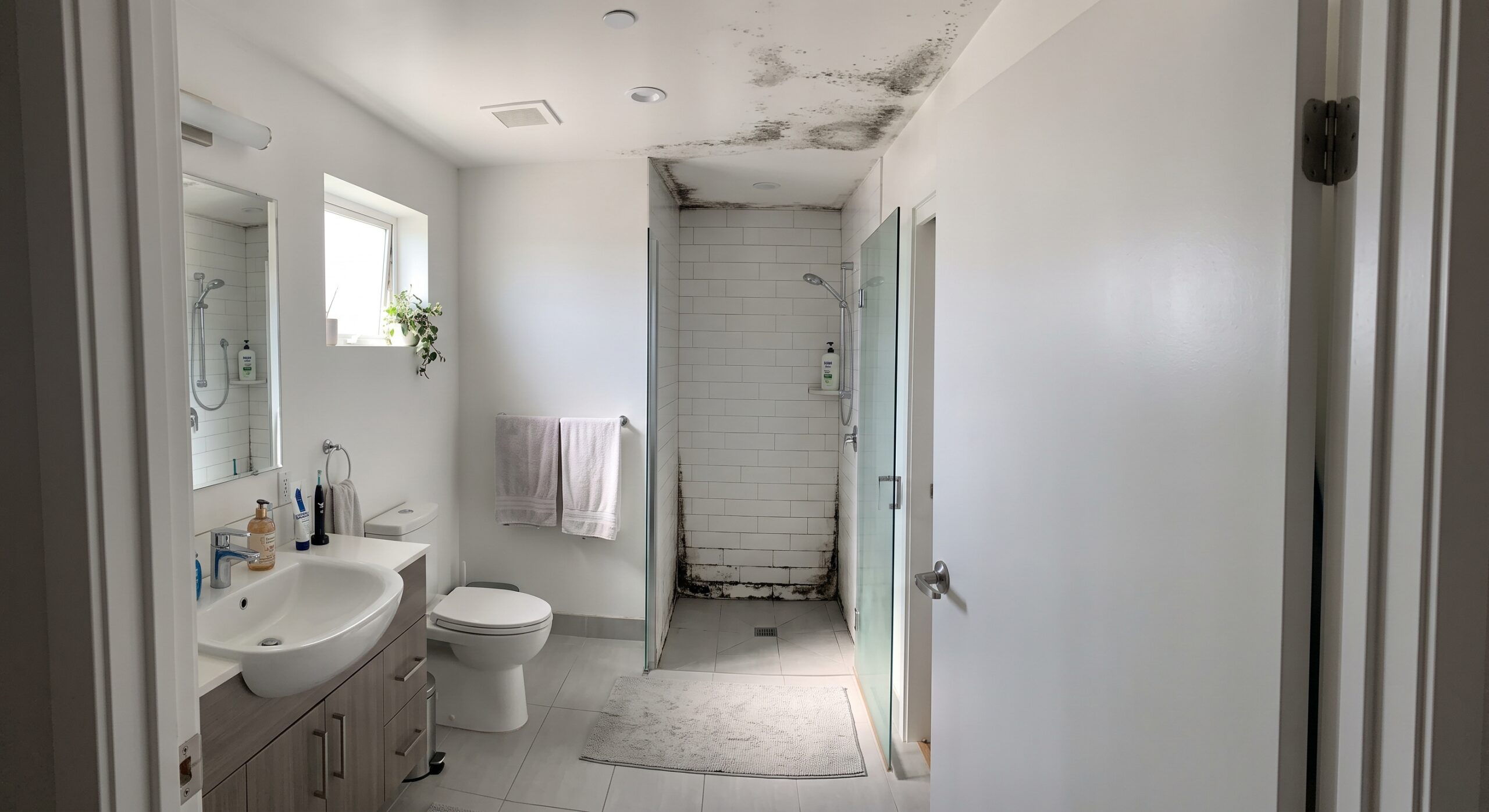
From my own home: I’ve dealt with this myself. My bathroom has no exhaust fan, and damp patches have appeared on the ceiling. It’s a good example of how quickly steam builds up when it has nowhere to go, and it’s why ventilation gets so much attention in this guide.
This guide covers everything: why it grows, where to look, how to clean each area of the bathroom and how to prevent it for good.
Why bathrooms get mold
Mold needs moisture, food and time. Bathrooms give it all three every day:
- Steam. A 10-minute hot shower releases a lot of water vapor, which settles on walls, ceilings and mirrors as condensation.
- Standing water. Water stays in grout lines, around the tub, on window sills and under bottles long after you’ve finished showering.
- Poor ventilation. Many bathrooms have no window, a small window that stays closed, or an exhaust fan that’s too weak or rarely used.
- Food for mold. Soap scum, shampoo residue, skin cells and dust all feed mold. So do the paper face of drywall and wooden cabinets.
- Hidden leaks. Slow leaks from the toilet, sink pipes or shower valve can keep walls and floors damp without you noticing.
- Cold surfaces. Exterior walls and ceilings under an attic are colder, so more steam condenses on them.
Where mold grows in the bathroom
| Area | What you’ll usually see | Main cause |
|---|---|---|
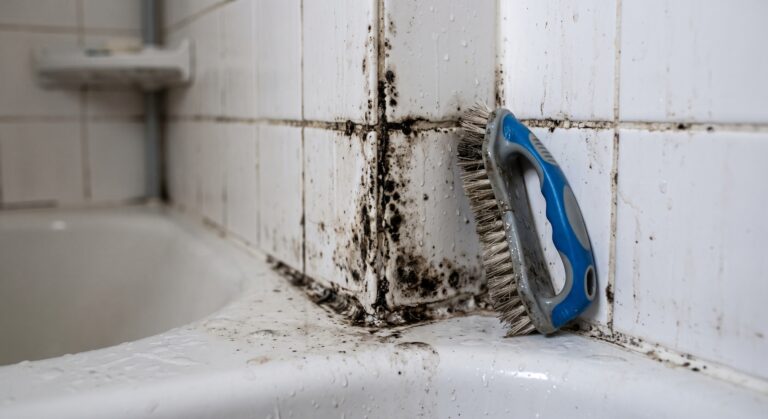
| Grout between tiles | Black or dark gray lines | Water sitting in porous grout |
| Silicone caulk | Black spots under the surface | Moisture trapped in old caulk |
| Ceiling | Gray or black spots, often above the shower | Steam and poor ventilation |
| Corners of walls | Dark patches near the ceiling or floor | Condensation on cold surfaces |
| Shower curtain and liner | Black or pink spots at the bottom | Staying wet after every shower |
| Around the drain and tub | Pink or orange slime | Soap residue and standing water |
| Under the sink | Musty smell, dark spots on cabinet base | Slow pipe leak |
| Around the toilet base | Stains on flooring, soft floor | Leaking wax ring |
| Exhaust fan | Dust and dark spots on the cover | Damp air and dust building up |
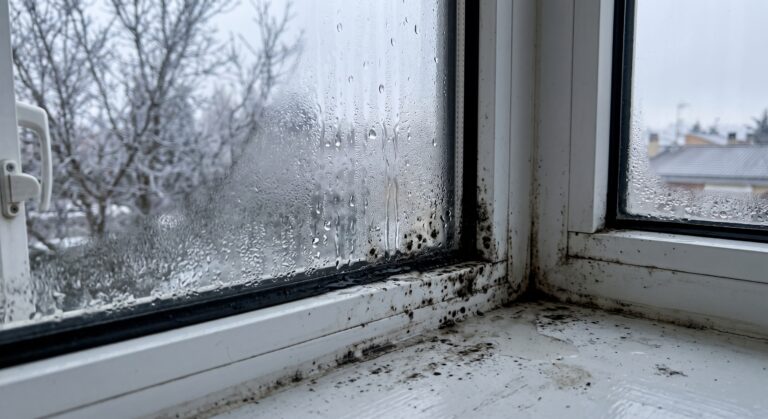
| Window sills | Black spots on the frame and seal | Condensation running down the glass |
Types of bathroom mold
- Black mold on grout, caulk and corners. Usually Cladosporium, Alternaria or Aspergillus. Very common and usually cleanable. True “black mold” (Stachybotrys) is rare on tiles; it grows on drywall or wood that has been wet for a long time.
- Pink or orange slime. Usually a bacterium called Serratia marcescens, not a mold. It feeds on soap residue around drains, tubs and toilets.
- Gray or white film. Often mildew, the early surface stage of mold, on ceilings, tiles and shower curtains.
- Green mold. Penicillium or Aspergillus, often on painted walls, ceilings and wooden cabinets.
You don’t need to know the exact type to clean it. What matters more is how much there is and whether it’s on the surface or inside a material.
Is bathroom mold dangerous?
For most healthy people, a few spots on the grout or ceiling aren’t an emergency. But bathroom mold shouldn’t be ignored, because you breathe the air there daily and steam helps spores spread.
Common symptoms include a stuffy or runny nose, sneezing, coughing, itchy eyes and a sore throat. People with allergies, asthma, weakened immune systems or chronic lung conditions, as well as young children and older adults, are more likely to react.
If symptoms improve when you’re away from home, or anyone at home is in a higher-risk group, talk to a doctor. This article is general information, not medical advice.
How to remove mold from your bathroom, area by area
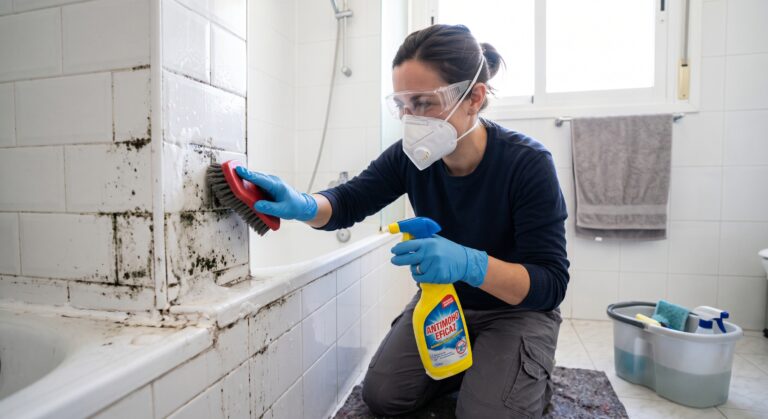
Before you start: wear rubber gloves, safety goggles and an N95 mask, open a window or turn on the exhaust fan, and never mix bleach with vinegar, ammonia or other cleaners.
Basic kit: a spray bottle, a bathroom mold cleaner (or 3% hydrogen peroxide), baking soda, dish soap, white vinegar, a grout brush, an old toothbrush, a sponge and microfiber cloths.
Grout
- Mix baking soda with a little water or dish soap to make a paste.
- Spread it on the grout lines and scrub with a grout brush.
- For dark stains, spray hydrogen peroxide or a mold cleaner, leave it for 10 minutes, and scrub again.
- Rinse and dry. Once fully dry, apply a grout sealer to make it harder for water to soak in.
Silicone caulk
If the black spots wipe off, clean the caulk like grout. If they stay, the mold is under the surface. In that case, cut out the old caulk with a utility knife, clean and dry the joint completely, and apply new mold-resistant silicone. Don’t use the shower for 24 hours while it cures.
Ceiling
- Lightly mist the area with cleaner so spores don’t fall.
- Wipe gently with a sponge and a mold cleaner or dish soap solution; don’t scrub hard on painted surfaces.
- Let it dry completely.
- If spots return, repaint with a mold-resistant bathroom paint once the ceiling is clean and dry.
Walls and corners
Wipe painted walls with warm water and dish soap or a mold cleaner, then dry. If the drywall feels soft, the paint is bubbling, or stains keep coming back, the mold may be inside the wall and the damaged section may need to be replaced.
Shower curtain and liner
Wash fabric curtains and plastic liners in the washing machine on a warm setting with a couple of towels to help scrub them. Hang them to dry fully. Replace plastic liners that stay stained.
Drain, tub and toilet
Scrub pink or black residue with baking soda and dish soap, rinse, and disinfect with a bathroom cleaner. Pour hot water down the drain and scrub the drain cover. For the toilet, clean under the rim and at the waterline.
Under the sink
Empty the cabinet, check pipes and connections for drips, and fix any leak first. Clean the cabinet base with a mold cleaner and let it dry with the door open. Swollen or crumbling particleboard usually needs to be replaced.
Exhaust fan
Turn off the power, remove the cover, and wash it in warm soapy water. Vacuum dust from the fan blades and housing. A clean fan moves much more air.
How to prevent mold in the bathroom
Cleaning removes mold; controlling moisture keeps it away. These habits make the biggest difference:
Every day
- Run the exhaust fan during every shower and for 20 to 30 minutes afterward. A fan timer switch makes this automatic.
- Squeegee or wipe down shower walls and glass after use.
- Spread out the shower curtain so it can dry, and leave the shower door open.
- Hang towels and bath mats to dry instead of leaving them in a pile.
- Keep the bathroom door open after showering if you don’t have a window.
Every week
- Clean the shower, tub, sink and toilet, paying attention to grout, corners and drains.
- Wash bath mats and towels.
- Move shampoo bottles and check underneath for pink or black residue.
Every few months
- Wash the shower curtain and liner, and replace the liner if it stays stained.
- Clean the exhaust fan cover.
- Check caulk and grout for cracks or gaps.
- Look under the sink and around the toilet base for leaks.
Upgrades that help
- A stronger exhaust fan. It should be vented outside, not into the attic, and sized for your bathroom.
- A humidity sensor fan that switches on automatically when the air gets humid.
- Mold-resistant paint on ceilings and walls.
- Sealed grout and mold-resistant silicone caulk.
- A small dehumidifier for bathrooms with no window and a weak fan.
Aim to keep bathroom humidity from staying above 50% for long periods; a cheap hygrometer lets you check.
When to call a professional
Most bathroom mold is a DIY job, but call a professional if:
- Mold covers more than about 10 square feet.
- It keeps coming back after cleaning, even with good ventilation.
- The walls, ceiling or floor feel soft, or the floor around the toilet is spongy.
- You smell mold but can’t find it, which may mean it’s inside the walls or under the floor.
- There’s been a leak or flood from the shower, tub or pipes.
- Anyone at home has asthma, allergies or a weakened immune system.
A plumber can find and fix hidden leaks, and a mold remediation company can safely remove mold from inside walls, ceilings and subfloors.
Frequently asked questions
Why does mold keep coming back in my bathroom?
Because the moisture problem hasn’t been fixed. The most common causes are an exhaust fan that’s too weak or not used long enough, water left on surfaces after showers, and old caulk or grout that traps water.
What’s the best cleaner for bathroom mold?
For most surfaces, a bathroom mold cleaner or 3% hydrogen peroxide works well. Baking soda and dish soap are great for scrubbing grout. White vinegar helps on tiles. Diluted bleach can be used on hard, non-porous surfaces, but never mixed with other cleaners.
Is black mold in the shower dangerous?
The black spots on shower grout and caulk are usually common molds, not the “toxic black mold” people worry about. They can still cause allergy symptoms, so clean them regularly.
Can I shower in a bathroom with mold?
A few spots on grout or caulk aren’t a reason to stop using the bathroom, but clean them soon. If the mold is widespread, smells strongly or someone at home has asthma or allergies, deal with it before using the room regularly.
How long should I run the bathroom fan after a shower?
At least 20 to 30 minutes, until the mirror is clear and the room no longer feels humid.
Should I open the window or use the fan?
Both, if you can. The fan removes humid air faster, and an open window lets dry air in. In very humid weather, the fan alone may work better.
Sources
- U.S. Environmental Protection Agency (EPA): A Brief Guide to Mold, Moisture, and Your Home
- Centers for Disease Control and Prevention (CDC): Mold
Last reviewed: October 2026. This article is for general information and is not medical, legal or professional advice.