Mold on Window Sills and Frames: Why It Keeps Coming Back
You scrub the black spots off the window frame, and a few weeks later they’re back in exactly the same place. Mold on window sills, seals and frames is one of the most frustrating problems in a home, and it’s especially common in winter and in bedrooms.
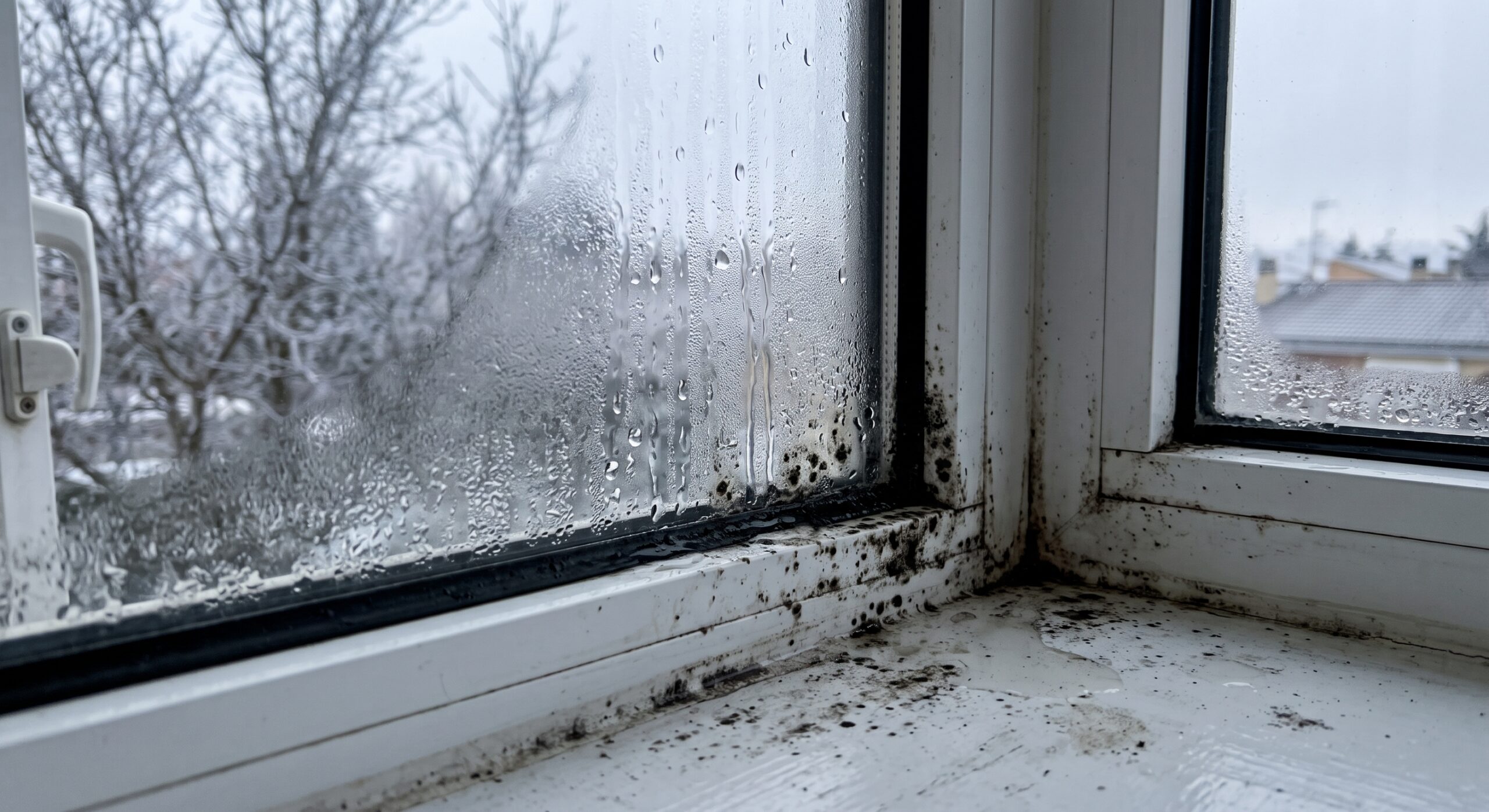
Quick answer: window mold is caused by condensation. Warm, humid indoor air touches the cold glass, turns into water and runs down onto the seals and sill, where it stays long enough for mold to grow. Cleaning removes the spots, but to stop them coming back you need to lower indoor humidity, let air move around the window, and wipe away condensation before it sits for hours.
From my own home: my windows stay dry in winter. The problem I’ve had is a damp bathroom ceiling, which comes from the same cause: warm, moist air meeting a cold surface. If your windows are wet every morning, the steps below apply in the same way.
Why mold keeps coming back on windows
| Cause | Why it matters |
|---|---|
| Condensation | The colder the glass, the more water forms on it. Cold mornings are the worst. |
| High indoor humidity | Cooking, showers, drying clothes indoors, aquariums and plants all add moisture to the air. |
| Bedrooms at night | Each person breathes out moisture all night, often with the door and window closed. |
| Closed curtains and blinds | They trap a layer of cold air against the glass and block air flow. |
| Single-pane or older windows | Their glass and frames get much colder than modern double-pane windows. |
| Blocked weep holes | Sliding windows have small drain holes; when blocked, water pools in the track. |
| Dust and dirt | Tracks and seals collect dust, which mold feeds on. |
In short: as long as water forms on the window every day, mold will keep finding a home there.
Is window mold dangerous?
A few spots aren’t an emergency, but window mold is often in bedrooms, where you spend many hours breathing the air. It can trigger a stuffy nose, sneezing, coughing and itchy eyes, especially in children and people with allergies or asthma. If symptoms improve when you’re away from home, talk to a doctor. This article is general information, not medical advice.
How to clean mold off windows
What you’ll need: rubber gloves, a vacuum with a crevice tool, a spray bottle, a mold cleaner, 3% hydrogen peroxide or white vinegar, an old toothbrush, cotton swabs, microfiber cloths and a pipe cleaner.
Tracks and sill
- Vacuum loose dirt and dust from the tracks and corners.
- Spray with cleaner and leave it for 10 minutes.
- Scrub corners and grooves with the toothbrush.
- Wipe clean and dry completely.
- Clear the weep holes with a pipe cleaner so water can drain.
Rubber seals
Spray the seal, wait a few minutes, then scrub gently with the toothbrush or a cotton swab. If black spots stay after cleaning, the mold has grown into the rubber. Many seals can be pulled out and replaced for a small cost.
Vinyl and aluminum frames
Wipe with warm soapy water or a mold cleaner, then dry. These materials clean easily.
Wooden frames
Clean with mild soap and water, then dry thoroughly. If the paint is peeling or the wood is soft, sand lightly, let it dry, and repaint with an exterior-grade or mold-resistant paint. Soft, crumbly wood is rot and should be repaired by a professional.
Curtains and blinds
Wash fabric curtains in hot water. Wipe blinds with a damp cloth and cleaner.
How to stop window mold for good
Daily habits
- Wipe condensation every morning with a microfiber cloth or a small window squeegee.
- Open curtains and blinds during the day so the glass can warm up and dry.
- Ventilate bedrooms for 10 to 15 minutes each morning.
- Use exhaust fans when cooking and showering.
Lower indoor humidity
- Keep humidity between 30% and 50%. In winter, aim for the lower end: 30% to 40% reduces condensation on cold windows. A hygrometer tells you where you are.
- Run a dehumidifier in bedrooms or rooms with a lot of condensation.
- Don’t dry clothes indoors, or do it in a room with a dehumidifier running.
Improve the window
- Keep weep holes clear so water drains out.
- Add window insulation film for an inexpensive way to make glass warmer in winter.
- Upgrade to double-pane windows if yours are old or single-pane. It’s the most effective long-term fix.
- Keep furniture and heavy curtains a little away from windows so air can flow.
When to call a professional
Call a window contractor if frames are rotting, seals are failing, or you see fog between the panes of a double-pane window (a sign the seal has broken). If mold is also spreading onto the walls around the window, or you suspect water is leaking in from outside, have the window and wall checked for leaks.
Frequently asked questions
Why do my windows get mold only in winter?
In winter, the glass gets much colder than the air inside, so moisture condenses on it. In summer, the glass is warmer and dries faster.
Is black mold on window sills dangerous?
It’s usually a common mold like Cladosporium, not the rare “toxic black mold.” It can still trigger allergies, especially in bedrooms, so clean it regularly.
Will a dehumidifier stop window condensation?
It helps a lot. Lowering indoor humidity is one of the most effective ways to reduce condensation and window mold.
What’s the best cleaner for window mold?
A household mold cleaner, 3% hydrogen peroxide or white vinegar all work well on vinyl, aluminum and glass. Dry the area completely afterward.
Should I replace moldy window seals?
If the black spots don’t come out after cleaning, yes. Replacement seals are inexpensive and easy to install on many windows.
Sources
- U.S. Environmental Protection Agency (EPA): A Brief Guide to Mold, Moisture, and Your Home
- Centers for Disease Control and Prevention (CDC): Mold
Last reviewed: October 2026. This article is for general information and is not medical, legal or professional advice.