Basement Mold: Causes, Removal and Prevention
If there’s one place in a house where mold feels at home, it’s the basement. It’s below ground, cooler than the rest of the house, often poorly ventilated, and full of wood, cardboard and fabric. A musty smell when you open the basement door is one of the most common signs of a mold problem in any home.
Quick answer: basement mold is caused by moisture from the ground, condensation and poor ventilation. Small areas can be cleaned yourself with detergent, a brush, protective gear and thorough drying. But cleaning alone won’t last: to keep basement mold away you need to control the moisture, mainly by running a dehumidifier to keep humidity between 30% and 50%, keeping rainwater away from the foundation and fixing leaks. Large areas, recurring mold or water getting through the walls are signs to call a professional.
This guide covers why basements get mold, where to look, how to remove it from each material and how to prevent it for good.
Why basements get mold
Basements have the perfect conditions for mold:
- Moisture from the ground. Soil around the foundation is always damp. Water moves through concrete walls and floors by capillary action, even when there’s no visible leak.
- Rainwater and poor drainage. Clogged gutters, short downspouts and soil sloping toward the house send water straight to the foundation.
- Condensation. In summer, warm humid air hits cool basement walls, floors and pipes and turns into water. This is why many basements are dampest in July and August, not in winter.
- Poor ventilation. Small or no windows, and little air movement, trap damp air.
- Leaks. Foundation cracks, leaking window wells, plumbing, water heaters and washing machines are all common sources.
- Flooding. Heavy rain, a failed sump pump or a burst pipe can soak everything in hours.
- Food everywhere. Wooden joists and stairs, drywall, carpet, cardboard boxes, old furniture and dust all feed mold.
Where mold grows in basements
| Area | What to look for |
|---|---|
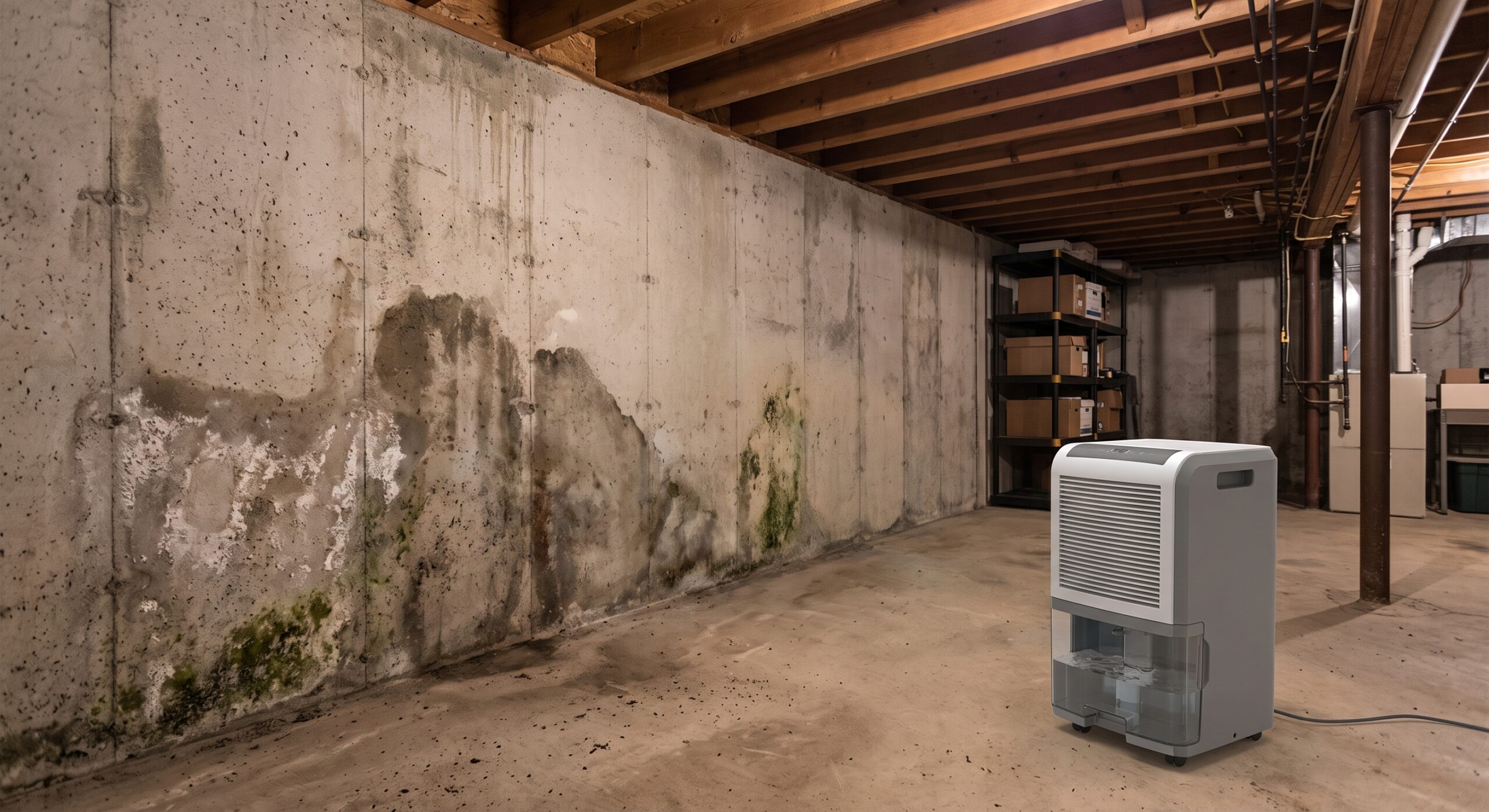
| Concrete or block walls | Dark patches near the floor, fuzzy spots on dust or paint, white deposits (often efflorescence) |
| Wooden joists and subfloor | White, gray or green fuzzy growth along the grain |
| Finished walls (drywall) | Stains, bubbling paint, dark spots along the bottom edge |
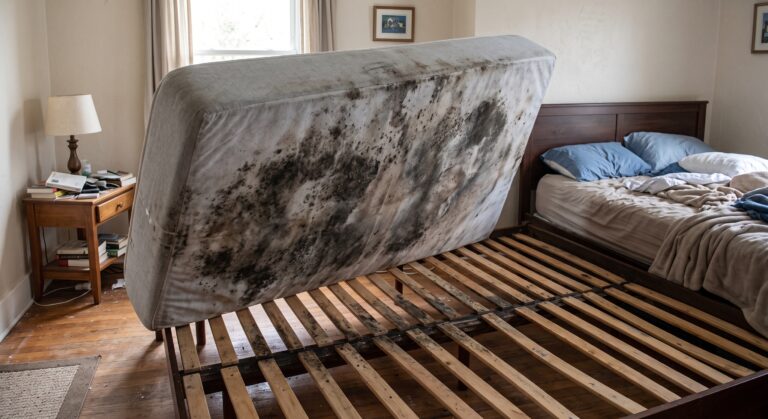
| Carpet and padding | Musty smell, dark spots on the underside |
| Stored boxes and belongings | Spots on cardboard, musty-smelling clothes and books |
| Around the water heater, furnace, washer | Dark spots on nearby walls and floor |
| Window wells and frames | Black spots, rotting wood |
| Sump pit area | Damp walls, musty smell |
Signs you have basement mold
- A musty, earthy smell, especially when you first open the door
- Visible spots or fuzzy growth on walls, wood or belongings
- Damp walls or floors, or water stains and puddles after rain
- Peeling paint or bubbling on finished walls
- Rust on metal items, or condensation on pipes and windows
- Allergy symptoms that get worse after spending time downstairs
Is basement mold dangerous?
Basement mold isn’t only a basement problem. Through what’s called the stack effect, warm air rises through a house, pulling air up from the basement into the living areas. That means spores and musty odors from below can reach bedrooms and living rooms.
For most healthy people, small amounts cause mild or no symptoms. Common reactions include a stuffy nose, sneezing, coughing, itchy eyes and a sore throat. People with allergies or asthma, weakened immune systems or chronic lung conditions, young children and older adults are more likely to react. If someone sleeps or works in the basement, mold deserves extra attention.
Long-term mold on wooden joists, stairs or subfloors can also slowly damage your home’s structure if the wood stays wet.
If symptoms improve when you’re away from home, or anyone at home is in a higher-risk group, talk to a doctor. This article is general information, not medical advice.
How to remove mold from your basement
If the moldy area is smaller than about 10 square feet and hasn’t been caused by flooding or sewage, you can usually handle it yourself.
Before you start:
- Wear an N95 mask, rubber gloves and safety goggles.
- Open windows and use a fan blowing air outside. Close the basement door to the rest of the house.
- Fix the water source first if there’s an active leak.
- Lightly mist moldy areas with water before cleaning to keep spores out of the air.
Concrete walls and floors
- Vacuum loose growth and dust with a HEPA vacuum.
- Scrub with a stiff brush and warm water with detergent.
- Rinse and dry completely with fans and a dehumidifier.
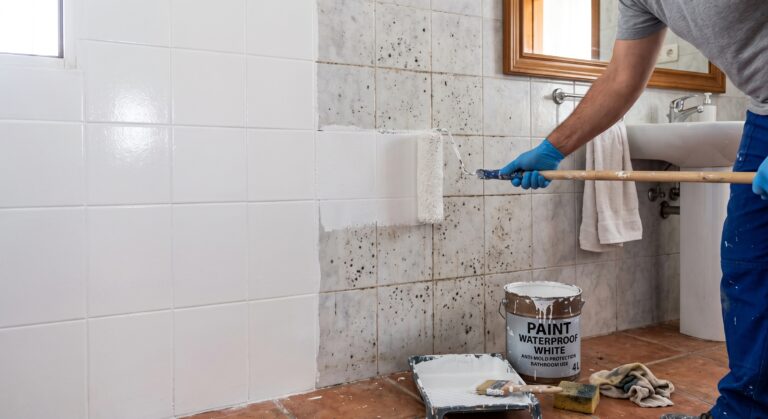
- Once dry, consider a waterproof masonry coating to reduce moisture coming through.
Wooden joists, stairs and subfloor
- HEPA-vacuum the surface.
- Scrub along the grain with detergent and water, or a wood-safe mold cleaner.
- If stains remain, lightly sand the surface and vacuum the dust.
- Dry the wood thoroughly for at least 24 to 48 hours.
- Optionally, apply a mold-resistant primer or sealer to exposed wood.
If the wood is soft, crumbly or cracked into small cubes, it may be rotting; have it checked by a professional.
Drywall and finished walls
Clean light surface mold on painted drywall with detergent and a damp cloth. If the drywall is stained all the way through, soft or has been wet from the bottom, cut out the damaged section at least 12 inches above the visible mold, remove any wet insulation, dry the wall cavity, and replace with new drywall (moisture-resistant drywall is a good choice for basements).
Carpet, boxes and belongings
- Carpet and padding that got wet or smell musty usually need to be removed. Basements are better with hard flooring like tile, vinyl or sealed concrete.
- Cardboard boxes with mold should be thrown away. Move items to plastic bins.
- Clothes and fabrics can often be saved by washing in hot water and drying fully.
- Books, papers and upholstered furniture with visible mold are hard to save; replace what you can.
Avoid using bleach on wood, drywall or other porous materials; it doesn’t reach mold inside the material and adds moisture.
How to prevent basement mold
The goal is simple: keep water out and keep the air dry. Start outside, then work inside.
Outside the house
- Clean gutters at least twice a year so rainwater doesn’t overflow next to the foundation.
- Extend downspouts at least 4 to 6 feet away from the house.
- Fix the grading. The soil should slope away from the foundation, about 6 inches of drop over the first 10 feet.
- Cover window wells with clear covers so rain doesn’t collect in them.
- Keep plants and mulch a little away from the foundation walls.
Inside the basement
- Run a dehumidifier. This is the most important step. Keep humidity between 30% and 50%, and use a model with a hose connected to a drain so it runs continuously.
- Check humidity with a hygrometer. They’re cheap and tell you if the dehumidifier is doing its job.
- Seal foundation cracks with hydraulic cement or an epoxy crack filler.
- Insulate cold water pipes to stop condensation dripping onto wood and floors.
- Improve air flow. Keep interior doors open and use a fan. Don’t pack belongings tightly against walls.
- Store smart. Use plastic bins on metal or plastic shelves, a few inches off the floor and away from walls.
- Choose moisture-friendly materials if you finish the basement: tile, vinyl or sealed concrete floors, moisture-resistant drywall, and insulation that doesn’t hold water.
- Keep your sump pump working. Test it every few months by pouring water into the pit, and consider a battery backup.
- Vent the dryer outside and check washer hoses for leaks.
When to call a professional
Call a mold remediation company if:
- Mold covers more than about 10 square feet.
- It came from flooding or a sewage backup.
- It keeps returning after cleaning.
- It’s inside finished walls, under carpet or in the HVAC system.
- Anyone at home has asthma, allergies or a weakened immune system.
Call a basement waterproofing contractor if water seeps through walls or the floor after rain, cracks keep widening, walls are bowing, or the basement floods regularly. Fixing how water gets in is often the only lasting solution.
Frequently asked questions
What humidity should a basement be?
Between 30% and 50%. Above 60% for long periods, mold can start to grow.
Should I run a dehumidifier in my basement all year?
In most homes, yes, at least from spring through fall. In winter, basements are often drier, so check with a hygrometer and run it when humidity climbs above 50%.
Is it safe to live or sleep in a basement with mold?
A small, cleaned patch isn’t usually a problem, but ongoing mold or a strong musty smell isn’t a healthy place to sleep, especially for children or people with asthma or allergies. Fix the moisture and mold first.
Why does my basement smell musty even though I can’t see mold?
Mold may be hidden under carpet, behind finished walls, in stored boxes or on the underside of the subfloor. High humidity alone can also create a musty smell.
Does homeowners insurance cover basement mold?
Usually only if it’s caused by a sudden covered event, like a burst pipe. Mold from long-term leaks, seepage or flooding is often excluded unless you have flood coverage. Check your policy.
How much does basement mold removal cost?
It varies widely with the size of the area and the damage. Small areas can be cleaned yourself for the cost of supplies, while professional remediation can cost from several hundred to several thousand dollars.
Sources
- U.S. Environmental Protection Agency (EPA): A Brief Guide to Mold, Moisture, and Your Home
- Centers for Disease Control and Prevention (CDC): Mold
Last reviewed: October 2026. This article is for general information and is not medical, legal or professional advice.