
Sump Pump Basics: Do You Need One?
A sump pump is a small pump installed in a pit in the lowest part of your basement or crawl space. It’s one of the most effective ways to keep groundwater from flooding a basement, and in many wet areas it’s what keeps a basement dry, and free of mold, year after year.
Quick answer: you probably need a sump pump if your basement has flooded before, water seeps in after heavy rain or snowmelt, you live in an area with a high water table or heavy rainfall, or you’re installing an interior drainage system. A basic installed system often costs about $600 to $2,500, more with a new pit or a battery backup. Test it every few months and replace it about every 7 to 10 years.
How a sump pump works
- Water collects in the sump pit (basin). Groundwater around the foundation flows into the pit through drain tile, gravel or holes in the basin. Interior drainage systems also send water there.
- A float switch rises with the water. When the water reaches a set level, the float turns the pump on.
- The pump pushes water out through a discharge pipe, usually PVC, to the outside.
- A check valve on the discharge pipe stops the water from flowing back into the pit when the pump shuts off.
- The water is released away from the house, ideally at least 10 to 20 feet from the foundation, into a yard, dry well or storm drain where local rules allow.
Do you need a sump pump?
You probably do if:
- Your basement has flooded or had standing water before
- Water seeps in where the wall meets the floor after rain or snowmelt
- You live in an area with a high water table, heavy rain or frequent storms
- Your home sits at the bottom of a slope or in a low area
- You’re installing an interior perimeter drain (it needs a pump to remove the water)
- You’re finishing the basement and want to protect your investment
- Your house already has a sump pit with an old or broken pump
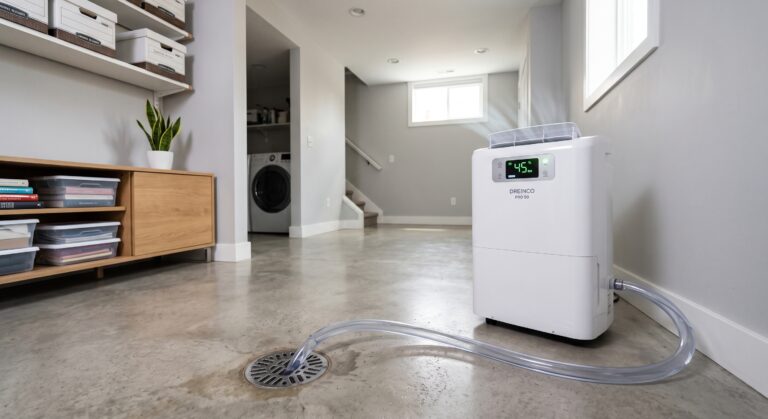
You may not need one if your basement stays dry year-round and the only moisture is condensation or occasional dampness. In that case, a dehumidifier and good gutters are usually enough.
Types of sump pumps
| Type | How it works | Pros | Cons |
|---|---|---|---|
| Submersible | Sits inside the pit, underwater | Quieter, more powerful, hidden; handles more water | Harder to service; often costs more |
| Pedestal | Motor sits above the pit on a column | Cheaper, easy to service, motor lasts longer | Louder, less powerful, takes up space |
| Battery backup | A second pump runs on a battery when power fails | Works during storms and outages, when you need it most | Battery needs replacing every few years |
| Water-powered backup | Uses city water pressure to pump water out, no electricity | No battery to maintain | Uses city water; not for homes on wells |
| Combination system | Primary pump plus a built-in backup | Best protection | Highest cost |
For most homes that rely on a sump pump, a submersible primary pump with a battery backup is the safest setup, since heavy storms often come with power outages.
What size do you need?
- 1/3 horsepower: fine for most homes with average water tables and moderate water.
- 1/2 horsepower: better for higher water tables, larger basements, or when the water has to be pumped higher or farther.
- 3/4 horsepower or more: for very wet conditions or long, high discharge runs.
Look at the pump’s flow chart (gallons per hour at a given lift height) rather than horsepower alone. If you already have a pump, note how often it runs in heavy rain; a pump that runs almost nonstop may be too small.
How much does a sump pump cost?
Rough U.S. ranges; prices vary by region and setup.
| Item | Typical cost |
|---|---|
| Pump only (pedestal or submersible) | About $100–$400 |
| Replacing a pump in an existing pit | About $300–$1,000 installed |
| New installation with a new pit | About $1,000–$2,500+ |
| Battery backup system | About $300–$1,500 installed |
| Interior drain system with sump pump | Often several thousand dollars |
Sump pump maintenance
Every 3 months (and before the rainy season):
- Test it. Slowly pour a bucket of water into the pit. The float should rise, the pump should start, empty the pit and shut off.
- Check the float moves freely and isn’t stuck against the side of the pit.
- Listen for grinding or rattling noises.
- Test the battery backup, if you have one.
Once a year:
- Unplug the pump, remove it, and clean the intake screen and pit of mud, gravel and debris.
- Check the discharge pipe outside isn’t blocked, frozen or draining back toward the house.
- Check the check valve works.
- Make sure the pump is plugged into a GFCI outlet that works, and not into an extension cord.
Replace the pump about every 7 to 10 years, or sooner if it runs constantly or shows signs of wear. Replace backup batteries every few years, as the maker recommends.
A water alarm in or near the pit is a cheap extra: it warns you if water rises too high.
Common sump pump problems
| Problem | Likely cause |
|---|---|
| Pump doesn’t turn on | Stuck float, tripped GFCI, failed motor, power outage |
| Pump runs nonstop | Stuck float, pump too small, broken check valve, very high water table |
| Pump turns on and off quickly | Float set too low, pit too small, faulty check valve |
| Loud noises | Debris in the impeller, worn bearings, loose pipes |
| Basement still floods | Pump too small, power outage without backup, blocked discharge |
| Musty or sewage smell | Dry pit letting gases in, or debris in the pit; add water or clean it |
Frequently asked questions
How long do sump pumps last?
Usually about 7 to 10 years, depending on how often they run and the quality of the pump.
Do I need a battery backup sump pump?
If your basement depends on the sump pump to stay dry, yes. Heavy storms often cause power outages exactly when the pump is needed most.
Can I install a sump pump myself?
Replacing a pump in an existing pit is often a DIY job. Digging a new pit through the basement floor and running a discharge line is usually best left to a professional.
Where should a sump pump drain?
Away from the house, at least 10 to 20 feet if possible, and never into the sewer if local rules don’t allow it.
Does a sump pump prevent mold?
It helps a lot by keeping water out of the basement. Pair it with a dehumidifier to control humidity.
Sources
- U.S. Environmental Protection Agency (EPA): A Brief Guide to Mold, Moisture, and Your Home
- Centers for Disease Control and Prevention (CDC): Mold
Last reviewed: October 2026. This article is for general information and is not medical, legal or professional advice.