Mold in a Crawl Space: Signs, Risks and Fixes
A crawl space is the low, narrow area under some houses, between the ground and the first floor. Most homeowners almost never look inside, which is why crawl space mold can grow for years before anyone notices. Often the first clue is a musty smell in the rooms above.
Quick answer: crawl space mold is caused by moisture from the ground, humid outdoor air coming through vents, and leaks. It usually grows on wooden floor joists and the subfloor. Because a significant share of the air on the first floor can rise from below, it can affect indoor air and even rot the wood that holds up your floors. The fix is to remove the mold and control moisture, usually with a vapor barrier, sealing and a dehumidifier. Most crawl space work is best done by a professional.
Why crawl spaces get mold
| Cause | What happens |
|---|---|
| Bare dirt floor | Moisture constantly evaporates from the soil into the crawl space air. |
| Open foundation vents | In humid summers, warm outdoor air enters, hits the cooler crawl space and condenses on wood and pipes. |
| Poor drainage | Rainwater from gutters and sloped ground flows toward the foundation and soaks in. |
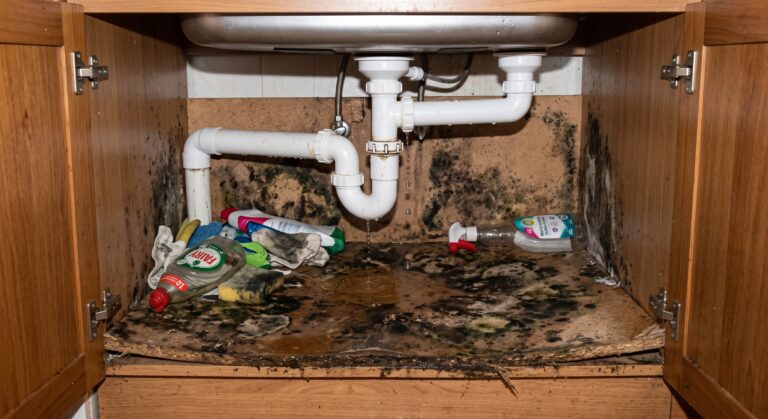
| Plumbing and HVAC leaks | Leaking pipes, ducts or AC condensate lines drip onto the ground and joists. |
| Missing or damaged vapor barrier | Without a plastic sheet covering the soil, ground moisture moves freely. |
| Flooding | Heavy rain or high groundwater leaves standing water that takes weeks to dry. |
Put simply: crawl spaces are dark, damp and full of wood, which is exactly what mold needs.
Signs of mold in your crawl space
- A musty smell in the rooms above, especially the first floor
- Higher humidity or a clammy feeling in the house
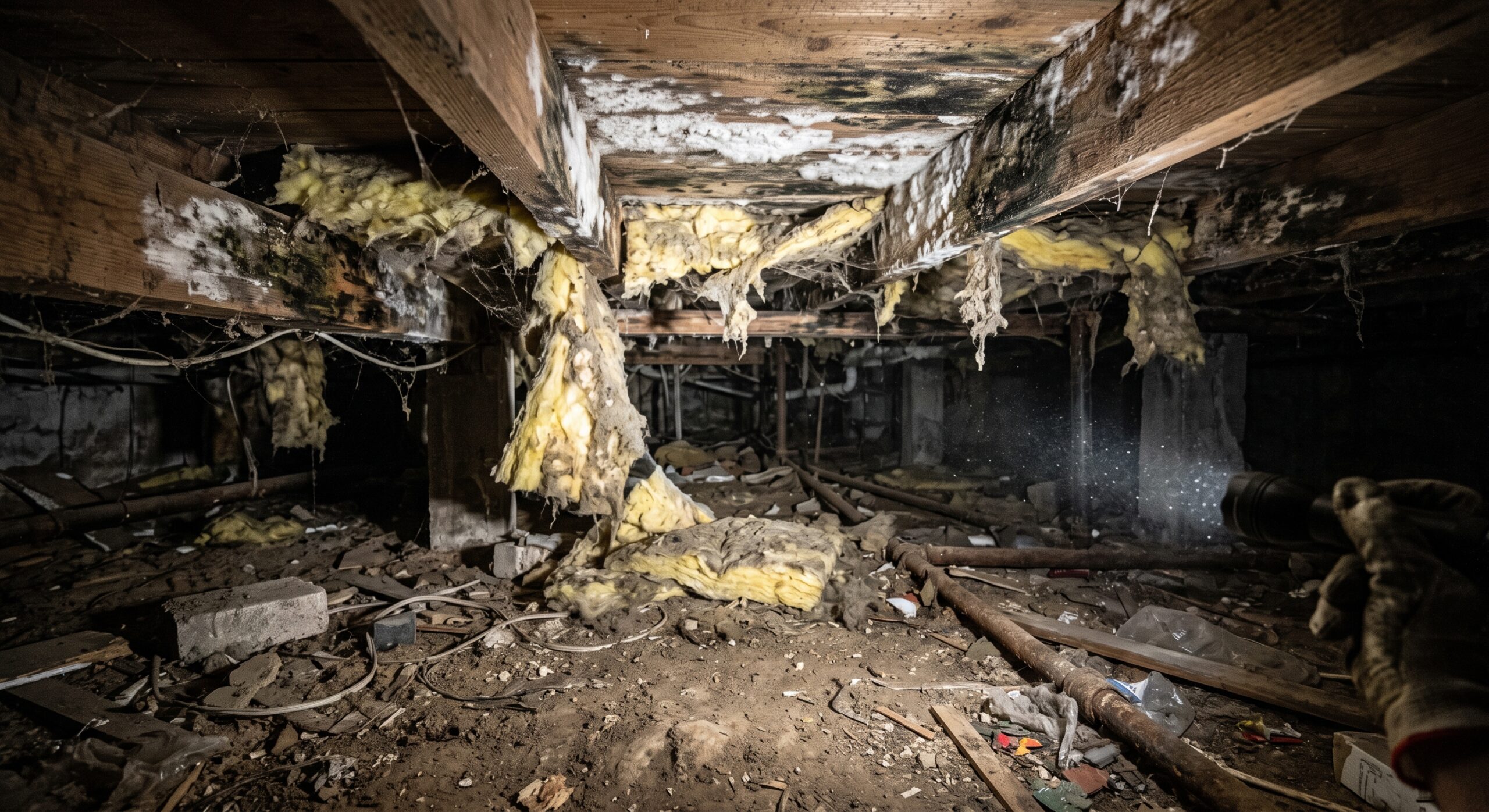
- White, gray, green or black growth on joists, beams or the subfloor
- Damp, sagging or fallen insulation
- Condensation on pipes and ductwork
- Standing water or wet soil under the house
- Soft, springy or uneven floors above
- More insects, like termites or camel crickets, which love damp areas
- Allergy symptoms that are worse on the ground floor
Why crawl space mold matters
For your health
Air in a house moves upward, a process called the stack effect. Air from the crawl space rises through gaps around pipes, ducts and floorboards into your living areas, bringing moisture, musty odors and mold spores with it. People with allergies, asthma or weakened immune systems are more likely to notice symptoms like a stuffy nose, coughing or itchy eyes. If symptoms improve when you’re away from home, talk to a doctor. This article is general information, not medical advice.
For your home
- Wood rot. Long-term moisture can rot floor joists and the subfloor, leading to soft, sagging floors.
- Ruined insulation. Wet insulation stops working and can fall down.
- Pests. Termites and other insects are attracted to damp wood.
- Higher energy bills. Damp air is harder to heat and cool.
- Lower home value. Crawl space mold often comes up in home inspections.
How to fix crawl space mold
Fixing crawl space mold has two parts: remove the mold, then control the moisture so it doesn’t come back.
Step 1: Remove the mold
Crawl spaces are cramped, dark and dirty, and they can contain sharp objects, pests and electrical wiring. For very small areas of surface mold, a confident DIYer can:
- Wear an N95 mask (or better), goggles, gloves, coveralls and knee pads.
- HEPA-vacuum loose mold from the wood.
- Scrub joists with detergent and water or a wood-safe mold cleaner.
- Let the wood dry, then apply an antimicrobial sealer if desired.
For most crawl spaces, though, a professional is the safer choice. They can clean large areas with methods like dry ice or soda blasting, treat the wood, replace rotten joists and remove wet insulation.
Step 2: Control the moisture
| Option | What it is | Best for |
|---|---|---|
| Fix drainage | Clean gutters, extend downspouts, grade soil away from the house | Every home; the first step |
| Repair leaks | Fix plumbing, duct and AC condensate leaks | Any home with active leaks |
| Vapor barrier | Heavy plastic sheeting laid over the dirt floor | Basic moisture control on a budget |
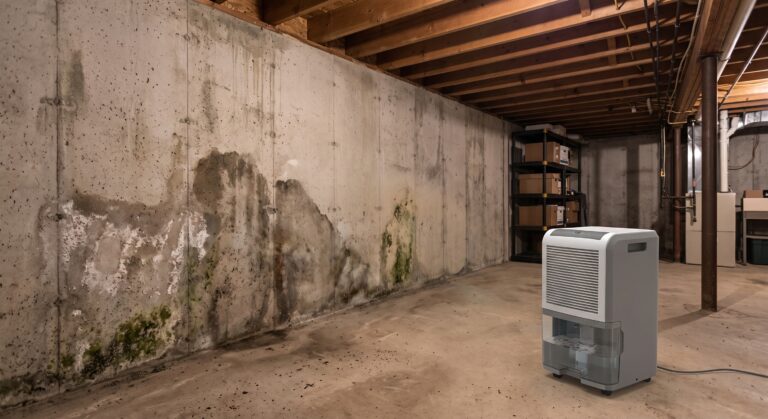
| Dehumidifier | A crawl-space-rated unit that keeps humidity low | Humid climates, often combined with a barrier |
| Encapsulation | Heavy liner on floor and walls, vents sealed, plus a dehumidifier | The most complete long-term fix |
| Sump pump | Removes standing water from low areas | Crawl spaces that flood or collect water |
The goal is to keep crawl space humidity below about 60%, and ideally closer to 50%.
When to call a professional
Call a crawl space or mold remediation specialist if you see mold on more than a small area, wood feels soft, floors above are sagging, there’s standing water, or you’re considering encapsulation. Get at least two or three quotes, as prices and methods vary a lot.
Frequently asked questions
Is crawl space mold common?
Yes, very common, especially in humid climates and older homes with dirt floors and open vents.
Can crawl space mold make me sick?
It can affect indoor air quality because air from the crawl space rises into the house. People with allergies or asthma are most likely to notice symptoms.
Should crawl space vents be open or closed?
It depends on your climate and setup. In humid areas, open vents often bring in more moisture in summer. Many experts now recommend sealed, encapsulated crawl spaces with a dehumidifier instead of open vents.
Is a vapor barrier enough?
A vapor barrier helps a lot by blocking ground moisture, but in humid climates it’s often combined with sealing and a dehumidifier.
How much does crawl space encapsulation cost?
It varies widely with the size of the crawl space and how much repair work is needed. Get several quotes and compare what each one includes.
Sources
- U.S. Environmental Protection Agency (EPA): A Brief Guide to Mold, Moisture, and Your Home
- Centers for Disease Control and Prevention (CDC): Mold
Last reviewed: October 2026. This article is for general information and is not medical, legal or professional advice.