
How to Remove Mold From Wood
Wood is one of mold’s favorite foods. Furniture stored in a damp basement, a wooden window frame, attic rafters, floor joists or a deck can all grow mold when they stay wet. The good news: most mold on solid wood can be removed if you catch it before the wood starts to rot.
Quick answer: to remove mold from wood, wear protective gear, vacuum loose spores with a HEPA vacuum, then scrub with detergent and water. For deeper mold, use white vinegar or a wood-safe mold cleaner. On unfinished wood, lightly sand any stains that remain. Dry the wood completely, then seal or refinish it. Avoid bleach, which doesn’t reach mold in the grain and can discolor wood. If the wood is soft or crumbly, it’s rotting and needs to be replaced.
Before you start
Surface mold or rot?
Press the wood with a screwdriver or your thumb.
- Solid and hard: the mold is on or near the surface. You can clean it.
- Soft, spongy, crumbly or cracked into small cubes: the wood is rotting. Cleaning won’t fix it; the damaged section needs to be replaced, especially if it’s structural (joists, beams, subfloor).
Finished or unfinished wood?
- Finished wood (painted, varnished, sealed furniture and floors): mold usually stays on top of the finish. Clean gently so you don’t damage it.
- Unfinished wood (raw lumber, joists, rafters, decks): mold can grow into the grain. You may need to scrub harder or sand.
What you’ll need
- N95 mask, gloves and goggles
- HEPA vacuum
- Soft brush and stiff brush
- Dish soap or mild detergent
- White vinegar or a wood-safe mold cleaner (non-bleach)
- Spray bottle and clean cloths
- Fine sandpaper (120 to 220 grit) for unfinished wood
- Fans or a dehumidifier
- Sealer, primer, paint or wood finish (optional)
How to remove mold from wood: step by step
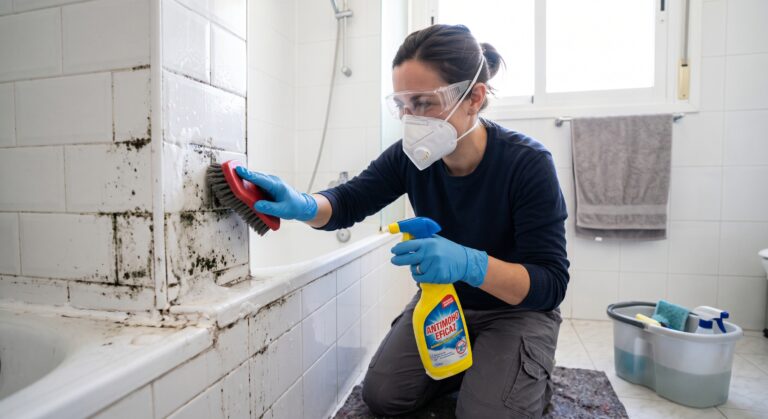
- Protect yourself and move outside if you can. Wear a mask, gloves and goggles. Take furniture outside on a dry, sunny day.
- Vacuum loose mold. Go over the surface with a HEPA vacuum to remove spores without spreading them.
- Wash with soap and water. Mix a little dish soap in warm water, dip a soft brush or cloth, and scrub gently. For many finished surfaces, this is enough.
- Use vinegar or a mold cleaner for stubborn mold. Spray undiluted white vinegar or a wood-safe mold cleaner, leave it for about an hour (or as the label says), then scrub along the grain.
- Sand unfinished wood if stains remain. Lightly sand with fine sandpaper, keeping a HEPA vacuum nozzle close to catch dust. Don’t sand finished furniture unless you plan to refinish it.
- Wipe clean with a damp cloth.
- Dry completely. Use sunlight, fans or a dehumidifier for at least 24 to 48 hours. Wood must be fully dry before the next step.
- Seal or refinish. Apply a sealer, mold-resistant primer, paint or wood finish to protect the surface.
Tips for different types of wood
| Wood item | Best approach |
|---|---|
| Finished furniture | Soap and water first; vinegar if needed. Test on a hidden spot. Dry, then polish or condition. |
| Hardwood floors | Damp (not wet) cloth with mild cleaner; dry immediately. Mold under the boards needs a pro. |
| Joists, rafters, studs | HEPA vacuum, scrub, sand stains, dry, and seal with an antimicrobial coating. |
| Decks and outdoor wood | Deck cleaner or oxygen bleach, scrub, rinse, dry, then reseal. |
| Window frames | Clean with vinegar, dry, and repaint if the paint is damaged. |
| Antiques | Gentle soap and water only; ask a furniture restorer before using anything stronger. |
Why not bleach? Bleach doesn’t soak into wood where mold roots grow. It can lighten the surface while mold survives underneath, and the water in it can help mold return. It can also damage the finish and discolor the wood.
How to keep mold off wood
- Keep indoor humidity between 30% and 50%.
- Don’t store wooden furniture in damp basements, garages or sheds.
- Leave a gap between furniture and exterior walls.
- Fix leaks fast and dry wet wood within 24 to 48 hours.
- Seal, paint or finish exposed wood in damp areas.
- Reseal decks and outdoor wood every year or two.
- Ventilate attics, basements and crawl spaces.
When to call a professional
Call a professional if the wood is soft or rotting, if the mold is on structural wood like joists, beams or subfloors over a large area, if it covers more than about 10 square feet, or if it keeps coming back. For valuable antiques, consult a furniture restorer.
Frequently asked questions
Does vinegar kill mold on wood?
Yes, white vinegar works well on many types of surface mold on wood. Leave it for about an hour before scrubbing, and dry the wood well afterward.
Can moldy wood be saved?
Usually, if the wood is still solid. Rotting wood that’s soft or crumbly should be replaced.
Why are there still dark stains after cleaning?
Mold can leave stains in the wood grain even after it’s removed. Light sanding on unfinished wood, or a stain-blocking primer before painting, usually takes care of it.
Is it safe to keep furniture that had mold?
Yes, once it’s been properly cleaned, fully dried and no longer smells musty. Upholstered furniture is harder to save than solid wood.
How do I get mold off a wooden deck?
Use a deck cleaner or oxygen bleach, scrub with a stiff brush, rinse, let it dry completely, and reseal it.
Sources
- U.S. Environmental Protection Agency (EPA): A Brief Guide to Mold, Moisture, and Your Home
- Centers for Disease Control and Prevention (CDC): Mold
Last reviewed: October 2026. This article is for general information and is not medical, legal or professional advice.