Vinegar vs. Bleach for Mold: Which Works Better?
Vinegar and bleach are the two cleaners most people reach for when they find mold. Both are cheap and easy to find, but they work in different ways, and one is not always better than the other.
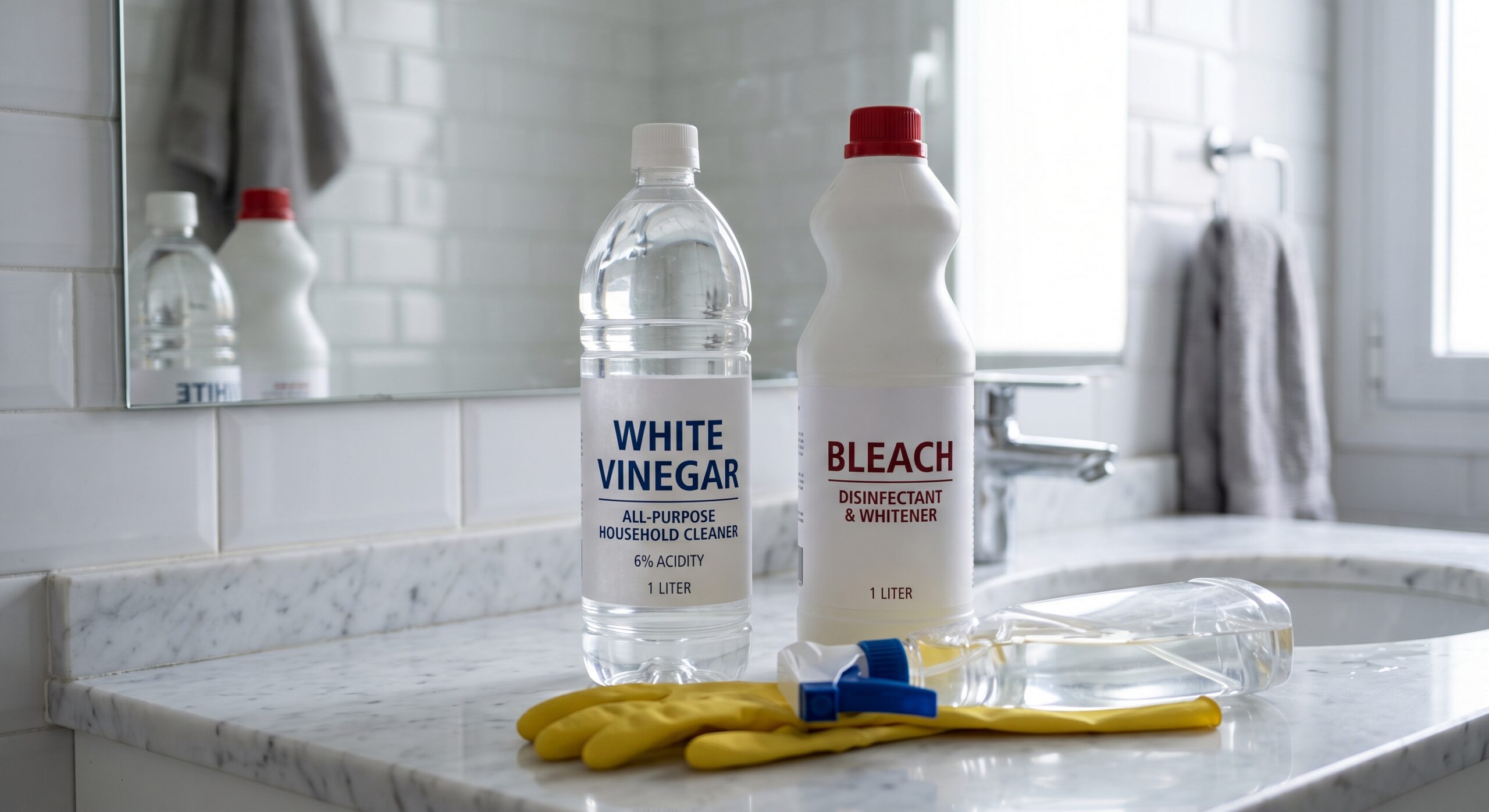
Quick answer: white vinegar is a good all-around choice for most household mold on hard and semi-porous surfaces like tiles, grout and wood, because it’s mild and soaks in a little. Bleach works fast on hard, non-porous surfaces like tile, glass and tubs, and removes stains, but it doesn’t reach mold inside porous materials and gives off harsh fumes. For drywall, carpet and other porous items with deep mold, neither is enough; they usually need to be replaced. And never mix vinegar and bleach: together they release toxic chlorine gas.
How vinegar works on mold
Regular white vinegar is about 5% acetic acid. The acid breaks down many common household molds and helps loosen them from surfaces. Because it’s a liquid acid with low surface tension, it can soak slightly into semi-porous materials like grout and wood. It’s mild, cheap, non-toxic in normal use, and its smell fades once it dries.
Its downsides: it works more slowly than bleach, it doesn’t remove stains as well, and it can damage some surfaces, such as natural stone like marble and granite.
How bleach works on mold
Household chlorine bleach is a strong oxidizer. On hard, non-porous surfaces it kills surface mold quickly and whitens the dark stains mold leaves behind, which is why it’s popular in showers.
Its downsides: it’s mostly water, and it stays on the surface of porous materials. It can remove the color of the mold on drywall or wood while the roots underneath survive, and the extra water can help them grow back. It also gives off strong fumes, can irritate lungs and eyes, and damages fabrics and many finishes.
Vinegar vs. bleach at a glance
| White vinegar | Chlorine bleach | |
|---|---|---|
| Works on hard surfaces | Yes | Yes, fast |
| Works on semi-porous surfaces (grout, wood) | Better | Mostly surface only |
| Works inside porous materials (drywall, carpet) | Limited | No |
| Removes stains | Somewhat | Very well |
| Speed | Slower (about 1 hour) | Faster (about 10 minutes) |
| Fumes | Mild smell | Strong, irritating fumes |
| Safe on colored fabrics | Usually | No, bleaches color |
| Safe on natural stone | No | No |
| Cost | Very low | Very low |
| Danger if mixed | Toxic gas with bleach | Toxic gas with vinegar or ammonia |
Which one to use, surface by surface
| Surface | Best choice | Why |
|---|---|---|
| Ceramic tile, tubs, sinks, glass | Either; bleach for heavy stains | Both work on hard surfaces; bleach whitens |
| Grout | Vinegar (or hydrogen peroxide) | Soaks in slightly, gentler on grout |
| Silicone caulk | Vinegar first; replace if stained inside | Mold under the surface can’t be cleaned |
| Solid wood | Vinegar or a wood-safe cleaner | Bleach can discolor and doesn’t penetrate |
| Painted walls | Mild detergent or vinegar | Bleach can damage paint |
| Drywall with deep mold | Neither; replace it | Mold grows inside the material |
| Fabrics and clothes | Vinegar in the wash | Bleach removes color (only for white cotton) |
| Marble, granite, natural stone | Neither; use a stone-safe cleaner | Both can etch or damage stone |
| Carpet | Vinegar for light surface spots | Deep or widespread mold means replacing it |
How to use vinegar on mold
- Pour undiluted white vinegar into a spray bottle.
- Spray the moldy area until it’s damp.
- Leave it for about an hour.
- Scrub with a brush, then wipe with clean water.
- Dry the surface completely.
The vinegar smell fades within a few hours.
How to use bleach on mold
- Open windows and turn on a fan. Wear gloves, goggles and a mask.
- Mix about 1 cup of bleach per gallon of water (this is the ratio the EPA has used as an example for hard surfaces).
- Apply with a spray bottle or sponge to hard, non-porous surfaces only.
- Leave it for about 10 minutes.
- Scrub, rinse with clean water and dry.
Use bleach only in well-ventilated areas, and keep children and pets away while you work.
⚠️ Never mix vinegar and bleach
Mixing vinegar (an acid) with bleach releases chlorine gas, which can seriously irritate or damage the lungs, eyes and throat, even in small amounts. Don’t use them one after the other on the same surface without rinsing and drying in between, and never mix bleach with ammonia or other cleaners either. If you’re exposed to fumes and have trouble breathing, get to fresh air and seek medical help.
Other good options
- Detergent and water. The EPA’s basic recommendation for hard surfaces. Removing mold physically is what matters most.
- Hydrogen peroxide (3%). Works well on many surfaces, has no harsh fumes and breaks down into water and oxygen. It can lighten some colors, so test first.
- Baking soda. Great for scrubbing grout and absorbing odors; safe and gentle.
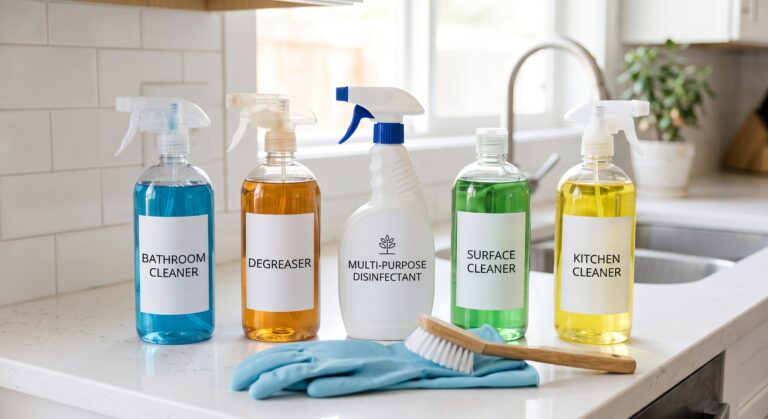
- Commercial mold cleaners. Formulated for bathrooms and specific surfaces; follow the label.
Whichever cleaner you use, the most important parts are the same: remove the mold, dry the area completely and fix the moisture problem.
Frequently asked questions
Does vinegar kill black mold?
White vinegar is effective against many common household molds, including many dark-colored ones, on hard and semi-porous surfaces. For large areas or mold inside walls, it’s not a substitute for professional removal.
Is bleach better than vinegar for mold?
Not overall. Bleach is faster and better at removing stains on hard surfaces, but vinegar is more versatile and gentler, and works better on grout and wood.
Should I dilute vinegar for mold?
For mold, use undiluted white vinegar. Diluting it reduces how well it works.
Can I use bleach on drywall mold?
It’s not recommended. Bleach only lightens the surface and adds moisture, while mold inside the drywall survives.
How long should vinegar sit on mold?
About one hour before scrubbing and wiping.
Sources
- U.S. Environmental Protection Agency (EPA): A Brief Guide to Mold, Moisture, and Your Home
- Centers for Disease Control and Prevention (CDC): Mold
Last reviewed: October 2026. This article is for general information and is not medical, legal or professional advice.