Mold and Children: Risks Parents Should Know
As a parent, finding mold in your home, especially in a nursery or child’s bedroom, can be worrying. Children spend a lot of time indoors, close to the floor, and their bodies are still developing, so it’s natural to ask how mold might affect them.
Quick answer: babies and young children can be more sensitive to mold than adults. Research has linked damp, moldy homes to more coughing, wheezing and respiratory symptoms in children, and to a higher risk of developing or worsening asthma. Most children exposed to small amounts of mold won’t have serious problems, but it’s best to act quickly: keep children out of moldy rooms, remove the mold and fix the moisture, and talk to your pediatrician if your child has ongoing symptoms.
Medical disclaimer: this article is general information, not medical advice. If your child has symptoms or you have concerns, talk to your pediatrician. If your child has trouble breathing, call 911 or seek emergency care.
Why children are more sensitive to mold
- They breathe faster. For their size, children breathe in more air than adults, and with it more of whatever is in the air.
- Their lungs and immune systems are still developing.
- They’re closer to the floor, where dust and settled spores collect, and they crawl, play and put things in their mouths.
- They spend a lot of time in one room, like a nursery or bedroom, often with the door closed.
- Some already have allergies or asthma, which mold can make worse.
What research shows
Major health organizations, including the World Health Organization and the U.S. Institute of Medicine (now the National Academy of Medicine), have reviewed studies on damp and moldy homes. In general, they’ve found that living in a damp or moldy home is associated with:
- More coughing, wheezing and upper respiratory symptoms
- Worse asthma symptoms in children who already have asthma
- A higher risk of developing asthma in some children
These are associations: they don’t mean every child in a damp home will get sick, and dampness often comes with other factors like dust mites. But they’re a good reason to deal with dampness and mold quickly where children live.
Symptoms to watch for in children
- Stuffy or runny nose that doesn’t seem to clear
- Frequent sneezing
- Coughing, especially at night or in the morning
- Wheezing or noisy breathing
- Itchy, red or watery eyes
- Skin rashes or itchiness
- More frequent asthma flare-ups
- Symptoms that improve when the child is away from home, such as at a grandparent’s house or on vacation
In babies, signs can be less obvious: congestion, noisy breathing, trouble feeding because of a blocked nose, or unusual fussiness. These symptoms have many possible causes, so check with your pediatrician.
Nursery and kids’ room checklist
Check these spots regularly, especially in fall and winter:
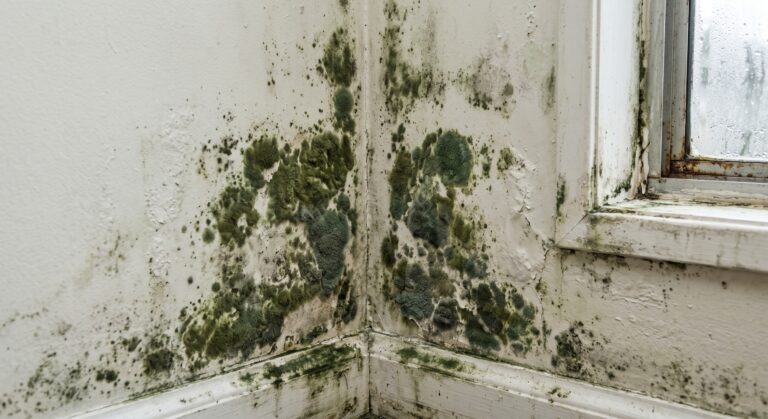
- ☐ Window frames, sills and seals for black spots and condensation
- ☐ Corners of ceilings and exterior walls
- ☐ Behind the crib, bed, dresser and wardrobe
- ☐ Inside the closet
- ☐ Under the crib or kids’ mattress
- ☐ Stuffed animals, especially ones kept near windows or walls
- ☐ Humidifiers (clean them often; they can grow mold and bacteria)
- ☐ Bath toys with holes, which trap water and often grow mold inside
- ☐ Air vents
- ☐ A musty smell when you walk in
Keep the room healthy:
- Keep humidity between 30% and 50% (use a hygrometer)
- Ventilate daily
- Leave a gap between furniture and exterior walls
- Use a breathable mattress protector
- Wash bedding weekly in hot water
- Replace or squeeze-dry and disinfect bath toys, or choose ones without holes
What to do if you find mold
- Move your child to another room until the mold is removed, especially babies and children with asthma or allergies.
- Don’t clean it while children are nearby. Cleaning releases spores. Keep children and pets out, and close the door.
- Small areas: clean with protective gear (N95 mask, gloves, goggles) and a suitable cleaner, then dry completely. Pregnant people, and anyone with asthma or a weak immune system, should let someone else do it.
- Larger areas, hidden mold or a musty smell you can’t trace: call a professional.
- Wash or replace affected items: wash fabrics in hot water; throw away moldy stuffed toys, mattresses or items that can’t be cleaned.
- Fix the cause so it doesn’t come back: condensation, leaks or high humidity.
- Air out the room for a few days after cleaning before your child sleeps there again.
When to call the pediatrician
Call your pediatrician if your child:
- Has a cough, congestion or wheezing that lasts more than a week or two, or keeps coming back
- Has asthma that’s getting harder to control
- Has symptoms that clearly improve away from home
- Is a baby with ongoing congestion, noisy breathing or trouble feeding
- Has a weakened immune system or a chronic lung condition and has been exposed to mold
Tell the doctor about the mold and where it is.
Seek emergency care (call 911) if your child is struggling to breathe, breathing very fast, has blue or gray lips or skin, or is unusually drowsy or hard to wake.
Mold at school or daycare
If you notice a musty smell, water stains or visible mold at your child’s school or daycare, or your child’s symptoms are worse on school days, tell the staff or director in writing. Schools and childcare centers should fix leaks and remove mold promptly. The EPA has guidance for schools on mold and indoor air quality that you can share.
Frequently asked questions
Can mold make my baby sick?
Babies can be more sensitive to mold, and it may cause congestion, coughing or wheezing. Keep your baby out of moldy rooms and talk to your pediatrician if you’re concerned.
Can mold cause asthma in children?
Research has linked damp, moldy homes to a higher risk of developing asthma in some children, and to worse symptoms in children who already have it.
Is it safe to use a humidifier in a baby’s room?
Yes, if it’s cleaned often and humidity stays between 30% and 50%. A dirty humidifier or too much humidity can encourage mold.
Should I throw away my child’s moldy stuffed animals?
If they can’t be washed in hot water and dried completely, or still smell musty, it’s safest to throw them away.
How long should my child stay out of a room after mold cleanup?
Until the area is cleaned, completely dry and no longer smells musty. For professional jobs, ask the company when it’s safe to return.
Sources
- U.S. Environmental Protection Agency (EPA): A Brief Guide to Mold, Moisture, and Your Home
- Centers for Disease Control and Prevention (CDC): Mold
Last reviewed: October 2026. This article is for general information and is not medical, legal or professional advice.