Is It Safe to Sleep in a Room With Mold?
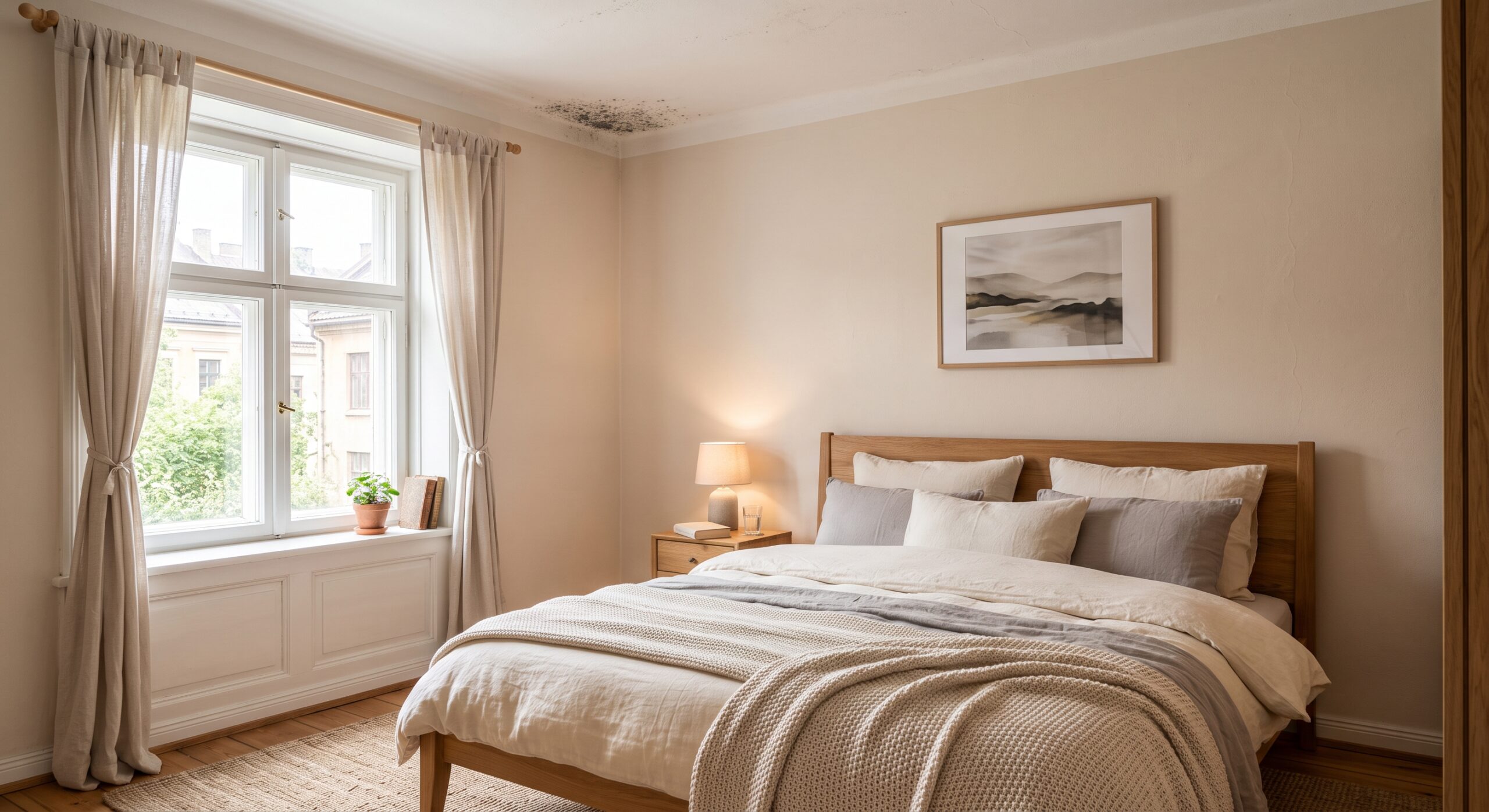
You go to bed and notice dark spots in the corner of the ceiling, around the window, or on the wall behind the bed. Should you keep sleeping there tonight?
Quick answer: for a healthy adult, a small patch of mold (a few spots, much less than about 10 square feet) is unlikely to cause serious harm in a single night, but it’s best to clean it soon and fix the cause. You should sleep in another room if the mold covers a large area, there’s a strong musty smell, you’re having symptoms like coughing, wheezing or a stuffy nose that are worse in that room, or if the person sleeping there is a baby, a child, someone with asthma or allergies, someone with a weakened immune system or lung disease, or an older adult.
Medical disclaimer: this article is general information, not medical advice. If you have symptoms or health concerns, talk to a doctor. For severe trouble breathing, call 911.
Why mold in the bedroom matters more
- Long exposure. You spend around 7 to 9 hours a night in your bedroom, breathing the same air.
- Closed room. Doors and windows are often shut at night, so spores and musty air stay in.
- Close to the source. The bed is often against a wall or near a window, where mold tends to grow.
- Humidity rises at night. Breathing adds moisture overnight, which can make condensation and mold worse, especially in winter.
When it’s usually OK to keep sleeping there
- The mold is a small patch, such as a few spots on a window frame or in a corner
- There’s no strong musty smell
- No one is having symptoms in that room
- The person sleeping there is a healthy adult
- You plan to clean it in the next day or two and fix the moisture problem
In the meantime, keep the bed and pillows away from the moldy area, open a window for a while before bed if weather allows, and don’t disturb the mold until you’re ready to clean it properly.
When to sleep somewhere else
Move to another room until the mold is removed if:
- The mold covers a large area (more than about 10 square feet) or is spreading
- There’s a strong musty smell, which can mean hidden mold
- You have symptoms that are worse in that room: coughing, wheezing, a stuffy nose, itchy eyes or headaches
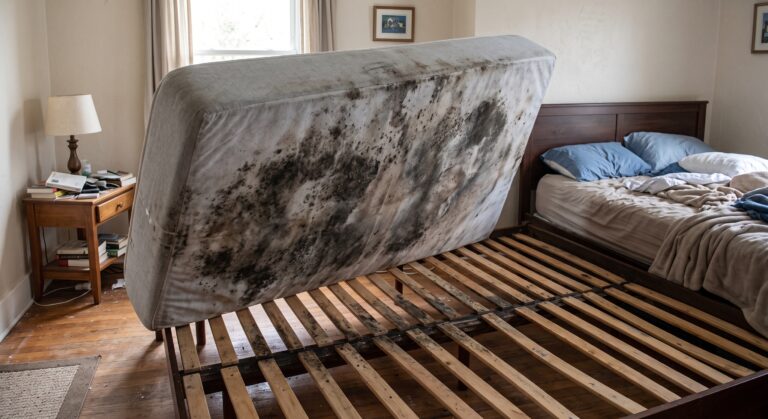
- The mattress, pillows or bedding have visible mold
- The room had a leak or flood recently
- The person sleeping there is:
- A baby or young child
- Someone with asthma or allergies
- Someone with a weakened immune system or chronic lung disease
- An older adult or someone who is pregnant
Where mold hides in bedrooms
- Window frames, sills and seals (condensation)
- Corners of exterior walls and ceilings
- The wall behind the bed or the headboard
- Behind wardrobes and dressers pushed against walls
- Inside closets
- Under the mattress, especially on the floor or solid bases
- Curtains touching cold windows
- Under carpets near exterior walls
- Air vents, if the HVAC system has mold
What to do tonight
- Decide where to sleep using the checklist above.
- Move the bed away from the moldy wall if you’re staying.
- Ventilate the room for 10 to 15 minutes if the weather allows.
- Keep the door to the rest of the house closed if you move out of the room.
- Don’t scrub or scrape the mold at night without protection; it releases spores.
- Run a HEPA air purifier in the room you’re sleeping in, if you have one.
What to do in the next few days
- Find the cause: condensation, a leak, high humidity or poor ventilation.
- Clean small areas with protective gear (N95 mask, gloves, goggles) and a suitable cleaner, then dry the area completely.
- Check the mattress and bedding. Wash bedding in hot water. Replace a mattress with mold that has soaked in.
- Call a professional for large areas, hidden mold, or if someone at home is at higher risk.
- Lower humidity to 30% to 50% with a dehumidifier and better ventilation.
How to keep your bedroom mold-free
- Air out the bedroom every morning for 10 to 15 minutes.
- Keep humidity between 30% and 50%, and lower in cold weather.
- Wipe condensation off windows in the morning.
- Leave a few inches between furniture and exterior walls.
- Pull back the covers in the morning to let the mattress breathe.
- Use a breathable mattress protector and a slatted bed base.
- Don’t dry clothes in the bedroom.
When to see a doctor
Talk to a doctor if you have symptoms that are worse in your bedroom or at home, such as a persistent cough, wheezing, a stuffy nose or itchy eyes, or if asthma becomes harder to control. Tell them about the mold. Seek emergency care for severe trouble breathing.
Frequently asked questions
Can sleeping in a room with mold make you sick?
It can cause allergy or asthma symptoms in sensitive people. The risk is higher with large amounts of mold and for people in higher-risk groups.
Is a little mold on the window sill dangerous?
A small amount is usually not an emergency for healthy adults, but clean it soon and reduce condensation so it doesn’t spread.
Should I throw away my mattress if there’s mold in the room?
Only if the mattress itself has mold that soaked in, or it smells musty. Mold on the wall doesn’t automatically mean the mattress is affected.
Can a baby sleep in a room with mold?
It’s best not to. Move the baby to a mold-free room until the mold is removed and the cause is fixed, and talk to your pediatrician if you have concerns.
Will an air purifier make it safe to sleep there?
A HEPA purifier can reduce airborne spores, but it doesn’t remove mold growing on surfaces. Remove the mold too.
Sources
- U.S. Environmental Protection Agency (EPA): A Brief Guide to Mold, Moisture, and Your Home
- Centers for Disease Control and Prevention (CDC): Mold
Last reviewed: October 2026. This article is for general information and is not medical, legal or professional advice.