How to Get Mold Out of Grout and Caulk
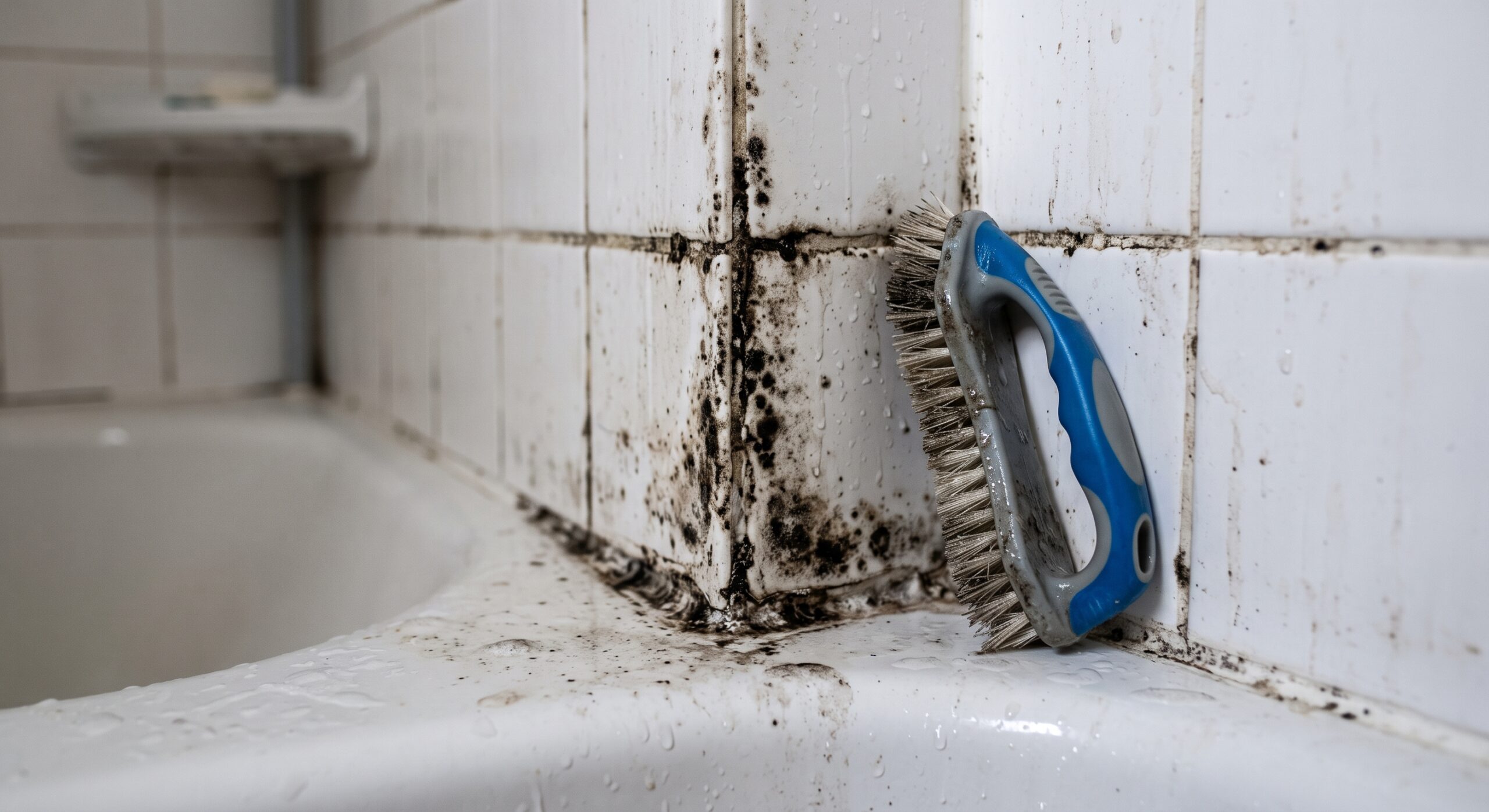
Black lines between shower tiles and dark spots along the tub caulk are some of the most common mold problems in any home. They make a clean bathroom look dirty, and they often come back just weeks after scrubbing.
Quick answer: grout can almost always be cleaned. Scrub it with a baking soda paste and a grout brush, then treat dark stains with hydrogen peroxide or a mold and mildew spray, and seal it once it’s dry. Caulk is different: if the black spots don’t wipe off, the mold is under the surface, and the only real fix is to cut out the old caulk and apply new mold-resistant silicone. To keep both clean, dry the shower after use and run the exhaust fan.
Why grout and caulk get moldy
- Grout is porous. Cement-based grout is full of tiny holes that hold water and soap residue long after you shower.
- Caulk traps moisture. Silicone caulk around tubs and sinks stays damp, and once mold gets under its surface, cleaners can’t reach it.
- Soap scum feeds mold. Shampoo, body wash and skin oils build up in grout lines.
- Poor ventilation. Bathrooms without a strong exhaust fan stay humid for hours.
- Unsealed or old grout. Without a sealer, grout absorbs even more water.
How to clean mold out of grout
What you’ll need: gloves, goggles, an N95 mask for heavy mold, baking soda, dish soap, 3% hydrogen peroxide or a mold and mildew spray, a grout brush or old toothbrush, a spray bottle and microfiber cloths.
- Ventilate the bathroom and put on gloves and goggles.
- Wet the grout with warm water.
- Make a paste of about 1/2 cup baking soda with a little dish soap and water (or hydrogen peroxide for extra power).
- Spread the paste along the grout lines.
- Scrub with a grout brush, working in short strokes along each line.
- Treat dark stains. Spray 3% hydrogen peroxide or a mold and mildew spray, leave it for 10 minutes, then scrub again.
- Rinse with clean water and dry the area with a towel.
- Seal the grout once it’s completely dry (usually after 24 to 48 hours). A grout sealer makes it harder for water and mold to soak in.
Tip: for very stubborn stains on white grout, a bleach-based mold spray works fast. Use it only with good ventilation, and never after vinegar without rinsing first.
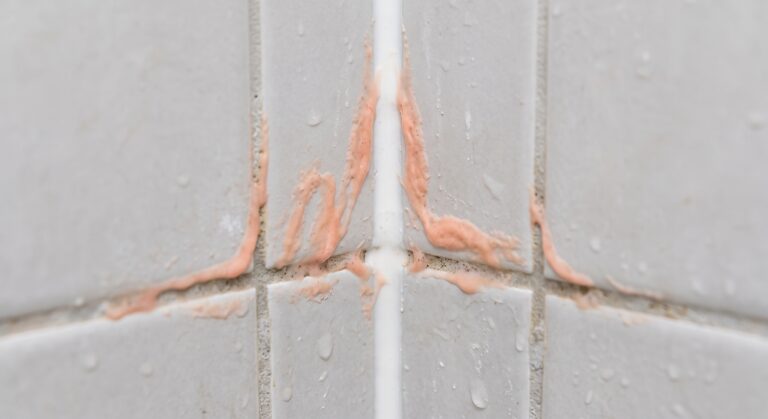
When grout can’t be saved: if grout is crumbling, cracked or missing, or stains stay after several cleanings, it can be scraped out with a grout saw and replaced.
How to clean mold off caulk
First, try cleaning. If the mold is only on the surface, it will come off.
- Spray the caulk with a mold and mildew spray or hydrogen peroxide.
- Leave it for 10 minutes.
- Scrub gently with an old toothbrush.
- Rinse and dry.
The paper towel trick for stubborn spots: soak strips of paper towel in a mold spray or hydrogen peroxide, press them onto the caulk, and leave them for a few hours (or overnight with good ventilation). Remove, rinse and dry.
If black spots are still visible under the surface after this, the mold is inside the caulk. No cleaner will fix it; it’s time to replace the caulk.
How to replace moldy caulk
What you’ll need: a caulk removal tool or utility knife, a plastic scraper, rubbing alcohol, a mold cleaner, painter’s tape (optional), mold-resistant 100% silicone caulk for kitchens and baths, and a caulk gun.
- Cut and pull out the old caulk with a utility knife or caulk removal tool. Work carefully to avoid scratching the tub or tiles.
- Scrape off any leftovers with a plastic scraper.
- Clean the joint with a mold cleaner or hydrogen peroxide to kill any mold left in the gap.
- Wipe with rubbing alcohol to remove soap residue and help the new caulk stick.
- Let it dry completely, ideally for 24 hours. Caulking over a damp joint traps moisture and mold.
- Fill the tub with water before caulking (if it’s a bathtub). This makes the joint as wide as it will be when someone uses it, so the caulk doesn’t crack later.
- Apply a steady bead of mold-resistant silicone. Painter’s tape on both sides gives a clean line.
- Smooth it with a wet finger or a caulk tool, then remove the tape.
- Let it cure for the time on the label, usually 24 hours, before using the shower.
How to keep mold out of grout and caulk
- Squeegee or wipe the shower after each use, especially corners and the caulk line.
- Run the exhaust fan during showers and for 20 to 30 minutes after.
- Spray a daily shower cleaner or a light mist of vinegar on grout a few times a week.
- Clean weekly with a quick scrub of grout lines and caulk.
- Reseal grout every 6 to 12 months, or when water stops beading on it.
- Use mold-resistant silicone whenever you recaulk.
- Fix leaks and gaps right away, so water doesn’t get behind tiles or caulk.
Frequently asked questions
What’s the best cleaner for moldy grout?
A baking soda paste for scrubbing, followed by 3% hydrogen peroxide or a mold and mildew spray for dark stains, works well for most grout.
Why does mold keep coming back in my grout?
Because the grout stays wet and soapy. Drying the shower, running the fan and sealing the grout are what stop it.
Can I just put new caulk over moldy caulk?
No. The mold under the old caulk will keep growing and show through. Always remove the old caulk completely first.
How long does new caulk need before showering?
Usually about 24 hours, but check the label. Some products need longer.
Is the black mold in shower grout dangerous?
It’s usually a common mold, not the rare “toxic black mold,” but it can still trigger allergies. Clean it regularly.
Sources
- U.S. Environmental Protection Agency (EPA): A Brief Guide to Mold, Moisture, and Your Home
- Centers for Disease Control and Prevention (CDC): Mold
Last reviewed: October 2026. This article is for general information and is not medical, legal or professional advice.