What PPE Do You Need to Clean Mold Safely?
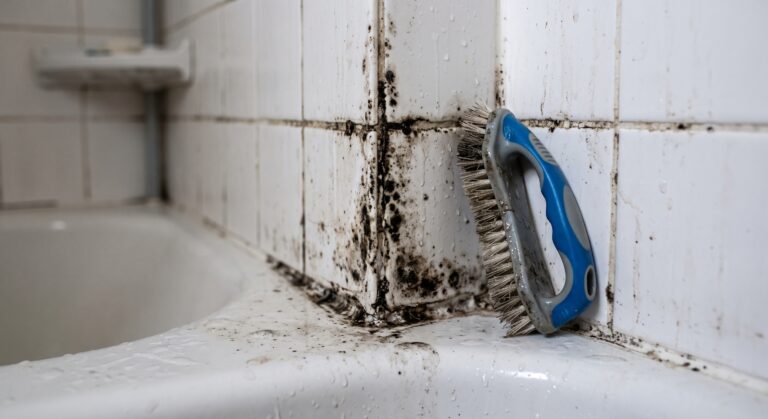
When you scrub, scrape or cut into mold, you release spores and tiny fragments into the air, right where you’re breathing. The right protective gear (PPE, or personal protective equipment) is cheap, easy to find, and makes DIY mold cleanup much safer.
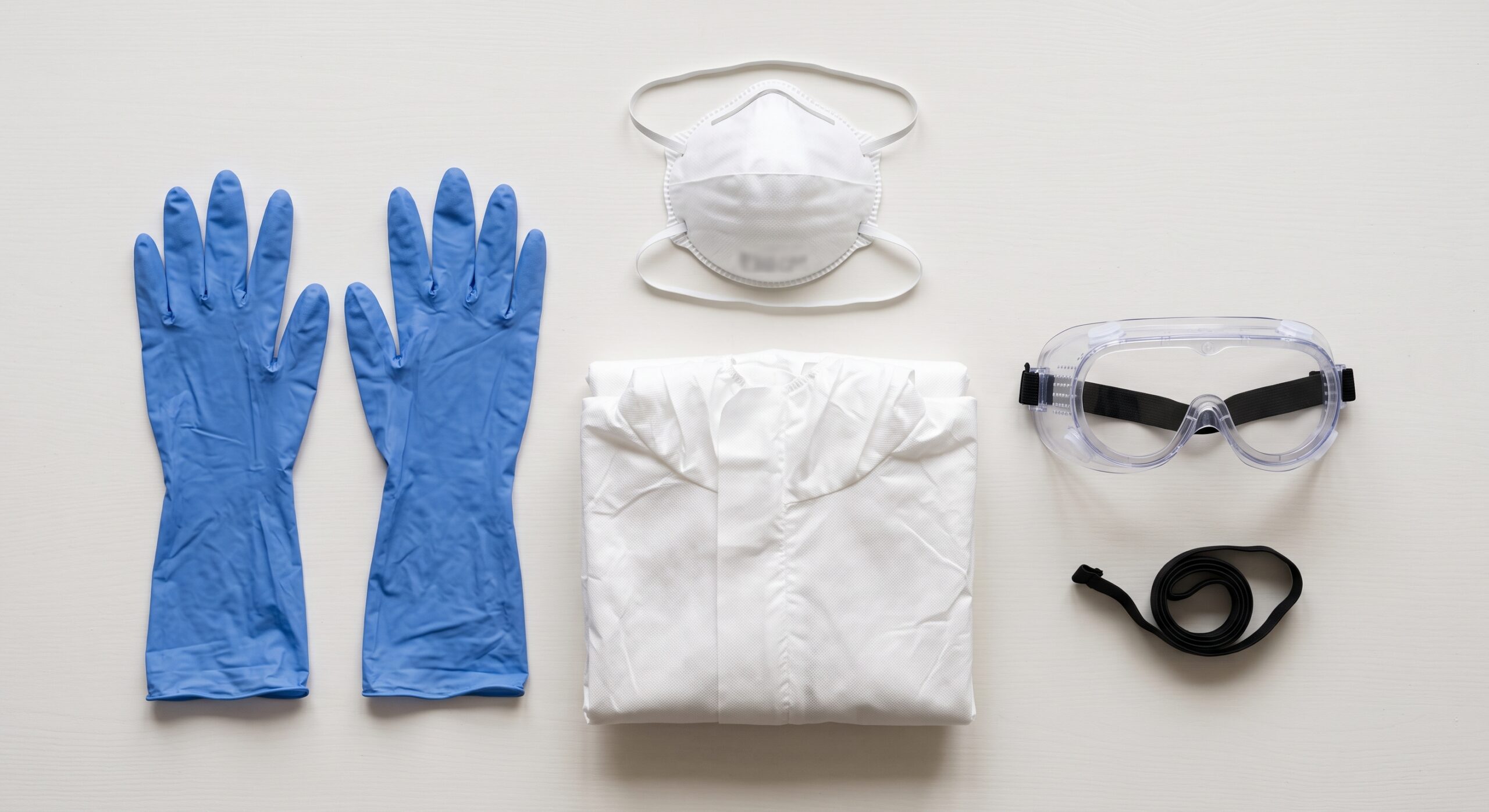
Quick answer: for small mold jobs (under about 10 square feet), you need at least an N95 respirator, long rubber or nitrile gloves, and safety goggles without vent holes. For bigger jobs, add disposable coveralls, shoe covers and a hood, and consider a half-face respirator with P100 filters. A cloth or surgical mask doesn’t stop mold spores. And remember: an N95 filters particles, not chemical fumes, so always ventilate when using bleach or strong cleaners.
Why protective gear matters
Mold that sits quietly on a wall releases relatively few spores. The moment you disturb it, by scrubbing, sanding, scraping or tearing out drywall, the number of spores in the air can rise sharply. Breathing them in can trigger a stuffy nose, coughing, wheezing and itchy eyes, and it can be worse for people with allergies or asthma. Mold and cleaning products can also irritate your skin and eyes.
PPE puts a barrier between you and all of that.
The essential gear, item by item
1. A respirator (the most important piece)
- N95 respirator: the minimum for any mold cleanup. Choose one approved by NIOSH (look for “NIOSH” and “N95” printed on the mask). It filters at least 95% of airborne particles, including mold spores.
- Half-face respirator with P100 filters: better for larger jobs or longer work. It seals more reliably and filters at least 99.97% of particles.
- Fit matters. The mask must seal tightly against your face. Beards and stubble break the seal. Press the metal nose strip firmly and check for air leaking around the edges when you breathe in and out.
- Not enough: cloth masks, surgical masks and dust masks without an N95 rating.
Important: N95 and P100 filters stop particles, not gases. They don’t protect you from bleach fumes or chemical vapors. Ventilate well, or use a respirator with combination cartridges designed for vapors if you work with strong chemicals.
2. Gloves
Use long gloves that reach the middle of your forearm. Nitrile, rubber, neoprene or PVC gloves all work. If you use bleach or strong cleaners, choose heavy-duty nitrile or rubber. Avoid touching mold with bare hands.
3. Eye protection
Wear safety goggles without ventilation holes, so spores and cleaner splashes can’t get in. Regular glasses or open safety glasses aren’t enough, especially when working overhead.
4. Protective clothing
- Small jobs: old long-sleeved clothes you can wash right away in hot water.
- Bigger jobs: disposable coveralls with a hood (often called “Tyvek-style” suits), plus disposable shoe covers. They keep spores off your clothes, hair and shoes, so you don’t carry them through the house.
What PPE to use for each job size
| Job size | Examples | Recommended PPE |
|---|---|---|
| Small (under ~10 sq ft) | Shower grout, a window sill, a few spots on a wall | N95 respirator, long gloves, sealed goggles, washable old clothes |
| Medium (~10 to 100 sq ft) | A section of basement wall, several joists, a closet | Half-face respirator with P100 filters (or a well-fitted N95), long gloves, sealed goggles, disposable coveralls with hood, shoe covers |
| Large (over ~100 sq ft) or hidden mold | Mold inside walls, after a flood, HVAC systems | Best left to professionals, who use full-face respirators, full protective suits and containment |
These size ranges are a general guide based on common EPA cleanup recommendations. If you’re unsure, go one level up.
How to put PPE on (in order)
- Put on protective clothing or coveralls, then shoe covers.
- Put on your respirator and check the seal.
- Put on goggles over the respirator straps.
- Put on gloves last, pulling the cuffs over your sleeves.
How to take PPE off without spreading mold
Do this at the edge of the work area or outside.
- Remove coveralls and shoe covers by rolling them inside out, touching the outside as little as possible.
- Remove gloves by peeling them off inside out.
- Wash your hands or put on a clean pair of gloves.
- Remove goggles by the strap, not the front.
- Remove the respirator last, by the straps, once you’re out of the dusty area.
- Bag disposable items in a sealed trash bag.
- Clean reusable gear: wash goggles and half-face respirators with soap and water, and replace filters as the maker recommends.
- Wash your clothes in hot water right away and take a shower.
Common PPE mistakes
- Using a cloth or surgical mask. They don’t filter mold spores.
- Wearing an N95 with a beard. Facial hair stops the mask from sealing.
- Reusing a dirty disposable N95 for days. Replace it when it gets damp, dirty, damaged or hard to breathe through.
- Thinking an N95 protects against bleach fumes. It doesn’t; ventilate the room.
- Wearing open safety glasses instead of sealed goggles.
- Taking gear off inside the house, spreading spores to other rooms.
- Skipping gloves for “just a quick wipe.”
Who shouldn’t do mold cleanup
Even with good PPE, some people should leave mold cleanup to someone else or to a professional:
- People with asthma, severe allergies or chronic lung conditions
- People with weakened immune systems (for example, during cancer treatment or after a transplant)
- Pregnant people
- Children
- Anyone who can’t wear a respirator comfortably, for example due to breathing or heart problems
If you’re unsure, talk to your doctor before starting. This article is general information, not medical advice.
Frequently asked questions
Do I really need a mask to clean a little mold?
Yes, at least an N95 when you scrub or wipe mold. It’s cheap and protects your lungs from the spores you release.
Is a KN95 as good as an N95 for mold?
KN95s are made to a different (non-US) standard, and quality varies a lot. For mold, a NIOSH-approved N95 is the safer choice.
How long can I use an N95 mask?
Disposable N95s are meant for short-term use. Replace yours when it gets wet, dirty, damaged or harder to breathe through, and after a heavily moldy job.
What gloves are best for cleaning mold?
Long nitrile or rubber gloves that reach the middle of your forearm. Use heavy-duty ones with bleach or strong cleaners.
Do I need a full protective suit?
For small jobs, washable old clothes are enough. For larger jobs, disposable coveralls with a hood keep spores off your clothes and hair.
Sources
- U.S. Environmental Protection Agency (EPA): A Brief Guide to Mold, Moisture, and Your Home
- Centers for Disease Control and Prevention (CDC): Mold
Last reviewed: October 2026. This article is for general information and is not medical, legal or professional advice.