How to Dry Out a House After Flooding
After a flood, whether from a storm, a river, a burst pipe or a failed sump pump, time matters. Mold can start growing on wet materials within 24 to 48 hours, so the faster you dry your home, the more you can save.
Quick answer: to dry out a house after flooding, first make sure it’s safe to enter (power off, no gas leak, no structural damage). Document the damage for insurance. Then remove standing water, take out soaked carpet, padding, insulation and the lower part of wet drywall, and dry everything with fans, dehumidifiers and ventilation. Clean and disinfect surfaces, especially after contaminated floodwater. Check with a moisture meter before rebuilding. For large floods or sewage-contaminated water, call a professional water restoration company.
Safety first
Floodwater and flooded homes have hazards that are more dangerous than mold. Before you start:
- Electricity: don’t walk into standing water if the power might be on. If you can reach the main breaker without stepping in water, turn it off. If not, call your utility company or an electrician. Have wet appliances and wiring checked before using them.
- Gas: if you smell gas, leave immediately and call the gas company from outside.
- Structure: look for sagging ceilings, cracked or bowing walls and buckled floors. If you’re unsure, don’t enter until it’s been checked.
- Contaminated water: water from rivers, storms or sewer backups can carry sewage, bacteria and chemicals. Treat it as contaminated.
- Generators and fuel-powered pumps: never run them inside the house, basement or garage; they produce deadly carbon monoxide.
- Protect yourself: wear rubber boots, waterproof gloves, goggles and an N95 respirator when removing wet or moldy materials. Wash your hands often, and keep children and pets away.
If you have health concerns, asthma or a weakened immune system, let others or professionals handle the cleanup.
Document the damage for insurance
Before you remove anything (once it’s safe):
- Take photos and videos of every room, the water line on the walls, damaged belongings and appliances.
- Call your insurance company as soon as possible to start a claim, and ask what they need.
- Keep samples of damaged materials if your insurer asks, such as a piece of carpet.
- Keep receipts for cleaning supplies, equipment rentals and repairs.
- Make a list of damaged items with approximate value and age.
Standard homeowners policies usually don’t cover flooding from outside water; that typically requires separate flood insurance. Burst pipes and sudden internal leaks are more often covered. Check your policy.
How to dry out your house: step by step
Step 1: Remove standing water
- For deep water in a basement, use a submersible pump. Pump it out gradually, about a third per day, if the ground outside is still saturated; pumping too fast can let outside pressure damage basement walls.
- For shallower water, use a wet/dry shop vacuum, mops and buckets.
- Clear floor drains and make sure your sump pump works.
Step 2: Take out wet materials
The faster soaked materials leave the house, the faster everything else dries.
- Carpet and padding: padding almost always has to go. Carpet can sometimes be saved after clean-water floods if it’s dried quickly by professionals; after contaminated floods, throw it away.
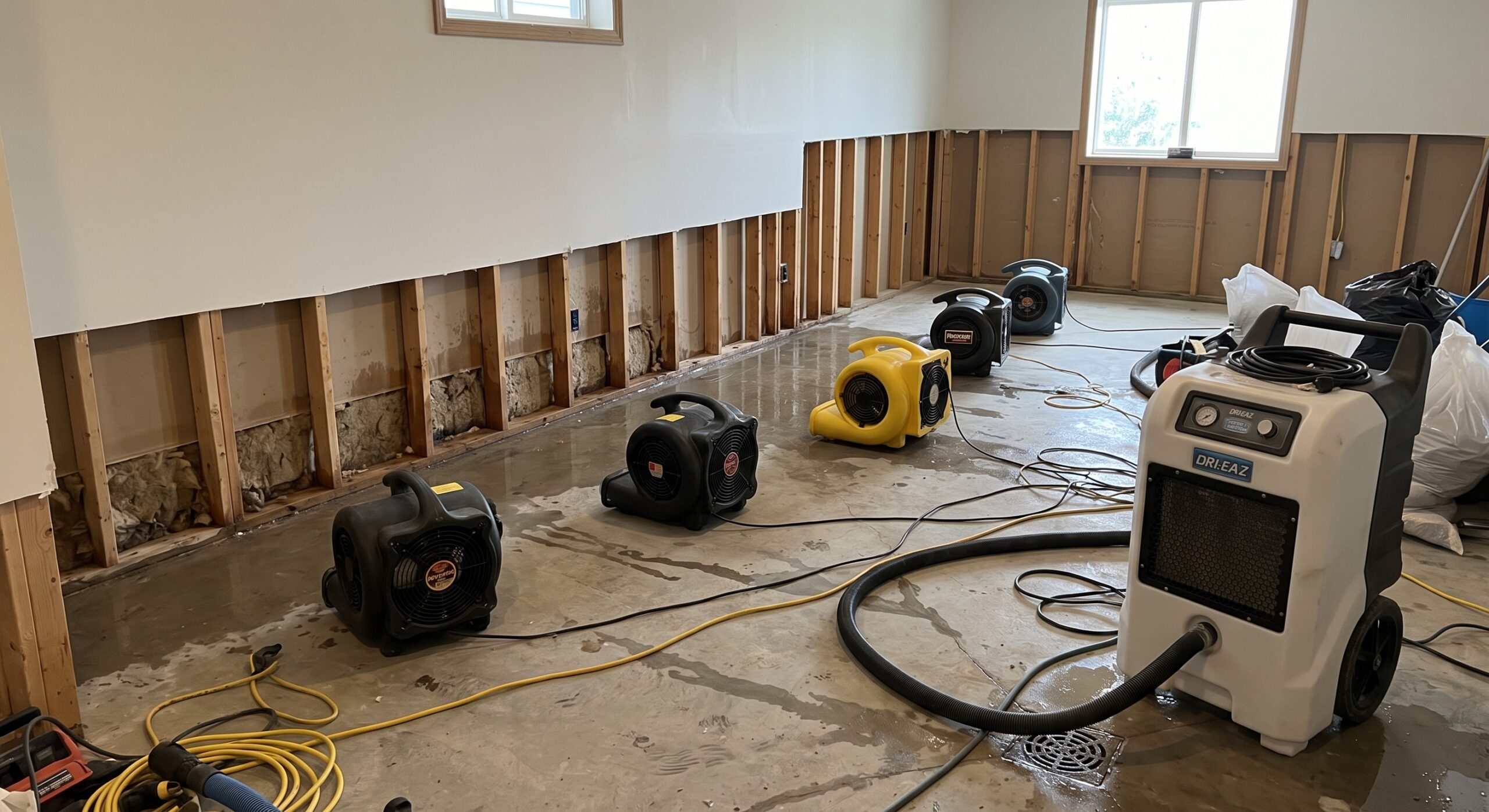
- Drywall: cut out wet drywall at least 12 inches above the water line (this is called a “flood cut”). Many people cut at 2 or 4 feet to match standard panel sizes.
- Insulation: remove wet insulation from walls. It holds water for a long time and loses its insulating value.
- Baseboards and trim: remove them so walls can dry from the bottom.
- Furniture and belongings: move them outside or to a dry area.
Step 3: Dry the air and the structure
- Open windows and doors if the air outside is drier than inside.
- Run fans (box fans, or rented air movers) pointed at wet walls, floors and wall cavities.
- Run dehumidifiers with doors and windows closed, and empty them often or connect a drain hose.
- Open wall cavities and cabinets so air reaches hidden areas.
- Use your HVAC to help dry the air only after it’s been inspected and it wasn’t flooded.
Step 4: Clean and disinfect
- Scrub hard surfaces (concrete, studs, tile, cabinets) with detergent and water.
- After contaminated floodwater, disinfect hard surfaces with a product suited for that purpose, following the label, or a diluted bleach solution on non-porous surfaces. Never mix bleach with ammonia or other cleaners.
- Clean and dry wooden studs; replace any that are soft or damaged.
Step 5: Check moisture before rebuilding
Use a moisture meter on studs, subfloors and concrete. Don’t close walls, install insulation or lay new flooring until materials are back to normal dry readings for your area. Rebuilding too soon traps moisture and leads to hidden mold.
What to keep and what to throw away
| Usually salvageable (clean, disinfect, dry) | Usually throw away |
|---|---|
| Solid wood furniture | Mattresses, box springs and pillows |
| Metal, glass, ceramic and hard plastic items | Upholstered furniture soaked by floodwater |
| Concrete, tile and stone surfaces | Carpet padding, and carpet after contaminated floods |
| Clothing and washable fabrics (wash in hot water) | Wet insulation and drywall below the flood line |
| Wooden studs that are still solid | Particleboard and MDF furniture or cabinets that have swelled |
| Food, medicine and cosmetics touched by floodwater | |
| Stuffed toys and baby items that can’t be washed in hot water |
How long does it take to dry out a house?
It depends on how much water there was, how long it sat, the materials and the weather. As a rough guide:
- Minor leak or shallow water caught quickly: a few days with fans and dehumidifiers
- Flooded room or basement: often 1 to 2 weeks
- Major flood with water in walls and subfloors: several weeks, sometimes longer
Don’t judge by touch: surfaces can feel dry while the inside of walls and floors is still wet. Trust a moisture meter.
When to call a professional
Call a water damage restoration company if:
- More than one room flooded, or water was more than a few inches deep
- The water was from sewage, a river or storm surge (contaminated)
- Water sat for more than 24 to 48 hours
- Mold is already visible on large areas
- Walls, ceilings or floors are sagging or damaged
- You don’t have the equipment, time or health to do it safely
Professionals use industrial dehumidifiers, air movers and moisture-mapping tools that dry homes much faster, and can document the process for your insurer.
Frequently asked questions
How soon does mold grow after a flood?
Mold can start growing on wet materials within 24 to 48 hours. Start drying as soon as it’s safe.
Can I save drywall that got wet?
If it was soaked by floodwater, especially contaminated water, cut it out at least 12 inches above the water line. Drywall wet only briefly by clean water may sometimes be dried, but check it carefully for mold.
Should I use bleach after a flood?
On hard, non-porous surfaces, a diluted bleach solution can disinfect after contaminated floodwater. It doesn’t work on porous materials, and must never be mixed with other cleaners.
Is it safe to stay in the house after a flood?
Only if the power and gas are safe, the structure is sound, and there’s no sewage contamination or widespread mold. If in doubt, stay elsewhere until it’s checked.
Does homeowners insurance cover flood damage?
Standard policies usually don’t cover flooding from outside water; that needs separate flood insurance. Sudden internal leaks are more often covered.
Sources
- U.S. Environmental Protection Agency (EPA): A Brief Guide to Mold, Moisture, and Your Home
- Centers for Disease Control and Prevention (CDC): Mold
Last reviewed: October 2026. This article is for general information and is not medical, legal or professional advice.