Black Mold vs. Regular Mold: How to Tell the Difference
You spot a dark, almost black patch on the wall and your mind jumps straight to the headlines: toxic black mold. Before you panic, it helps to know that most black-colored mold in homes is not the notorious «black mold» at all.
Quick answer: «black mold» usually means Stachybotrys chartarum, a greenish-black mold that grows only on materials that stay wet for days or weeks, like drywall paper or ceiling tiles. «Regular» household molds (Cladosporium, Alternaria, Aspergillus and others) can also look black, but they grow on everyday damp surfaces such as shower grout and window sills. You can’t tell them apart with certainty by eye. The good news: you don’t need to, because every type of indoor mold should be removed and its moisture source fixed.
What people mean by «black mold»
«Black mold» isn’t a scientific category. It’s a popular name, and people use it in two different ways:
- Any mold that looks black. Several common household molds are dark green, brown or black, especially Cladosporium, Alternaria, Aspergillus niger and Ulocladium.
- Stachybotrys chartarum specifically. This is the mold behind the «toxic black mold» stories. It can produce mycotoxins, and it became famous after news coverage in the 1990s and 2000s.
When a contractor, inspector or news story says «black mold,» they almost always mean Stachybotrys. That’s the meaning we use in this article.
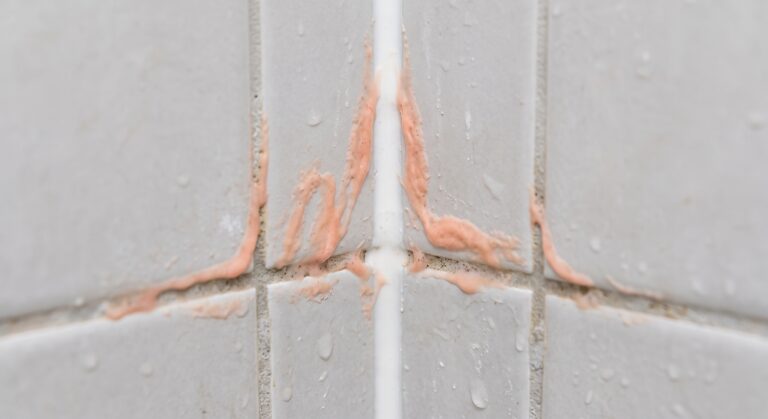
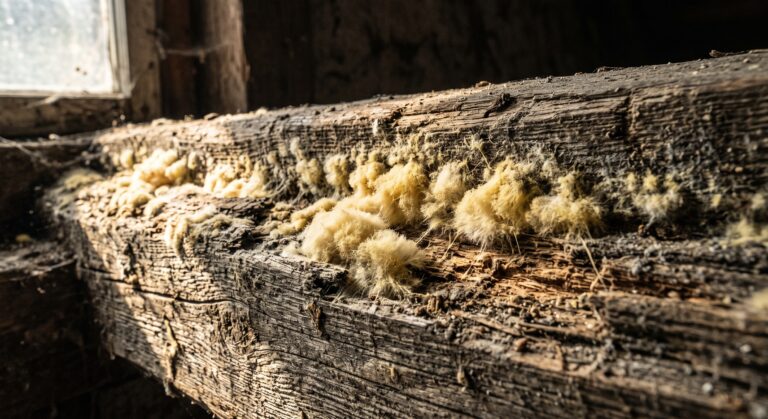
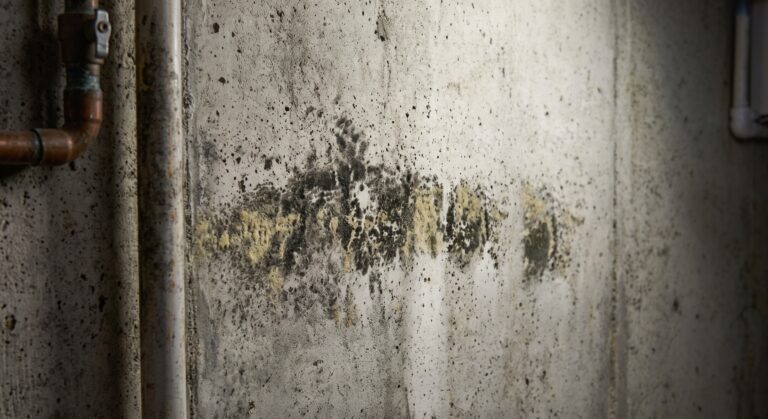
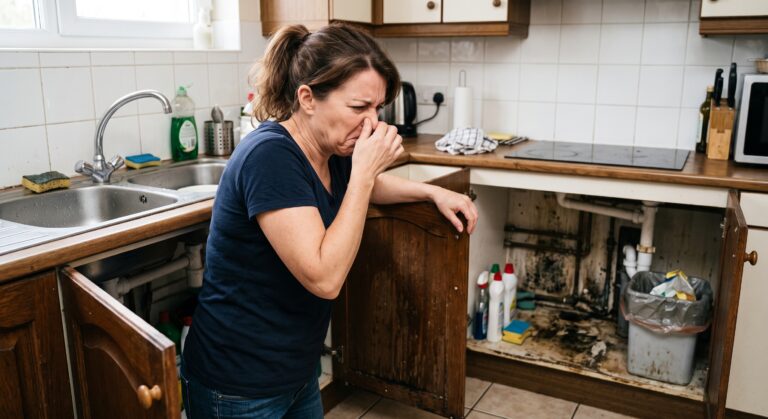
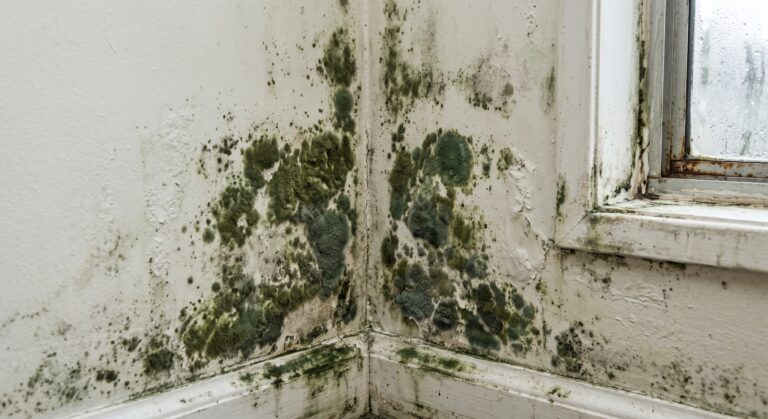
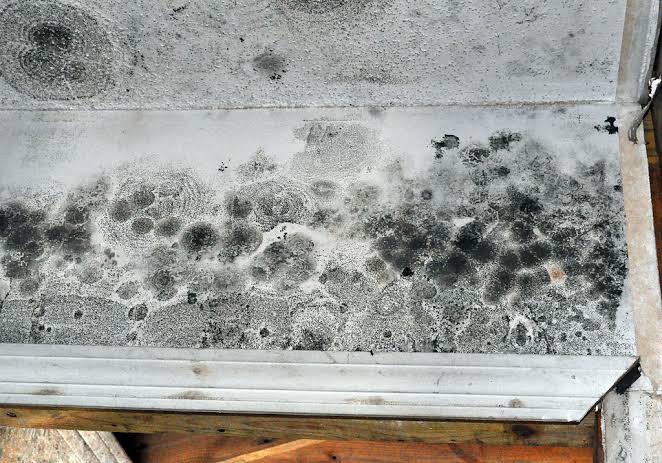
[Foto: moho negro común en la junta de una ducha vs. Stachybotrys en un panel de yeso dañado por agua]
Black mold vs. regular mold: key differences
The biggest clue isn’t the color. It’s where the mold is growing and how long that spot has been wet.
| Feature | Black mold (Stachybotrys) | Regular dark molds (Cladosporium, Alternaria, Aspergillus) |
|---|---|---|
| Color | Dark greenish-black | Black, dark green, olive, brown or gray |
| Texture | Slimy or wet when active; dry and sooty once the area dries | Powdery, velvety or fuzzy |
| Where it grows | Cellulose materials: drywall paper, ceiling tiles, wood, cardboard, wallpaper | Almost anywhere damp: grout, caulk, window frames, tiles, fabrics, dust |
| Moisture it needs | Constant water for days or weeks (leaks, floods) | Occasional dampness: steam, condensation, humidity |
| Growth speed | Slow; usually appears after other molds | Fast; often visible within days |
| Typical locations | Behind walls, under sinks, below roof leaks, in flooded basements | Bathrooms, window sills, AC vents, around sinks |
| How common | Relatively uncommon in homes | Very common; found in most homes |
| What it tells you | A serious, long-running water problem | Usually a ventilation or humidity problem |
Signs it could be Stachybotrys
None of these signs proves it, but the more of them you see, the more likely it is:
- The mold is on drywall, ceiling tiles, wood or paper, not on tile or glass.
- The area has had a leak, flood or water stain for a while.
- It looks slimy or wet, or dark and sooty on a previously wet area.
- There’s a strong musty or earthy smell, especially in a closed-off room.
- The wall or ceiling is soft, stained, bubbling or warped.
Signs it’s more likely regular mold
- It’s on shower grout, caulk, tiles, glass or window frames.
- It keeps coming back after hot showers or on cold winter mornings.
- It’s powdery or fuzzy, and wipes away fairly easily from a hard surface.
- The surface underneath is solid and dry most of the time.
Is black mold more dangerous than regular mold?
Less than its reputation suggests, but it still deserves respect.
Stachybotrys can produce mycotoxins, and that’s where the «toxic mold» label comes from. However, other common molds, including some Aspergillus species, can produce mycotoxins too. According to the CDC, there’s little evidence that inhaling black mold at home causes unique or rare illnesses, and the agency advises treating all indoor mold the same way.
What actually drives the health risk is:
- How much mold there is. A large patch behind a wall matters more than a spot on the grout, whatever the color.
- How long you’re exposed. Living for months with hidden, water-damaged materials is different from a short-lived bathroom problem.
- Who’s exposed. People with allergies, asthma, weakened immune systems or chronic lung disease, as well as young children and older adults, are more likely to react.
Common symptoms of mold exposure include a stuffy nose, coughing, wheezing, sneezing, and itchy eyes or skin. If symptoms improve when you leave the house, or anyone at home is in a higher-risk group, talk to a doctor. This article is general information, not medical advice.
What to do if you think it’s black mold
Whether it turns out to be Stachybotrys or not, the steps are almost the same.
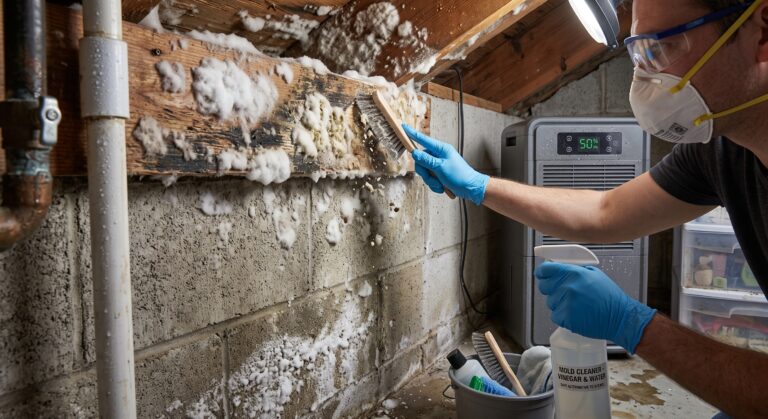
- Don’t disturb it. Scrubbing or sanding dry mold releases spores into the air. Keep the door closed and pets and children away.
- Find and stop the water. Look for a leaking pipe, roof or window, or a damp area on the other side of the wall. Without this step, cleaning won’t last.
- Measure the area. If it’s under about 10 square feet on a hard surface and the water source is fixed, it’s usually a DIY job.
- Call a professional if: the patch is larger than 10 square feet, it’s on drywall, insulation or carpet that’s soaked through, the water was sewage or floodwater, it’s inside walls or HVAC ducts, or someone at home is in a higher-risk group.
- Remove, don’t just clean, porous materials. Moldy drywall, ceiling tiles and insulation usually need to be cut out and replaced. Bleach doesn’t reach mold that has grown into them.
Should you test to confirm?
Usually not. Knowing the species doesn’t change how the mold should be removed. Testing is worth it when you’re buying or selling a home, when a doctor asks for more information, when you can smell mold but can’t find it, or to confirm a professional cleanup worked. For those cases, a professional inspection with lab analysis is far more reliable than a DIY kit.
Frequently asked questions
Is all black mold toxic?
No. Most black-colored mold in homes is a common type like Cladosporium or Alternaria. Even Stachybotrys isn’t a guaranteed health threat; the amount of mold and who’s exposed matter more.
What does black mold smell like?
Like other molds: musty and earthy, similar to wet cardboard or a damp basement. Because Stachybotrys often grows in hidden, wet places, a strong musty smell with no visible mold is a reason to look for a leak.
Can I remove black mold myself?
For a small area (under about 10 square feet) on a surface you can clean or replace, yes, as long as you wear an N95 mask, gloves and goggles and fix the moisture source. Larger areas, or mold on soaked drywall and insulation, are a job for a professional.
Does bleach kill black mold?
Bleach can clean mold off hard, non-porous surfaces like tile, but it doesn’t penetrate drywall or wood, where the mold’s roots stay alive. Moldy porous materials are usually better removed and replaced.
How fast does black mold grow?
More slowly than most household molds. Stachybotrys typically needs a material to stay wet for a week or more, which is why finding it usually means there’s been a long-running leak.