
What Does Mold Smell Like? Musty Odor Explained
Sometimes you smell mold before you ever see it. A room smells stale when you walk in, a closet smells like a damp basement, or the air conditioner gives off an odd, earthy odor. How do you know if it’s really mold?
Quick answer: mold usually smells musty, earthy and damp, often compared to wet socks, old books, wet cardboard or rotting wood. The smell comes from gases that mold releases as it grows. A strong musty smell with no visible mold often means it’s growing somewhere hidden, such as behind walls, under floors or inside air ducts, so it’s worth investigating.
What mold smells like
People describe the smell of mold in similar ways:
- Musty, like an old basement or a closet that hasn’t been opened in a long time
- Earthy, like damp soil or wet leaves
- Like wet socks or laundry left too long in the washing machine
- Like old books or wet cardboard
- Like rotting wood, especially when the mold is growing on wooden structures
The smell is usually stronger in closed rooms, in the morning after a night without ventilation, when it’s humid or rainy outside, and when you first turn on the heating or air conditioning.
Why mold smells
As mold grows and feeds, it releases gases called microbial volatile organic compounds (MVOCs). These are what your nose picks up as the musty odor. Different molds and different materials produce slightly different smells, which is why some mold smells sharp and others smell more like earth or wood.
The smell is a sign of active growth. When mold dries out and becomes dormant, the smell often fades, only to return when moisture comes back.
Smell mold but can’t see it? Where to look
Follow your nose: the smell is usually strongest near the source. Check these common hiding spots:
| Area | Where to check |
|---|---|
| Bathroom | Under the sink, behind the toilet, under the bathtub panel, inside the exhaust fan |
| Kitchen | Under the sink, behind the dishwasher and fridge, inside cabinets |
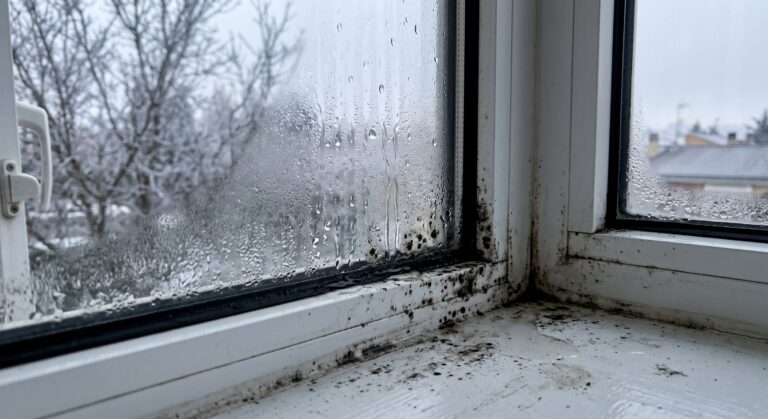
| Walls | Behind furniture on exterior walls, behind wallpaper, below windows |
| Floors | Under carpets and rugs, under laminate or vinyl flooring near water sources |
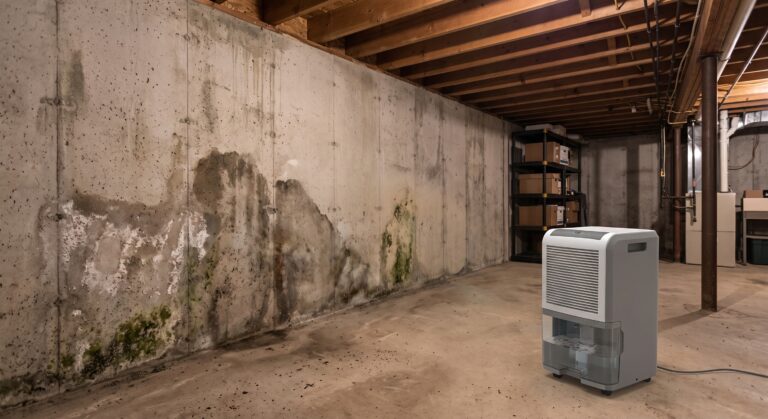
| Basement and crawl space | Joists, corners, stored boxes, around the water heater |
| Attic | Roof sheathing, insulation, around vents and chimneys |
| HVAC system | Air ducts, vents, the AC drip pan and filter |
| Laundry area | Inside the washing machine door seal and detergent drawer |
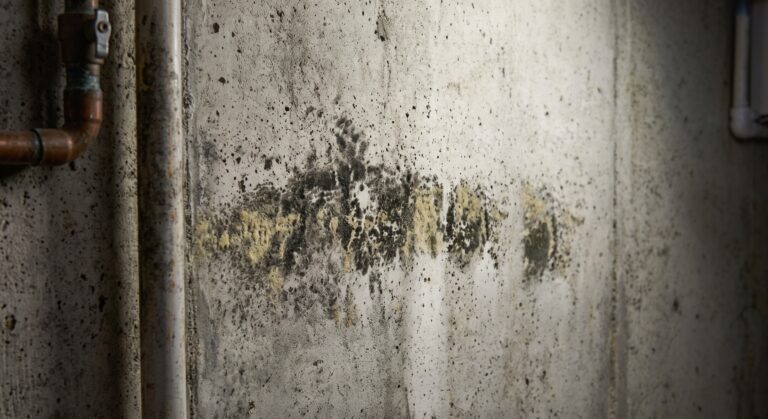
Signs that point to hidden mold include stains or discoloration on walls or ceilings, peeling or bubbling paint, warped floors or baseboards, and allergy symptoms that improve when you leave the house.
Other causes of a musty smell
Not every musty smell is mold. Before tearing into walls, rule out:
- Damp laundry or towels left in piles or in the washer
- A dry drain trap, which lets sewer gas into the room (run water in unused sinks and showers)
- A dirty AC unit or dehumidifier with standing water
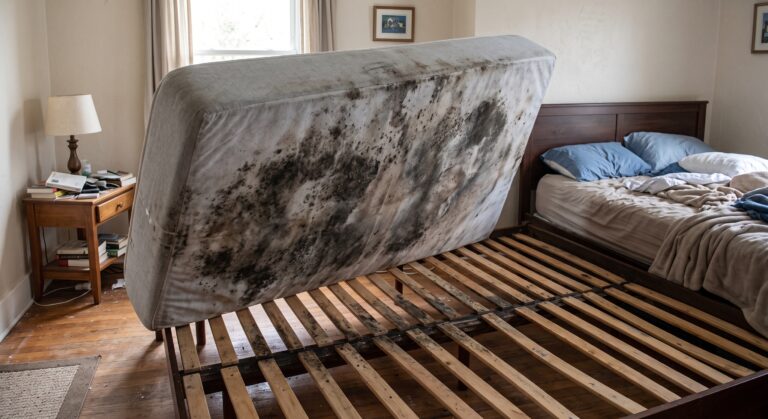
- Old carpets or upholstery that got wet at some point
- Stored items like books, clothes or boxes that absorbed moisture
If the smell stays after checking these, mold is the most likely cause. A professional mold inspector can use moisture meters and thermal cameras to find it without damaging your walls.
Is the smell of mold harmful?
The smell itself is mostly a warning sign rather than the main problem. Some people get headaches, a stuffy nose or irritated eyes and throat in rooms with a strong musty odor. The bigger concern is what the smell tells you: mold is actively growing, and it may be releasing spores into the air you breathe.
People with allergies, asthma or weakened immune systems, as well as young children and older adults, are more likely to react. If symptoms improve when you’re away from home, talk to a doctor. This article is general information, not medical advice.
How to get rid of the mold smell
Air fresheners and candles only cover the smell for a while. To get rid of it for good:
- Find and remove the mold. Clean small areas on hard surfaces yourself, wearing an N95 mask, gloves and goggles. Throw away moldy porous items like cardboard, old carpet or ceiling tiles.
- Fix the moisture source. Repair leaks, improve ventilation, and keep humidity between 30% and 50% with a dehumidifier.
- Air out the room. Open windows and use fans for a few days to clear lingering odors.
- Wash fabrics. Wash curtains, bedding and clothes in hot water, and add a cup of white vinegar or baking soda to the wash for musty-smelling items.
- Absorb what’s left. Bowls of baking soda or activated charcoal help absorb remaining odors in closets and small rooms.
- Clean the HVAC system. Replace the air filter, clean the AC drip pan, and have the ducts cleaned if the smell comes from the vents.
If the smell comes back after cleaning, the mold or moisture source hasn’t been fully found. That’s the right moment to call a professional mold inspector.
Frequently asked questions
What’s the difference between a mold smell and a mildew smell?
They’re very similar. Mildew usually has a lighter, damp smell, while mold tends to smell stronger and earthier. Both mean there’s too much moisture.
Can you smell mold if you can’t see it?
Yes. That’s very common. Mold often grows behind walls, under floors or in air ducts, and the smell is the first sign.
Why does my house smell musty only when it rains?
Rain raises humidity and can let water into basements, crawl spaces or walls. Dormant mold becomes active again and starts releasing its smell.
Why does my AC smell like mold?
Mold can grow on the evaporator coil, the drip pan or inside ducts. Replace the filter, clean the drip pan and have the system serviced if the smell continues.
Does the smell mean the mold is dangerous?
Not necessarily, but it means mold is actively growing. Find the source and remove it, especially if anyone at home has allergies or asthma.