
Green Mold on Walls: Is It Dangerous?
Green spots or fuzzy patches on a wall are hard to ignore. Maybe they showed up behind a piece of furniture, in a bedroom corner, or around a window. The big question is simple: is it dangerous?
Quick answer: green mold on walls is common and usually caused by condensation, a leak or poor ventilation. It’s typically Penicillium, Aspergillus or Cladosporium. For most healthy people, a small patch isn’t an emergency, but it can trigger allergies and breathing problems, especially in children and people with asthma. It should be cleaned promptly, and the moisture that caused it should be fixed so it doesn’t come back.
What green mold is
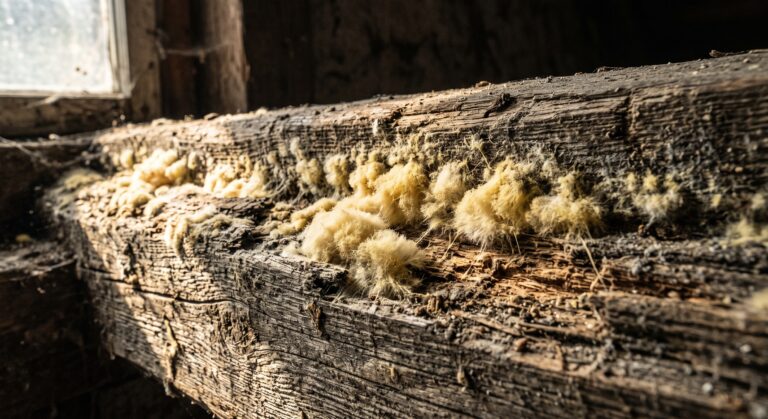
«Green mold» isn’t one species. It’s a name for several common molds that look green, blue-green or olive at some stage of growth. The most common on walls are:
| Mold | How it looks | Where it usually grows |
|---|---|---|
| Penicillium | Blue-green and fuzzy, sometimes with a white edge | Water-damaged drywall, wallpaper, insulation |
| Aspergillus | Green, yellow-green or gray; powdery | Walls, dust, HVAC vents, damp corners |
| Cladosporium | Olive-green to dark green; velvety | Around windows, on cool walls, behind furniture |
| Trichoderma | Starts white, turns bright green | Damp wood, wallpaper, drywall |
You can’t tell which one it is just by looking, and you don’t need to: they’re all cleaned and prevented the same way.
Why green mold grows on walls
- Condensation. Warm, humid indoor air hits a cold exterior wall and turns into water. It’s most common in winter, in corners and behind furniture.
- Leaks. A leaking pipe, roof or window keeps the wall damp from the inside or outside.
- Poor ventilation. Bedrooms, bathrooms and closets without fresh air stay humid.
- High indoor humidity. Drying clothes indoors, long showers and cooking without a fan all add moisture.
- Past water damage. A flood or leak that wasn’t dried properly can leave moisture inside the wall.
[Foto: moho verde en la esquina de un dormitorio, detrás de un mueble]
Is green mold dangerous?
Green mold is not more or less dangerous than other colors. The risk depends on how much there is, how long you’re exposed and who’s living in the home.
For most healthy adults, a small patch causes mild or no symptoms. Common reactions include a stuffy or runny nose, sneezing, coughing, itchy eyes or skin, and a sore throat.
The risk is higher for:
- People with allergies or asthma, whose symptoms can get worse.
- Babies, young children and older adults.
- People with weakened immune systems, who can get lung infections from molds like Aspergillus.
- People with chronic lung conditions.
Green mold in a bedroom deserves extra attention, because you spend many hours breathing the air there every night.
If symptoms improve when you’re away from home, or anyone at home is in a higher-risk group, talk to a doctor. This article is general information, not medical advice.
How to remove green mold from walls
If the patch is smaller than about 10 square feet and the wall isn’t soft or crumbling, you can usually clean it yourself.
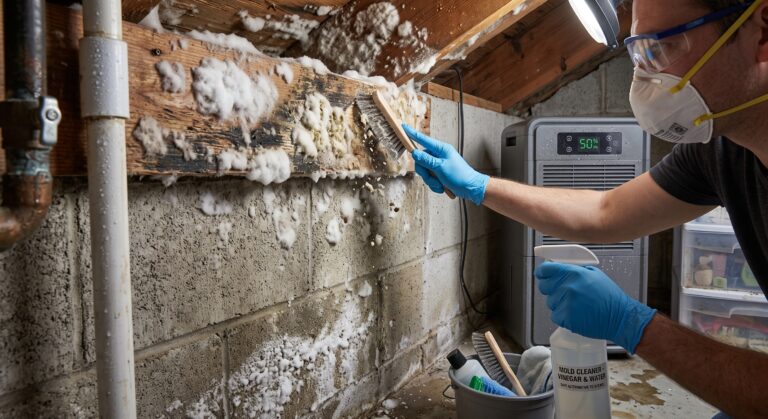
What you’ll need: an N95 mask, rubber gloves, safety goggles, a spray bottle, dish soap or a mold cleaner, a soft brush or sponge, clean cloths and a fan or dehumidifier.
- Protect yourself. Put on the mask, gloves and goggles, and keep children and pets out of the room.
- Ventilate. Open a window and, if possible, place a fan blowing air outside.
- Move furniture away from the wall so you can reach the whole area and let it dry later.
- Lightly mist the mold with water or cleaner. This stops spores from spreading into the air.
- Clean the surface. On painted walls, wipe gently with warm water and dish soap or a mold cleaner. Avoid scrubbing hard, which can damage the paint and spread spores.
- Dry the wall completely. Use a fan or dehumidifier for at least 24 to 48 hours.
- Check again after a week. If the mold comes back, the moisture problem is still there.
What about drywall?
Drywall has a paper surface that mold can grow into. If the stain doesn’t come out, the wall feels soft, or the paint is bubbling, the mold is likely inside the drywall. In that case, the affected section usually needs to be cut out and replaced.
Avoid using bleach on drywall and painted walls: it can discolor the surface, and it doesn’t reach mold growing inside porous materials.
When to call a professional
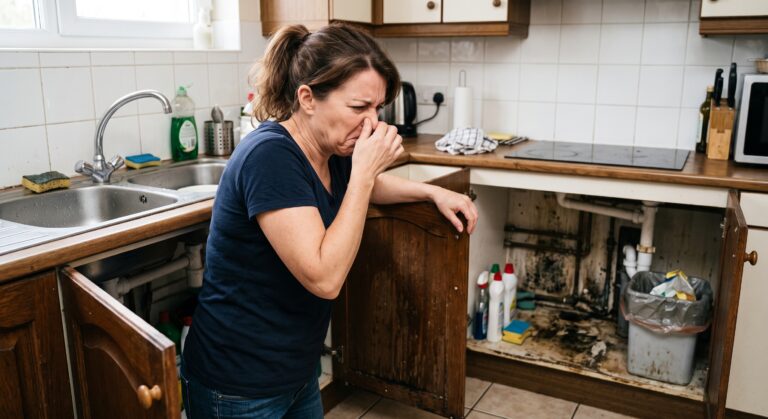
Call a mold remediation company if the mold covers more than about 10 square feet, keeps coming back after cleaning, is on soft or damaged drywall, appeared after a leak or flood, or if you notice a strong musty smell but can’t see where it’s coming from. It’s also wise to get help if anyone at home has asthma or a weakened immune system.
How to prevent green mold on walls
- Keep humidity between 30% and 50%. A cheap hygrometer tells you the level; a dehumidifier brings it down.
- Ventilate every day. Open windows for 10 to 15 minutes, especially in bedrooms in the morning.
- Use exhaust fans in the bathroom and kitchen.
- Leave a gap behind furniture. Keep wardrobes and beds a few inches away from exterior walls so air can circulate.
- Avoid drying clothes indoors, or use a dehumidifier if you have to.
- Fix leaks right away and dry any water damage within 24 to 48 hours.
- Use mold-resistant paint in bathrooms and rooms that tend to get damp.
Frequently asked questions
Is green mold more dangerous than black mold?
No. Color doesn’t show how dangerous a mold is. Both green and black molds can cause allergy and breathing symptoms, and both should be removed.
Can I sleep in a room with green mold?
A small patch is unlikely to cause harm to healthy adults, but it’s best to clean it quickly. If the mold is large, you can smell it strongly, or you have asthma or allergies, sleep elsewhere until it’s removed.
Can I paint over green mold?
No. The mold will grow back through the paint. Clean the wall, let it dry completely, and then use a mold-resistant paint or primer.
Why does green mold keep coming back on the same wall?
Because the wall stays damp. The most common causes are condensation on a cold exterior wall, furniture blocking air flow, or a hidden leak.
Does vinegar kill green mold on walls?
White vinegar can help on painted surfaces, but it isn’t a complete fix on its own. Cleaning, drying and reducing humidity are what stop it for good.