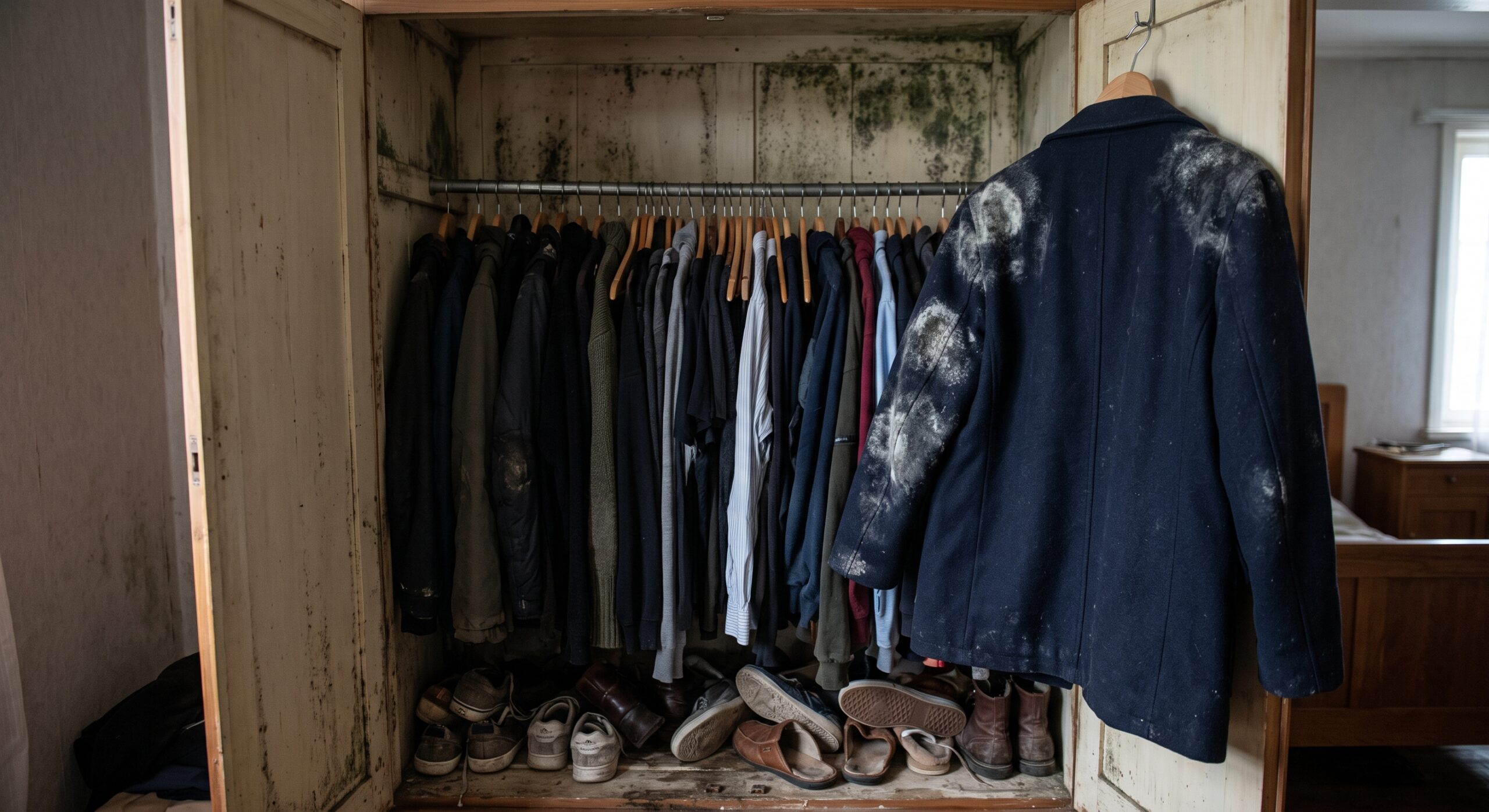
Mold in Closets: How to Clean Clothes and Prevent It
You open the closet and notice a musty smell. Then you find white or dark spots on a jacket you haven’t worn in a while, or on a pair of leather shoes at the back. Closets are one of the easiest places for mold to grow, because they’re dark, closed and full of fabric.
Quick answer: closet mold grows when humid air gets trapped with little air flow, especially in closets on exterior walls or next to bathrooms. Most clothes can be saved by washing them in hot water with vinegar or an oxygen bleach, and drying them completely. Clean the closet walls and shelves, let it air out, and then keep it dry with good air flow, moisture absorbers and lower indoor humidity.
Why closets get mold
- Little air flow. Closet doors stay closed, and clothes packed tightly trap air.
- Exterior walls. Closets on outside walls are colder, so moisture condenses on the wall behind the clothes.
- Next to a bathroom. Shared walls can bring in steam or moisture from leaks.
- Damp clothes put away. Clothes, towels or shoes that aren’t fully dry add moisture every time.
- High indoor humidity. Anything above about 60% for long periods makes closet mold much more likely.
- Stored items. Cardboard boxes, old bags and fabrics on the floor are perfect food for mold.
Signs of mold in your closet
- A musty, damp smell when you open the door
- White, gray, green or black spots on clothes, shoes, bags or belts
- Dark spots on the back wall, corners or ceiling of the closet
- Clothes that feel slightly damp or smell stale even after washing
- Leather items with a white, powdery coating
[Foto: moho blanco en un zapato de cuero]
How to clean a moldy closet
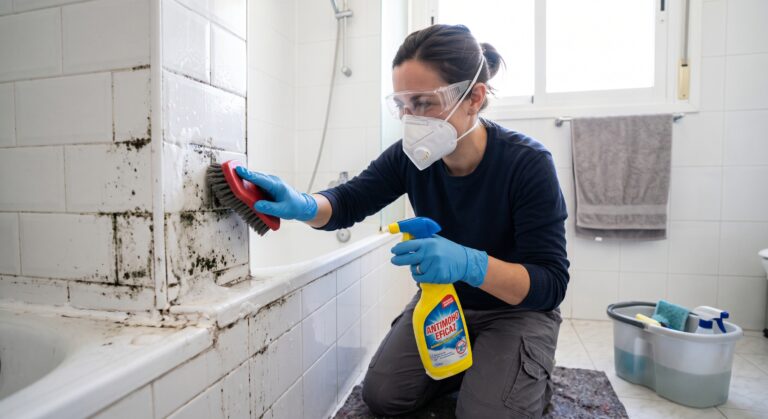
- Protect yourself. Wear gloves and an N95 mask.
- Empty the closet completely. Take everything outside or to another room to sort.
- Vacuum the floor, shelves and corners, ideally with a HEPA vacuum.
- Clean walls and shelves with a mold cleaner or warm water with dish soap. Wipe gently on painted walls.
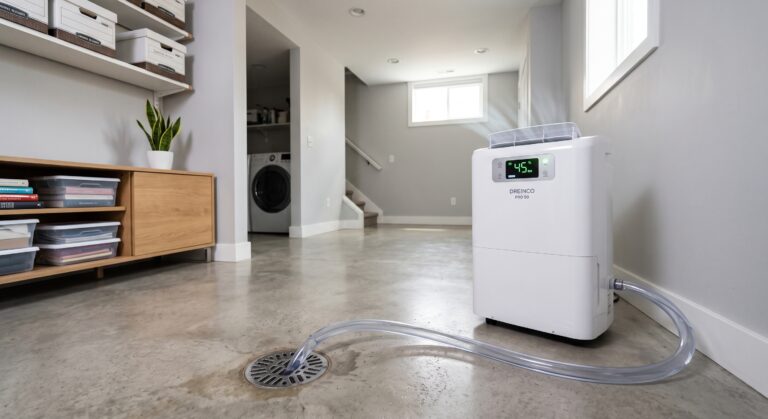
- Dry completely. Leave the door open and run a fan or dehumidifier for at least 24 hours.
- Check the wall. If the stain returns quickly or the wall feels damp, there may be a leak or condensation problem behind it.
How to get mold out of clothes
- Take them outside and brush off visible mold with a soft brush, so spores don’t spread indoors.
- Pre-soak for about an hour in warm water with 1 cup of white vinegar, or with an oxygen bleach (sodium percarbonate) following the label.
- Wash in the hottest water the care label allows, with your usual detergent.
- Check before drying. If spots or smell remain, repeat the soak and wash. Heat from the dryer can set stains.
- Dry completely, ideally in the sun, which helps kill mold and remove odors.
Use chlorine bleach only on white cotton, and never mix it with vinegar. Take dry-clean-only items to a professional cleaner and tell them about the mold.
Shoes, bags and leather
- Leather: take items outside, brush off the mold, then wipe with a cloth dampened in a mix of equal parts water and white vinegar or rubbing alcohol. Let them dry away from direct heat, then apply leather conditioner.
- Fabric shoes and sneakers: many can be washed in the machine in a laundry bag; let them air dry.
- Items to throw away: heavily moldy cardboard boxes, cheap fabric bags and anything that still smells musty after cleaning.
How to prevent mold in closets
- Only put away dry clothes. Let clothes, towels and shoes dry completely before storing them.
- Leave space between items. Don’t pack clothes too tightly; air needs to move.
- Open the closet regularly. Leave the door open for an hour or two a few times a week, or use louvered doors.
- Leave a gap from exterior walls. Keep clothes and boxes a few inches from the back wall.
- Use moisture absorbers. Calcium chloride absorbers, silica gel packs or a small closet dehumidifier help in damp closets.
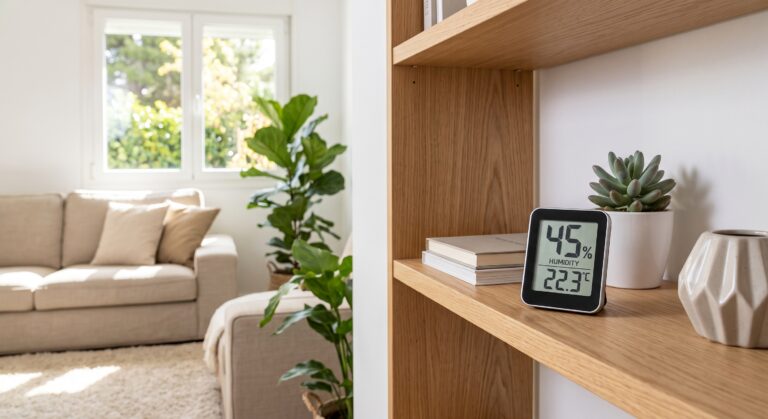
- Control room humidity. Keep indoor humidity between 30% and 50%.
- Store smart. Use breathable cotton garment bags instead of plastic, and plastic bins instead of cardboard boxes.
- Add a little light and warmth. A small LED closet light or leaving the light on briefly can help dry the air in very damp closets.
- Clean regularly. Vacuum and wipe the closet a few times a year.
When to call a professional
Call a professional if mold keeps coming back on the closet walls, the wall feels damp or soft, you suspect a leak from a nearby bathroom, or the mold covers a large area. These are signs of a hidden moisture problem inside the wall.
Frequently asked questions
Can moldy clothes be saved?
Most can. Washing them in hot water with vinegar or oxygen bleach and drying them fully usually removes both mold and smell. Delicate fabrics may need professional cleaning.
Is it safe to wear clothes that had mold?
Yes, once they’ve been properly washed and dried and no longer smell musty. If they still smell, wash them again or throw them away.
Why do my clothes smell musty in the closet?
The closet is too humid or doesn’t get enough air. Clothes may also have been put away slightly damp.
Does vinegar kill mold on clothes?
White vinegar helps remove mold and musty odors when used in a pre-soak or the wash cycle. For tougher stains, oxygen bleach works well on most colors.
Can mold spread from one piece of clothing to others?
Yes. Spores can move to nearby items in a closed closet, so clean everything in the area and let the closet dry fully.