
Mold Remediation Cost: 2026 Price Guide
If you’ve found more mold than you can safely clean yourself, the next question is usually: how much will a professional cost? The answer varies a lot, from a few hundred dollars for a small bathroom job to tens of thousands for a whole house after a flood.
Quick answer: most homeowners pay somewhere around $1,200 to $4,000 for professional mold remediation, with small jobs starting around $500 and large or whole-house jobs reaching $10,000 to $30,000 or more. Contractors often price by area, roughly $10 to $25 per square foot of affected space. The final price depends on how much mold there is, where it is, what has to be removed and replaced, and what caused it. Always get at least three written quotes.
Average mold remediation cost
All prices are approximate U.S. ranges and vary by region, contractor and the details of your home.
| Typical cost | |
|---|---|
| Small job (one small area) | About $500 – $1,500 |
| Typical job (one room or area) | About $1,200 – $4,000 |
| Large job (several rooms, structural materials) | About $4,000 – $10,000 |
| Whole house or major flood damage | About $10,000 – $30,000+ |
| Price per square foot of affected area | About $10 – $25 |
Cost by size of the affected area
| Affected area | Approximate cost |
|---|---|
| Under 10 sq ft | Often a DIY job; about $500 – $1,000 if hired out |
| 10 – 50 sq ft | About $500 – $1,500 |
| 50 – 100 sq ft | About $1,000 – $2,500 |
| 100 – 200 sq ft | About $2,000 – $5,000 |
| 200 – 400 sq ft | About $4,000 – $8,000 |
| Over 400 sq ft | About $8,000+ |
The size is the area that has to be treated, not the size of the whole room. A 150 sq ft bathroom with mold on one 20 sq ft wall is a small job; a basement where mold has spread behind all the drywall is a large one.
Cost by location in the home
| Location | Approximate cost | Why it varies |
|---|---|---|
| Bathroom | About $500 – $1,500 | Usually small areas; more if drywall, subfloor or a leak behind the shower is involved |
| Kitchen (under sink, behind appliances) | About $500 – $2,500 | Cabinets and flooring may need removing |
| Basement | About $1,500 – $4,000+ | Often large areas, wood joists, drywall and carpet; more if waterproofing is needed |
| Attic | About $1,500 – $5,000+ | Large roof surfaces, hard access; may include ventilation fixes |
| Crawl space | About $1,000 – $4,000+ | Tight access; encapsulation adds more |
| HVAC system and ducts | About $500 – $3,000+ | Depends on cleaning vs. replacing ducts and parts |
| Inside walls | About $500 – $3,000+ per wall section | Drywall and insulation removal and replacement |
| Whole house | About $10,000 – $30,000+ | After floods, long-term leaks or widespread growth |
What’s usually included
A professional remediation job typically follows these steps:
- Inspection and assessment of the mold and moisture source (sometimes charged separately)
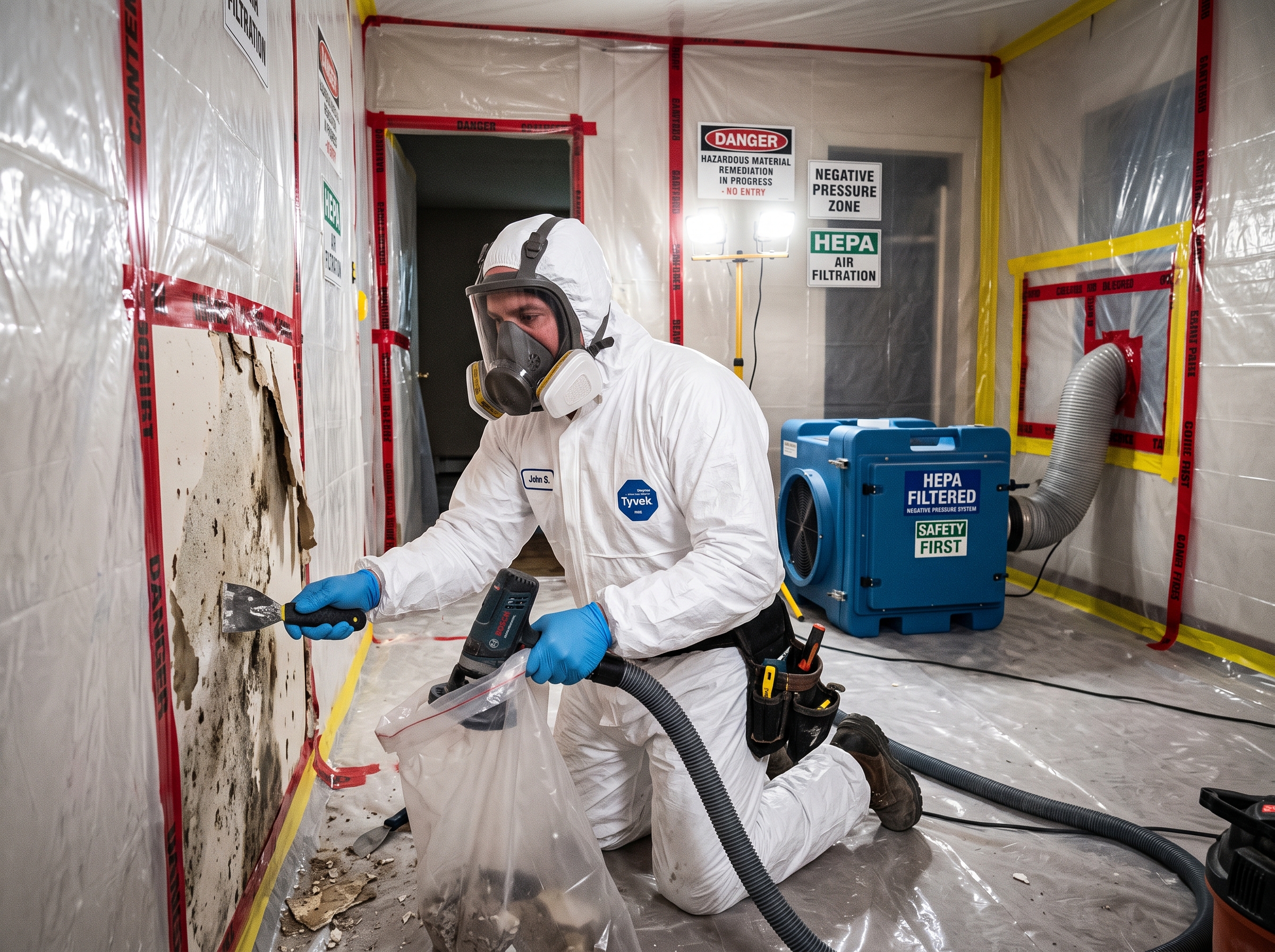
- Containment: plastic sheeting and sealed doorways to keep spores from spreading
- Air filtration: negative air machines and HEPA air scrubbers
- Removal of moldy porous materials such as drywall, insulation and carpet
- Cleaning of salvageable surfaces with HEPA vacuums and antimicrobial cleaners
- Drying of the area with dehumidifiers and air movers
- Sealing of treated wood or surfaces with an encapsulant, if needed
- Disposal of moldy materials
- Final cleaning and, ideally, post-remediation verification
Often not included (check your quote):
- Mold inspection and testing (often $300 – $800+, separately)
- Fixing the moisture source (plumbing, roofing, waterproofing)
- Rebuilding: new drywall, paint, flooring and cabinets
- Independent clearance testing
- Contents cleaning (furniture, clothing, belongings)
What makes mold remediation more expensive
- A larger affected area or mold in several rooms
- Hidden mold inside walls, ceilings, subfloors or ducts
- Hard-to-reach places like attics and crawl spaces
- Structural damage: rotted joists, subfloors or framing that must be replaced
- Contaminated water: sewage or floodwater requires extra precautions
- HVAC contamination, which can spread mold through the house
- Your location: labor costs are higher in big cities and some states
- Urgency: emergency or weekend service often costs more
- Rebuilding: replacing drywall, flooring, cabinets and finishes after removal
How to save money
- Act early. Small mold problems are much cheaper to fix than ones that have spread.
- Fix the moisture source first. Otherwise you may pay twice.
- Get at least three written quotes and compare what each one includes.
- Separate inspection and remediation. Hiring an independent inspector avoids a company inflating the problem it will then fix.
- Do small, safe jobs yourself: areas under about 10 sq ft on hard surfaces.
- Handle rebuilding separately if you’re comfortable hiring a general contractor or doing finish work yourself.
- Check your insurance before work starts.
Does insurance cover mold remediation?
Sometimes. Homeowners insurance often covers mold damage when it’s caused by a sudden, covered event, such as a burst pipe or appliance leak, and you reported it promptly. It usually doesn’t cover mold from long-term leaks, poor maintenance or high humidity, and many policies have mold limits (for example, a cap on how much they’ll pay). Flood damage usually needs separate flood insurance. Call your insurer and document everything before work starts.
DIY vs. professional: when to hire a pro
| DIY is usually fine | Hire a professional |
|---|---|
| Under about 10 sq ft | Over about 10 sq ft |
| Hard surfaces (tile, glass, sealed wood) | Porous materials soaked through (drywall, insulation, carpet) |
| Cause is known and fixed | Hidden mold, musty smell with no visible source |
| Clean water (condensation, small leak) | Sewage or floodwater |
| Healthy adults at home | Anyone with asthma, allergies or a weakened immune system |
Frequently asked questions
Is black mold removal more expensive?
Not because of the color. The cost depends on how much mold there is, where it is and what must be removed. “Black mold” jobs cost more only when they involve large, water-damaged areas.
How long does mold remediation take?
Small jobs can take a day. Most typical jobs take 1 to 5 days; large or whole-house jobs can take a week or more, plus rebuilding time.
Do I need a mold inspection before remediation?
Not always. If the mold is visible and its cause is clear, a remediation company can often assess it. An independent inspection is worth it for hidden mold, large jobs, home sales or insurance claims.
Can I stay in my house during mold remediation?
For small, well-contained jobs, often yes. For large jobs, or if someone at home is at higher risk, the company may recommend staying elsewhere.
Is mold remediation worth the cost?
If the mold is widespread or inside walls, yes. Professional removal protects your health, prevents further damage and helps when you sell your home.
Sources
- U.S. Environmental Protection Agency (EPA): A Brief Guide to Mold, Moisture, and Your Home
- Centers for Disease Control and Prevention (CDC): Mold
Last reviewed: October 2026. This article is for general information and is not medical, legal or professional advice.