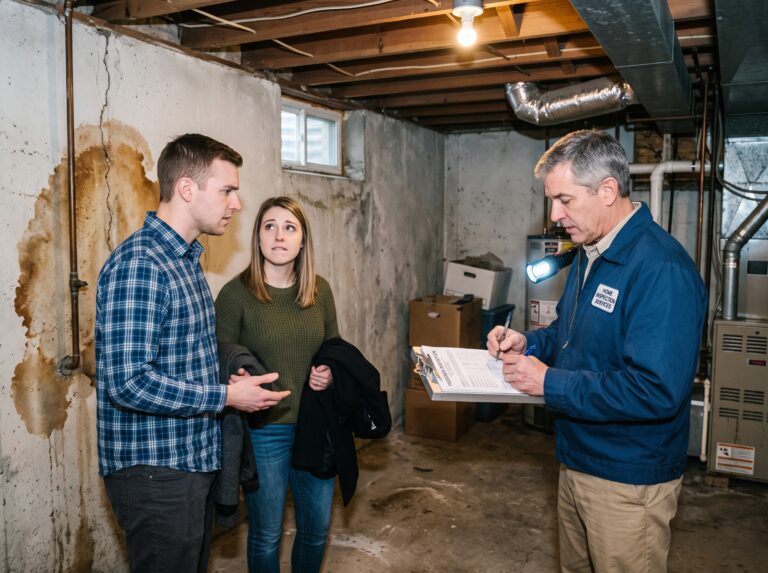

Mold Inspection Cost and What to Expect
If you smell mold but can’t find it, you’re buying a home, or you want proof that a cleanup worked, a professional mold inspection can give you answers. But what does it cost, and what do you actually get?
Quick answer: a professional mold inspection typically costs about $300 to $800 for an average home, with small homes or single areas at the lower end and large homes or extensive testing reaching $1,000 or more. The visit usually includes a visual inspection, moisture readings, often thermal imaging, and air or surface samples sent to a lab. You’ll get a written report explaining where mold is, what’s causing it and what to do next. For the most objective results, hire an inspector who doesn’t also do mold removal.
How much does a mold inspection cost?
Approximate U.S. ranges; prices vary by region, home size and how many samples are taken.
| Service | Typical cost |
|---|---|
| Visual inspection only | About $200 – $400 |
| Standard inspection with a few samples (small to average home) | About $300 – $600 |
| Large home or detailed inspection | About $600 – $1,000+ |
| Extra air or surface samples (lab fees) | About $30 – $100+ per sample |
| Post-remediation clearance testing | About $250 – $600 |
| Inspection as an add-on to a home inspection | Often $100 – $400 extra |
Some remediation companies offer “free inspections.” They can be useful for getting a quote, but remember they have an interest in finding work to do.
What affects the price
- Size of the home and the number of areas inspected
- Number and type of samples (air, surface swab, tape lift, wall cavity)
- Access: attics, crawl spaces and HVAC systems take more time
- Your location and local labor rates
- Rush service or weekend visits
- Detailed reports for legal, insurance or real estate purposes
When a mold inspection is worth it
You usually don’t need an inspection if you can see the mold, it’s small and you know the cause. Just clean it and fix the moisture. An inspection makes sense when:
- You smell mold but can’t find it
- You suspect mold inside walls, ceilings, floors or HVAC ducts
- There’s been a leak, flood or water damage
- You’re buying or selling a home
- Someone at home has health concerns and you want to know the extent of the problem
- You need documentation for insurance, a landlord or a legal dispute
- You want to confirm that a professional cleanup worked
What to expect during a mold inspection
A typical inspection of an average home takes about 1 to 3 hours.
- Interview. The inspector asks about your concerns, symptoms, past leaks or floods, and where you’ve seen or smelled mold.
- Visual inspection. They check every room, plus the basement, attic, crawl space, bathrooms, kitchen, windows and HVAC system, looking for mold, stains and water damage.
- Moisture readings. A moisture meter checks walls, floors and ceilings for hidden dampness.
- Thermal imaging (often included). An infrared camera shows cold, damp spots that can point to leaks or hidden moisture.
- Humidity and temperature readings in different rooms.
- Sampling (if needed):
- Air samples: a pump draws air through a cassette, inside and usually one outdoors for comparison.
- Surface samples: a swab or tape lift from a visible spot to identify the mold type.
- Wall cavity samples: a small hole in the wall to sample air inside.
- Lab analysis. Samples are sent to a lab; results usually take 2 to 5 business days.
Before the visit: don’t clean, paint over or disturb suspected mold, and keep windows closed for about 12 hours beforehand if air samples will be taken, so results aren’t skewed. Ask the inspector for any specific instructions.
What’s in the report
A good inspection report should include:
- Where mold was found, with photos
- Moisture readings and likely sources of moisture
- Lab results, with indoor vs. outdoor comparisons explained in plain language
- An estimate of the affected area
- Clear recommendations: what needs cleaning, removal or repair, and whether professional remediation is needed
- A remediation plan or scope of work that contractors can quote on
If lab numbers don’t make sense to you, ask the inspector to explain them. Mold spores are always present in air; what matters is how indoor levels and types compare with outdoor air and with other rooms.
How to choose a mold inspector
- Independent: choose an inspector who doesn’t also do mold removal, to avoid a conflict of interest.
- Certified and licensed: look for recognized certifications (for example, from the American Council for Accredited Certification or InterNACHI). Some states, such as New York, Texas, Florida and Louisiana, require mold assessors to be licensed; check your state’s rules.
- Insured: ask for proof of liability insurance.
- Accredited lab: samples should go to a lab accredited for mold analysis (for example, through the AIHA).
- Clear quote: a written price that says how many samples are included and the cost of extras.
- Sample report: ask to see an example report, so you know what you’ll get.
- Reviews and references from recent customers.
Red flags
- Offering a “free inspection” that always ends with an expensive remediation quote
- Pushing you to sign a remediation contract on the spot
- Scare tactics about “toxic mold” without clear evidence
- Taking many samples without explaining why
- No written report, or a report with only lab numbers and no explanation
- No license where your state requires one
Frequently asked questions
Is a mold inspection worth the money?
It’s worth it when mold is hidden, the problem might be large, you’re buying or selling a home, or you need documentation. For a small, visible spot with an obvious cause, you can usually skip it.
Are home mold test kits as good as a professional inspection?
No. DIY kits can show that mold spores exist (they always do), but they can’t find hidden mold or moisture, and they’re hard to interpret. A professional inspection is much more reliable.
Does a home inspection include mold?
A standard home inspection may note visible signs of moisture or mold, but it isn’t a mold inspection. Mold testing is usually an add-on.
Who pays for a mold inspection when buying a house?
Usually the buyer, as part of their due diligence, but it can be negotiated with the seller.
Does insurance pay for mold inspection?
Sometimes, if the mold is linked to a covered event, such as a burst pipe. Check with your insurer before booking.
Sources
- U.S. Environmental Protection Agency (EPA): A Brief Guide to Mold, Moisture, and Your Home
- Centers for Disease Control and Prevention (CDC): Mold
Last reviewed: October 2026. This article is for general information and is not medical, legal or professional advice.