
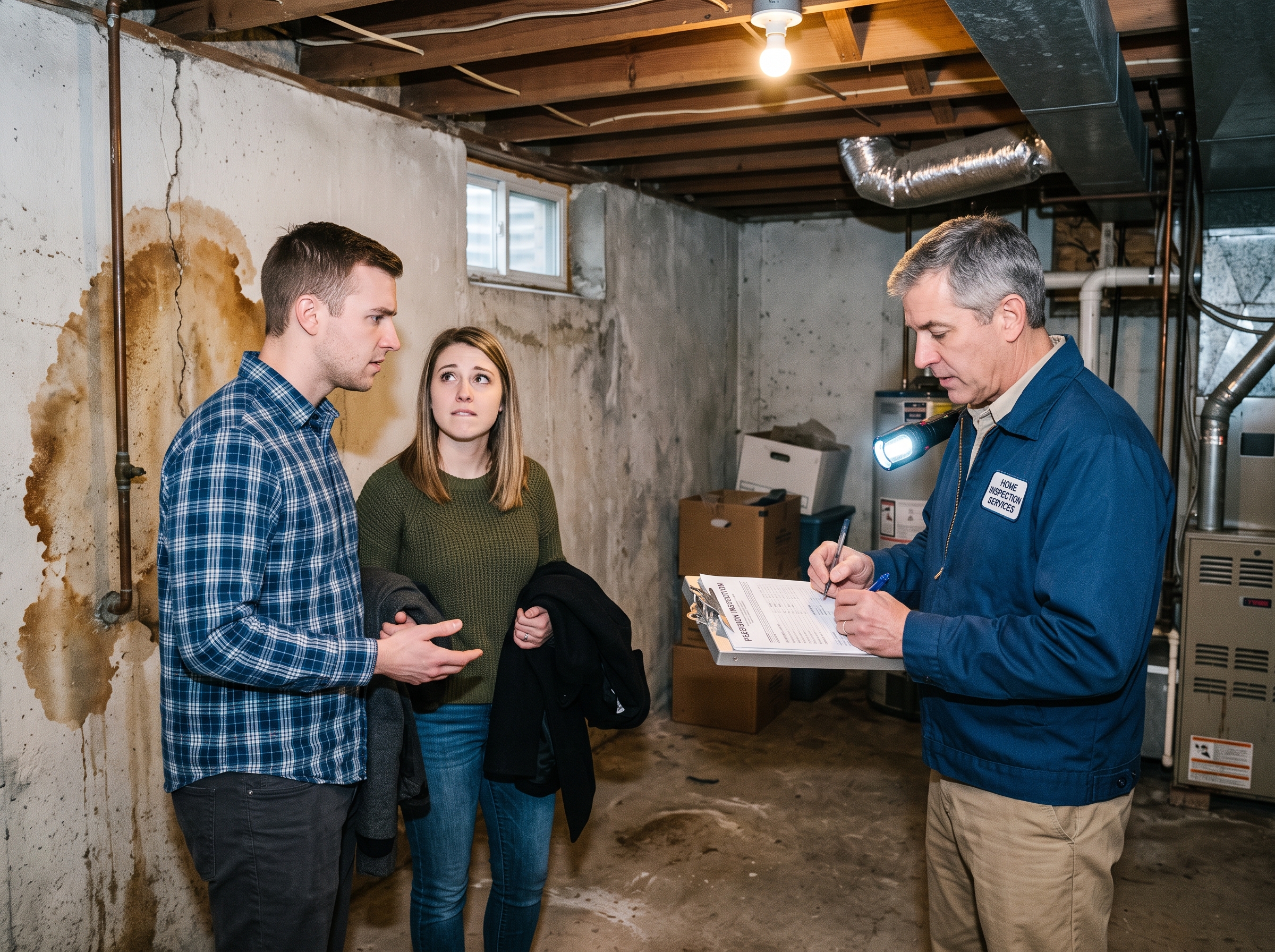
Mold Found During Home Inspection: What Buyers Should Do
You’ve found a home you love, made an offer, and then the inspection report mentions “possible mold” or “suspected microbial growth.” It’s a stressful moment, but it doesn’t have to end the deal.
Quick answer: mold found during a home inspection is common and often fixable. Act quickly, before your inspection contingency deadline: get a specialized mold inspection to learn how big the problem is and what’s causing it, then get a remediation estimate. With that information, you can ask the seller to fix it with a qualified company, ask for a price reduction or credit, or walk away if the problem is severe. Mold itself is usually less important than the moisture problem behind it.
Note: this article is general information, not legal or real estate advice. Contract terms and disclosure laws vary by state. Talk to your real estate agent and, if needed, a real estate attorney.
First steps after the inspection report
- Check your deadlines. Most purchase contracts have an inspection contingency period (often around 7 to 14 days) to request repairs or cancel. Ask your agent exactly how many days you have left.
- Read the report wording carefully. Home inspectors often write “suspected mold” or “microbial growth” because they can’t confirm mold without testing. Note where it was found and whether they mention water damage, leaks or high humidity.
- Book a specialized mold inspection quickly. A mold inspector can find out how much mold there is, whether it’s hidden in walls, and what’s causing it.
- Get a remediation estimate. Ask one or two mold remediation companies to quote the work, so you know the real cost.
- Review the seller’s disclosure. Check whether past leaks, flooding or mold were disclosed. Many states require sellers to disclose known material defects.
- Talk to your agent about the best way to negotiate, based on your market and contract.
How serious is it?
| Usually minor | Usually more serious |
|---|---|
| A few spots in a bathroom, on window sills or in a closet | Mold covering large areas of walls, ceilings or the basement |
| Surface mold on a few basement joists, wood still solid | Mold inside walls, under floors or in the HVAC system |
| Clear, simple cause (poor bathroom ventilation, condensation) | Ongoing leaks, foundation water problems or flood history |
| Small, inexpensive fix | Rotten wood, structural damage, roof problems |
| Strong musty smell throughout the house |
The key question isn’t just “is there mold?” but “why is there mold, and how expensive is it to fix that cause?” A small patch from a bathroom without a fan is a simple fix. A wet basement with a failing foundation is a much bigger issue.
Your options as a buyer
| Option | How it works | Pros | Cons |
|---|---|---|---|
| Ask the seller to remediate | Seller hires a qualified company before closing | You move into a home that’s already fixed | You don’t control the quality; work may be rushed |
| Ask for a credit or price reduction | Seller lowers the price or gives a credit at closing | You choose the company and control the work | You pay upfront and handle it after moving in |
| Escrow holdback | Part of the seller’s proceeds is held to pay for the work after closing | Money is guaranteed for repairs | Needs lender and title company approval |
| Accept as-is | You buy without changes | Keeps the deal simple | You take on all the risk and cost |
| Walk away | Cancel within your contingency period | Avoids a major problem | You lose the home and inspection costs |
If the seller does the remediation, ask for:
- A licensed or certified remediation company (not a handyman)
- A written scope of work you can review before it starts
- Repair of the moisture source, not just mold removal
- Independent clearance testing after the work, with results shared with you
- Copies of invoices, reports and any warranty, transferable to you
- Time for a re-inspection before closing
Questions to ask the seller
- Have there been leaks, floods or water damage? When, and how were they fixed?
- Has there been mold before? Was it professionally removed? Are there reports?
- Have there been insurance claims for water or mold?
- Does the basement or crawl space get wet after heavy rain?
- How old are the roof, plumbing and water heater?
- Is there a sump pump or dehumidifier, and does it stay with the house?
When to consider walking away
- Mold is widespread, inside many walls, or throughout the HVAC system
- There’s serious water intrusion: foundation problems, a failing roof, or a history of flooding
- Wood framing, subfloors or roof sheathing are rotting
- The seller refuses to fix it or to lower the price, and the cost is more than you can handle
- The seller hid known problems that you’ve now discovered
- Someone in your family has asthma, a weakened immune system or other health concerns, and you’re not comfortable with the risk
Frequently asked questions
Should I buy a house with mold?
Often yes, if the mold is limited, the cause is fixable and the price reflects the cost of repairs. Get a mold inspection and remediation estimate before deciding.
Who pays for mold remediation when buying a house?
It’s negotiable. The seller may pay for the work, offer a credit, or reduce the price. The buyer usually pays for their own inspections.
Is mold a deal breaker?
Not usually. It becomes a deal breaker when it’s widespread, tied to serious water or structural problems, or the seller won’t negotiate.
Can a seller hide mold?
Many states require sellers to disclose known defects, including mold and water damage. If you think a seller knowingly hid a problem, talk to a real estate attorney.
Will mold affect my mortgage or insurance?
It can. Some lenders may require repairs before closing, and insurers may ask about past water damage. Let your agent, lender and insurer know early.
Sources
- U.S. Environmental Protection Agency (EPA): A Brief Guide to Mold, Moisture, and Your Home
- Centers for Disease Control and Prevention (CDC): Mold
Last reviewed: October 2026. This article is for general information and is not medical, legal or professional advice.