Mold After a Hurricane or Flood: Recovery Guide
After a hurricane or flood, mold is one of the most common and long-lasting problems homeowners face. Water soaks walls, floors and belongings, power is often out, and help can be hard to find. Mold can start growing within 24 to 48 hours, so knowing what to do, and in what order, makes a real difference.
Quick answer: after a flood, put safety first: don’t enter until it’s safe, and protect yourself from contaminated water. Document the damage, contact your insurer and, if a disaster has been declared, FEMA. Then remove water and soaked materials as quickly as possible, dry the structure, and clean what can be saved. For large or contaminated floods, use a professional water damage and mold remediation company, and choose it carefully to avoid storm-chasing scams.
Note: this article is general information. Always follow instructions from local emergency officials, and talk to a doctor if you have health concerns.
Safety first
Before thinking about mold:
- Return only when officials say it’s safe.
- Electricity: don’t enter standing water if the power may be on. Have an electrician check wiring and appliances that got wet.
- Gas: if you smell gas, leave and call the gas company from outside.
- Structure: watch for sagging ceilings, cracked walls and weakened floors.
- Carbon monoxide: never run generators, pressure washers or fuel-powered equipment indoors, in garages or near windows.
- Contaminated floodwater: treat it as if it contains sewage and chemicals. Wear rubber boots and waterproof gloves, and wash your hands often.
- Injuries: cover cuts, and get medical advice about a tetanus shot if you’re injured during cleanup.
Recovery timeline
| When | What to do |
|---|---|
| Before entering | Check safety, turn off power if you can do it safely, gather protective gear |
| First 24–48 hours | Document damage with photos and video; call your insurer; start removing water; open the house to air it out if safe |
| First week | Remove soaked carpet, padding, drywall and insulation; dry with fans and dehumidifiers; throw away unsalvageable items; apply for FEMA assistance if a disaster was declared |
| Weeks 2–4 | Clean and disinfect surfaces; keep drying; check moisture levels in framing; treat any mold that appears |
| Before rebuilding | Confirm materials are dry with a moisture meter; consider a mold inspection or clearance testing |
| Months after | Watch for musty smells, stains or new mold; keep humidity low; fix any lingering leaks |
The faster soaked materials leave the house and the structure dries, the less mold you’ll have to deal with later.
Mold cleanup priorities
- Get water out. Pump, vacuum and mop standing water.
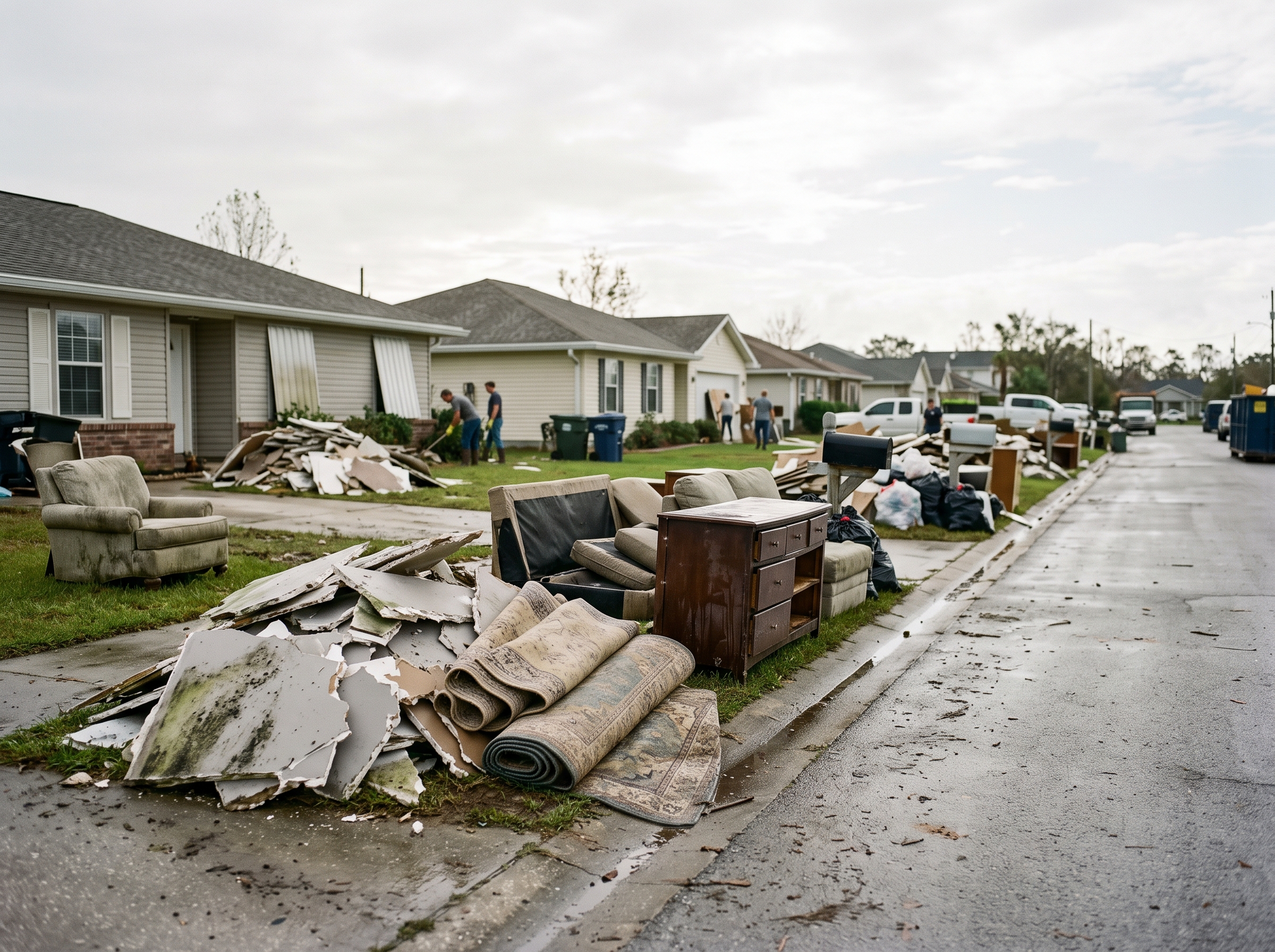
- Remove soaked porous materials. Carpet and padding, drywall (cut at least 12 inches above the water line), insulation, mattresses and upholstered furniture that sat in floodwater usually can’t be saved.
- Dry the structure. Use fans, dehumidifiers and open windows when outdoor air is drier. Open wall cavities so studs can dry.
- Clean and disinfect hard surfaces. Scrub with detergent and water; after floodwater, disinfect non-porous surfaces with a suitable disinfectant or diluted bleach (never mixed with other cleaners).
- Treat visible mold on salvageable materials, or call professionals for large areas.
- Check before rebuilding. Don’t close walls or install flooring until materials are dry.
In large regional floods, contractors, dehumidifiers and fans can be hard to find. Start what you safely can yourself, and get on contractors’ lists early.
Protecting your health
- Wear protective gear: an N95 respirator, waterproof gloves, goggles and rubber boots when handling moldy or flood-damaged materials.
- Keep vulnerable people away from cleanup: children, pregnant people, older adults, and anyone with asthma, allergies, lung disease or a weakened immune system. The CDC advises these groups to avoid mold cleanup.
- Take breaks and work in well-ventilated areas.
- Wash your hands and clothes after working, and keep work clothes separate.
- See a doctor if you develop breathing problems, a fever, or wounds that look infected.
- Watch stress levels. Disaster recovery is exhausting; ask for help from family, neighbors and community organizations.
Insurance and FEMA help
- Flood insurance: standard homeowners policies usually don’t cover flooding from outside water. If you have flood insurance (through the National Flood Insurance Program or a private insurer), file a claim as soon as possible. Mold coverage under flood policies often depends on whether you took reasonable steps to dry and clean the home.
- Homeowners insurance: may cover wind damage from a hurricane, such as a damaged roof letting rain in, and sometimes resulting water and mold damage. Check your policy and report quickly.
- FEMA assistance: if the President declares a major disaster for your area, you may be eligible for FEMA Individual Assistance, which can help with home repairs or temporary housing not covered by insurance. Apply at DisasterAssistance.gov or through the FEMA app.
- SBA disaster loans: low-interest loans from the U.S. Small Business Administration are available to homeowners and renters in declared disaster areas.
- Keep everything: photos, receipts, contractor estimates and all communication with insurers and agencies.
Avoiding contractor scams after a disaster
After big storms, some fake or unqualified contractors (“storm chasers”) target homeowners. Protect yourself:
- Be wary of door-to-door offers, especially from out-of-town companies.
- Don’t pay large amounts upfront or in cash.
- Check licenses, insurance and reviews; ask for local references.
- Get written estimates and contracts before work begins.
- Don’t sign over your insurance benefits without understanding what it means.
- Be cautious of anyone claiming to be “FEMA-approved” or charging to help you apply. FEMA doesn’t endorse contractors, and applying for assistance is free.
- Report suspected fraud to your state attorney general or the FEMA fraud hotline.
Frequently asked questions
How soon does mold grow after a flood?
Mold can start growing within 24 to 48 hours on wet materials. In hot, humid hurricane season, it can spread quickly, so start drying as soon as it’s safe.
Can I stay in my home after a flood with mold?
Only if the power, gas and structure are safe and the mold is limited. Vulnerable family members should stay elsewhere until cleanup is complete.
Does FEMA pay for mold removal?
FEMA assistance may help with repairs needed to make your home safe and livable after a declared disaster, which can include some mold-related repairs. It doesn’t replace insurance. Apply and explain the damage.
Should I gut my house after a flood?
Often, flood-soaked drywall, insulation and flooring below the water line need to be removed. How much depends on how high the water rose, how long it stayed and whether it was contaminated.
How do I know if my home is dry enough to rebuild?
Use a moisture meter on studs, subfloors and concrete, and compare readings with dry areas. A professional can confirm before you close walls.
Sources
- U.S. Environmental Protection Agency (EPA): A Brief Guide to Mold, Moisture, and Your Home
- Centers for Disease Control and Prevention (CDC): Mold
Last reviewed: October 2026. This article is for general information and is not medical, legal or professional advice.