Mold on the Mattress: Can You Save It?
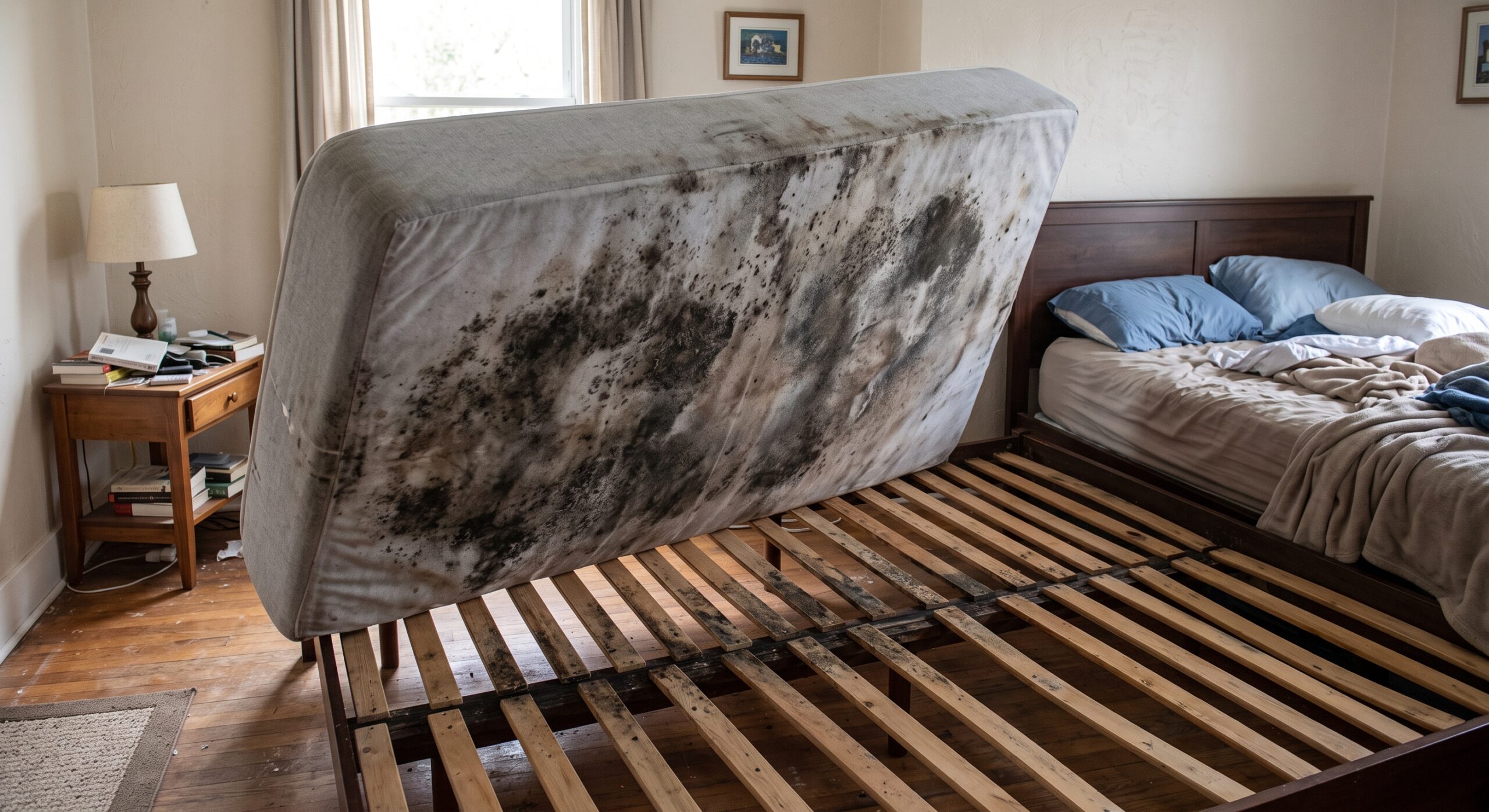
Finding mold on your mattress is unsettling. You spend around a third of your life on it, with your face just inches from the surface. Mold often appears on the underside first, where nobody looks, so many people only discover it when they flip or move the mattress.
Quick answer: you can sometimes save a mattress with a few small spots of surface mold, by cleaning it carefully and drying it completely in the sun. But if the mold covers a large area, has soaked into the foam or padding, keeps coming back, smells strongly, or the mattress got wet from a flood, it’s safer to replace it. Mattresses are thick and porous, so mold deep inside can’t be fully removed.
Why mattresses get mold
- Sweat and body heat. Every night, your body releases moisture into the mattress.
- No air under the mattress. Mattresses on the floor, on solid platform beds or on closely spaced slats can’t breathe, so moisture gets trapped underneath.
- A humid bedroom. High humidity, closed windows and condensation make it worse.
- Spills and accidents. Drinks, pet accidents or bedwetting that soak in and aren’t fully dried.
- Storage. Mattresses stored in basements, garages or plastic wrap often grow mold.
- Flooding or leaks near the bed.
Signs of mold on a mattress
- Black, green, gray or white spots, often on the underside or at the edges
- A musty or damp smell from the bed
- Allergy symptoms that are worse at night or when you wake up (stuffy nose, sneezing, coughing, itchy eyes)
- Mold on the bed frame, slats or the wall behind the bed
Save it or replace it?
| Situation | Save it | Replace it |
|---|---|---|
| A few small spots on the surface | ✅ Try cleaning | |
| Mold only on the cover, not the inside | ✅ | |
| Large areas of mold | ✅ | |
| Mold has soaked into the foam or padding | ✅ | |
| Strong musty smell that stays after cleaning | ✅ | |
| Mold comes back after cleaning | ✅ | |
| Mattress was in a flood | ✅ | |
| Someone in the home has asthma, allergies or a weak immune system | ✅ (safer) |
Memory foam and latex mattresses are especially hard to save, because they’re dense and hard to dry once moisture gets in.
How to clean surface mold on a mattress
What you’ll need: an N95 mask, gloves, a HEPA vacuum, a spray bottle, rubbing alcohol (isopropyl) and water, or a mild enzyme or upholstery cleaner, clean cloths, baking soda, and a sunny, dry day.
- Take the mattress outside if possible, or to a well-ventilated room, so spores don’t spread in the bedroom.
- Wear a mask and gloves.
- Vacuum both sides with a HEPA vacuum, paying attention to seams and edges.
- Make a cleaning solution of 1 part rubbing alcohol and 1 part warm water, or use an upholstery cleaner.
- Lightly dampen the moldy spots with a cloth. Don’t soak the mattress; extra water makes the problem worse.
- Blot and gently scrub the area, then wipe with a cloth dampened in clean water.
- Sprinkle baking soda over the area to absorb moisture and odors.
- Dry completely in the sun for several hours, turning it so both sides get sunlight. Sunlight helps kill mold and remove odors.
- Vacuum again once it’s fully dry.
- Check it over the next few weeks. If spots or smell return, replace the mattress.
Wash all bedding, the mattress protector and pillowcases in hot water. Clean the bed frame and slats, and check the wall behind the bed.
How to prevent mold on your mattress
- Let the mattress breathe. Use a bed frame with slats spaced no more than a few inches apart, or a breathable base. Avoid putting the mattress directly on the floor.
- Use a breathable, waterproof mattress protector. It keeps sweat and spills out while letting air through.
- Air out the bed every morning. Pull back the covers for 30 minutes before making the bed.
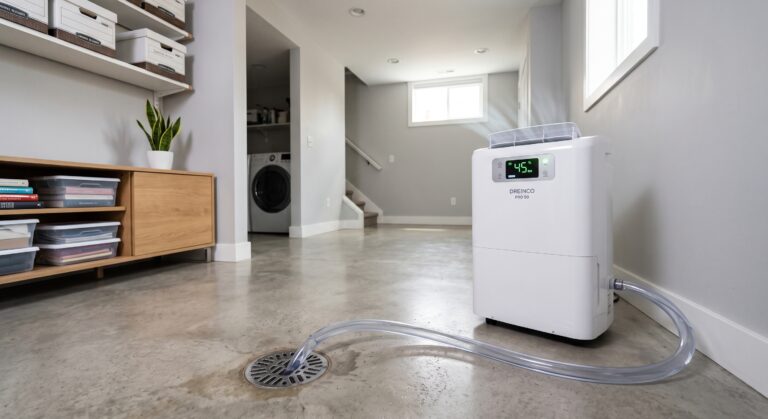
- Keep bedroom humidity between 30% and 50%. A dehumidifier helps in humid climates.
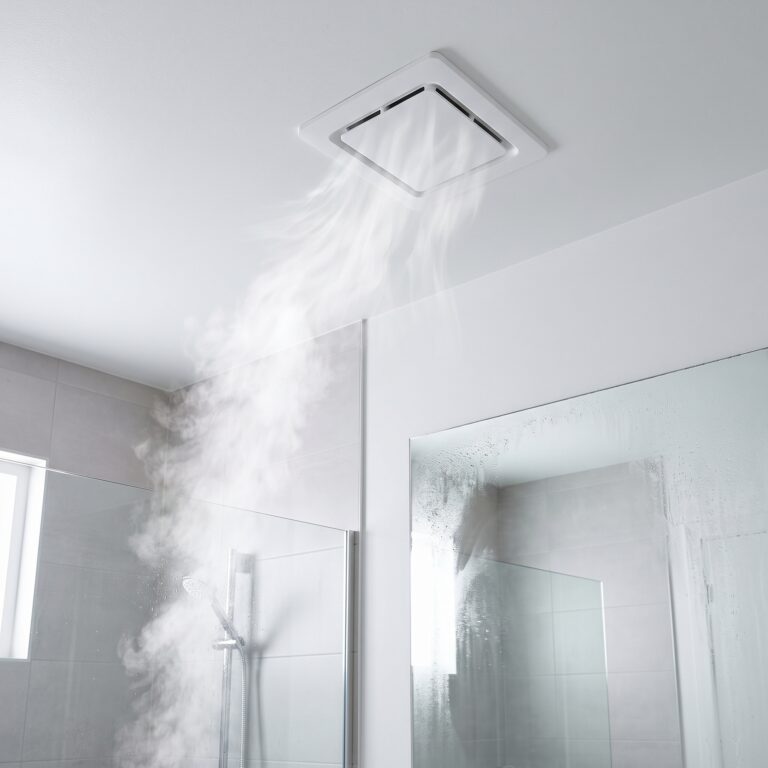
- Ventilate the bedroom for 10 to 15 minutes each day.
- Rotate or flip the mattress every few months, following the manufacturer’s advice.
- Dry spills immediately with towels and a fan.
- Keep the bed a few inches from exterior walls, especially cold ones.
- Store spare mattresses in a dry, indoor space in a breathable cover, never in sealed plastic in a basement or garage.
Frequently asked questions
Is it safe to sleep on a mattress with mold?
It’s not recommended, especially for children or people with allergies or asthma, since you breathe close to the surface for hours. Clean small spots right away, and replace the mattress if the mold is extensive.
Why is there mold under my mattress?
Moisture from your body gets trapped underneath when there isn’t enough air flow, especially with mattresses on the floor or on solid bases.
Does vinegar or bleach work on mattresses?
Bleach is not recommended; it can damage fabric and doesn’t reach deep mold. A light solution of rubbing alcohol and water or an upholstery cleaner works better on surface spots.
Can a memory foam mattress with mold be saved?
Usually not. Memory foam is dense and holds moisture, so mold that gets inside is almost impossible to remove.
Does a mattress warranty cover mold?
Most warranties don’t cover mold, because it’s considered a result of moisture or care, not a manufacturing defect. Check your warranty.
Sources
- U.S. Environmental Protection Agency (EPA): A Brief Guide to Mold, Moisture, and Your Home
- Centers for Disease Control and Prevention (CDC): Mold
Last reviewed: October 2026. This article is for general information and is not medical, legal or professional advice.