Mold in Your Car: How to Remove It Safely
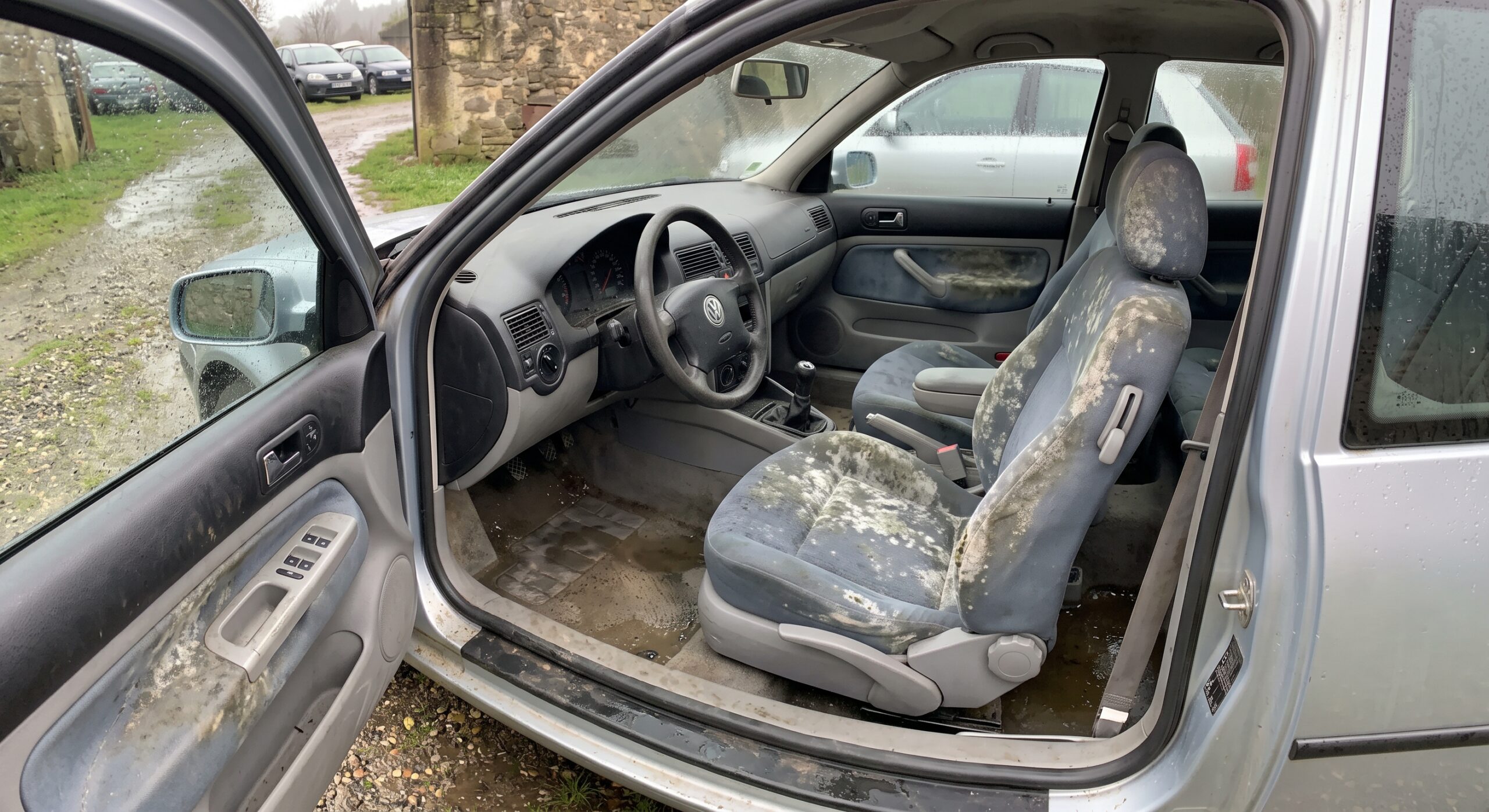
Mold in a car can come as a shock: you open the door after a few weeks without driving and find white fuzz on the seats, a musty smell, or damp carpets. Cars are small, closed spaces full of fabric, and they can trap moisture quickly.
Quick answer: car mold is caused by moisture getting trapped inside, usually from a leak, wet items left in the car, spills, or a car sitting closed for a long time in a humid place. You can usually remove it yourself: dry the car completely, vacuum with a HEPA vacuum, clean the surfaces with white vinegar or an upholstery cleaner, and dry again. Find and fix the source of the moisture so it doesn’t come back. Cars that were flooded usually need professional help.
Why cars get mold
- Leaks. Worn door or window seals, a sunroof with blocked drains, or a leaking windshield let rain in.
- Windows left open during rain, even slightly.
- Wet items. Umbrellas, gym clothes, wet towels, snowy boots and beach gear left inside.
- Spills. Coffee, milk, soda or food that soaks into seats and carpets.
- Sitting unused. A closed car parked for weeks in a humid garage or climate traps moisture.
- A dirty AC system. Moisture on the evaporator can grow mold and cause a musty smell from the vents.
- Flooding. A car that sat in floodwater will almost always develop mold.
Where mold grows in a car
Fabric seats, especially seams and the underside; carpets and floor mats, and the padding under them; seat belts; the headliner; the trunk; door panels; and the AC system and vents.
Is car mold dangerous?
A car is a small, closed space, so you’re breathing spores at close range. For most healthy people, a small amount causes mild or no symptoms, but it can trigger a stuffy nose, sneezing, coughing or itchy eyes, especially in people with allergies or asthma. Clean it before driving regularly, especially with children in the car. If symptoms continue, talk to a doctor. This article is general information, not medical advice.
How to remove mold from your car
What you’ll need: an N95 mask, gloves, goggles, a HEPA vacuum (or a shop vac with a HEPA filter), a spray bottle, white vinegar, dish soap, an upholstery or leather cleaner, soft and stiff brushes, microfiber cloths, and fans or a dehumidifier.
1. Prepare
Park in a sunny, dry place outdoors and open all the doors for an hour. Wear your mask, gloves and goggles. Remove floor mats and any loose items.
2. Dry the car
If anything is wet, dry it first. Use towels, a wet/dry vacuum for soaked carpets, fans pointed inside, or a small dehumidifier with the windows cracked. Mold spreads when you clean wet surfaces.
3. Vacuum
HEPA-vacuum all surfaces: seats, carpets, seams, the trunk and door pockets. Empty the vacuum outside.
4. Clean each surface
| Surface | How to clean it |
|---|---|
| Fabric seats and carpet | Spray a mix of 1 part white vinegar and 1 part water, wait 10 to 15 minutes, scrub with a stiff brush, then blot dry. An upholstery cleaner also works. |
| Leather seats | Wipe with a cloth lightly dampened with water and a little vinegar or a leather cleaner. Don’t soak the leather. Dry and apply leather conditioner. |
| Hard plastics and vinyl | Wipe with warm water and dish soap or an interior cleaner. |
| Seat belts | Pull them out fully, clip in place, spray with the vinegar mix, scrub gently, and let them dry fully extended. |
| Floor mats | Rubber mats: wash with soap and water. Carpet mats: scrub, rinse and dry in the sun. |
| Headliner | Dab gently with a damp cloth and cleaner. Don’t soak it; the glue can fail. |
Avoid using bleach inside a car: it can discolor fabric and damage surfaces.
5. Dry and air out again
Leave the doors open in the sun or use fans for several hours. Sunlight helps kill mold and remove odors.
6. Treat odors
Sprinkle baking soda on carpets and seats, leave it overnight, then vacuum. Leave an open container of activated charcoal in the car for a few days.
7. Clean the AC
Replace the cabin air filter and use an AC system cleaner designed for cars, or have it cleaned by a mechanic if the smell comes from the vents.
How to prevent mold in your car
- Fix leaks. Check door and window seals, sunroof drains and the trunk seal. A car wash is a good test: look for wet spots afterward.
- Never leave wet items inside. Take out umbrellas, gym bags, towels and wet clothes.
- Clean spills right away, especially milk, coffee and food.
- Use rubber floor mats in rainy or snowy seasons.
- Air out the car on dry, sunny days, especially if it sits unused.
- Run the AC now and then, even in winter; it removes moisture from the air.
- Turn off the AC a few minutes before parking and let the fan run, so the evaporator dries out.
- Use a moisture absorber (silica gel or a car dehumidifier bag) if the car is parked for long periods.
- Replace the cabin air filter as the maker recommends.
When to call a professional
Get professional help if the car was flooded, mold is widespread or has soaked into the seat foam and carpet padding, the headliner is moldy, or the musty smell continues after cleaning. Professional auto detailers can deep-clean and, in serious cases, replace carpets and padding. Flooded cars often have hidden damage to electrical systems, so a mechanic should inspect them too.
Frequently asked questions
Is it safe to drive a car with mold?
A small amount isn’t an emergency, but you’re breathing air in a small space, so clean it as soon as possible. People with allergies or asthma, and children, should avoid riding in a moldy car until it’s cleaned.
Does vinegar kill mold in cars?
White vinegar mixed with water works well on fabric seats and carpets. Test it on a hidden spot first.
Why does my car smell musty when I turn on the AC?
Mold or bacteria are likely growing on the AC evaporator. Replace the cabin air filter and use a car AC cleaner, or ask a mechanic to clean it.
Can mold in a car come back?
Yes, if moisture keeps getting in. Find and fix leaks and keep the car dry.
Should I buy a car that had mold?
Be careful. Mold often means the car had a leak or was flooded. Ask for its history, check under carpets and seats, and have a mechanic inspect it.
Sources
- U.S. Environmental Protection Agency (EPA): A Brief Guide to Mold, Moisture, and Your Home
- Centers for Disease Control and Prevention (CDC): Mold
Last reviewed: October 2026. This article is for general information and is not medical, legal or professional advice.