Indoor Humidity Levels: The Ideal Range to Prevent Mold
If there’s one number that decides whether mold grows in your home, it’s indoor humidity. Mold spores are everywhere, all the time. What they need to grow is moisture, and humid air is one of the main ways your walls, floors and furniture stay damp.
Quick answer: keep indoor relative humidity between 30% and 50% to prevent mold. The EPA recommends keeping it below 60%, and ideally in that 30% to 50% range. Above 60% for long periods, mold, dust mites and musty smells become much more likely. Below 30%, the air gets uncomfortably dry. A cheap hygrometer tells you where you stand, and a dehumidifier, exhaust fans and good ventilation keep it in the safe zone.
A personal note: I don’t own a hygrometer yet, and that’s part of why I wrote this guide. The damp patches I’ve had on my bathroom ceiling are a reminder that you can’t judge humidity by feel; measuring it is the only way to know.
This guide explains what humidity is, the right level for each season and room, how to measure it, and how to fix it when it’s too high or too low.
What indoor humidity means
When people talk about humidity at home, they mean relative humidity (RH): how much water vapor is in the air compared with the most it could hold at that temperature, shown as a percentage. At 100%, the air is completely saturated and water starts to condense.
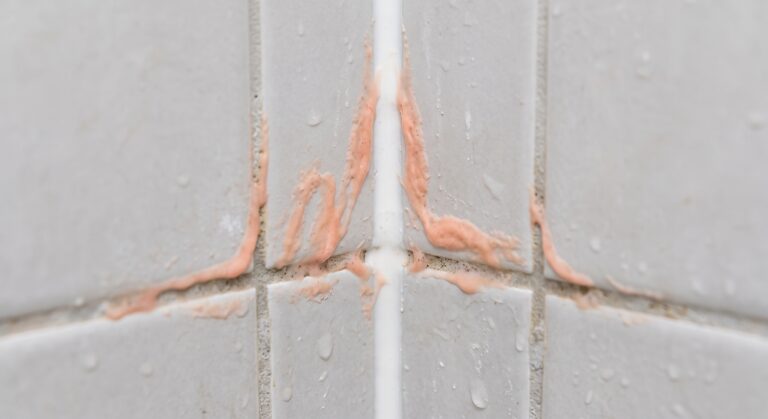
Temperature matters: warm air can hold more water than cold air. That’s why a room at a comfortable 50% can produce condensation on a cold window or exterior wall. The air right next to that cold surface cools down, reaches 100% and leaves water behind. This is exactly how mold starts on windows, corners and basement walls.
The ideal humidity range
| Relative humidity | What it means |
|---|---|
| Below 30% | Too dry: dry skin, static, irritated nose and throat, cracking wood |
| 30% to 50% | Ideal: comfortable and unfriendly to mold and dust mites |
| 50% to 60% | Acceptable short term, but watch cold surfaces and basements |
| Above 60% | Risky: mold, dust mites and musty smells become likely if it lasts |
| Above 70% | High risk: mold can grow on many surfaces within days |
Humidity by season
- Winter: aim for the lower end, around 30% to 40%. Cold outdoor air makes windows and exterior walls cold, so higher humidity leads to condensation and window mold. In very cold climates, even lower can be needed to stop condensation.
- Summer: aim for 40% to 50%. Humid outdoor air and AC systems that don’t remove enough moisture can push indoor humidity above 60%, especially in basements.
- Spring and fall: usually the easiest seasons, but watch basements after rain.
Humidity by room
| Room | Target | Watch out for |
|---|---|---|
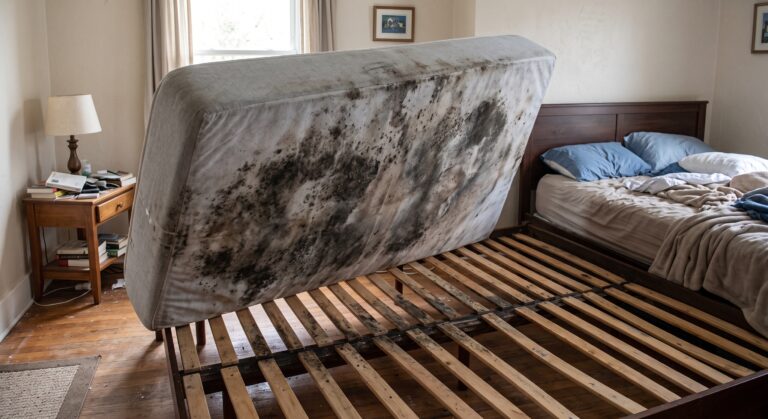
| Bedrooms | 30% to 50% | Breathing adds moisture overnight; window condensation |
| Bathrooms | Below 60% within 30 minutes of a shower | Steam staying for hours without a fan |
| Kitchen | 30% to 50% | Cooking without the range hood |
| Basement | Below 50% | Ground moisture and summer condensation |
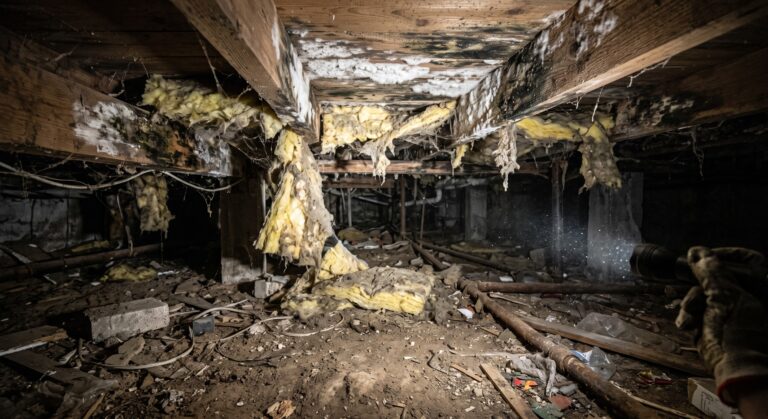
| Crawl space | Below about 60% | Damp soil and outdoor air |
| Closets | 30% to 50% | Trapped air behind closed doors |
| Attic | Close to outdoor levels | Warm, moist air leaking up from the house |
Signs your home is too humid
- Condensation on windows, mirrors or cold water pipes
- A musty or damp smell
- Mold or mildew spots on walls, ceilings, window frames or in closets
- Clammy air, or bedding and clothes that feel slightly damp
- Peeling paint or wallpaper, and warped wood
- Water stains on walls or ceilings
- More allergy symptoms at home
Signs your home is too dry
- Dry, itchy skin and chapped lips
- Dry or irritated nose, throat and eyes
- Static shocks
- Cracks or gaps in wood floors and furniture
- Houseplants drying out quickly
How to measure indoor humidity
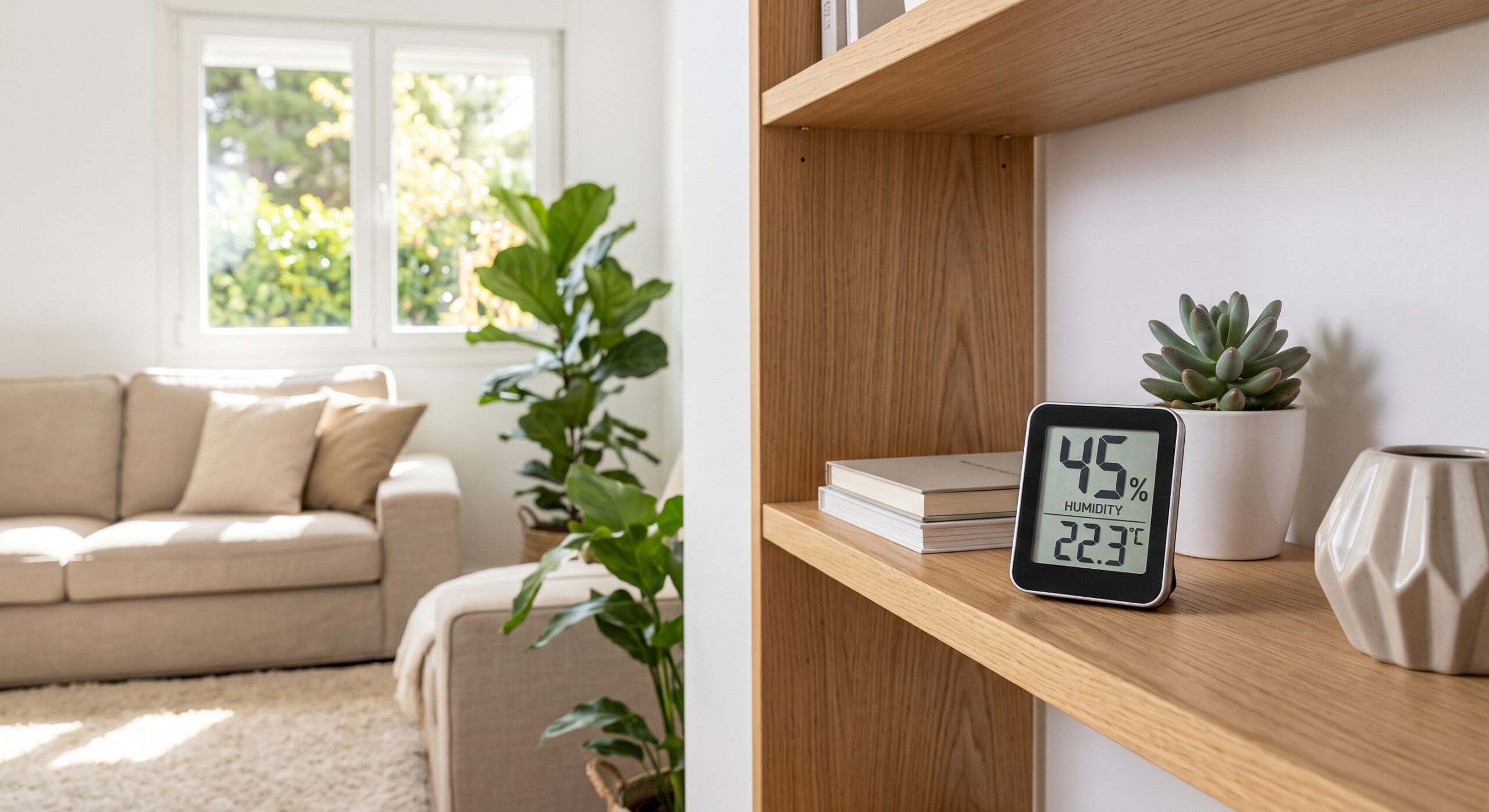
The only reliable way is with a hygrometer, a small, inexpensive device that shows relative humidity (and usually temperature).
- Where to place it: at about chest height, away from windows, vents, heaters, bathrooms and the kitchen, so the reading isn’t skewed.
- How many: one in the main living area is a good start. Add one in the basement and one in any bedroom or room with mold problems.
- When to check: look at different times of day, especially early morning in winter and humid afternoons in summer.
- Check accuracy: cheap hygrometers can be off by a few percent. Comparing two devices side by side is an easy check.
- Smart options: some hygrometers send readings to your phone and record history, which helps spot problems in rarely used rooms.
How to lower indoor humidity
Start with the free and cheap fixes, then move to equipment.
Everyday habits
- Use exhaust fans in the bathroom during showers and for 20 to 30 minutes after, and the range hood when cooking.
- Ventilate by opening windows for 10 to 15 minutes a day when outdoor air is drier than indoor air.
- Dry clothes outside or in a vented dryer, not on racks indoors.
- Take shorter, cooler showers.
- Cover pots when cooking.
- Don’t overwater houseplants, and avoid crowding many plants in one room.
- Keep firewood outside.
Equipment
- Dehumidifier: the most effective tool for basements, bedrooms and humid climates. Set it to 45% to 50% and empty or drain it regularly.
- Air conditioning: removes moisture as it cools. Run the fan on “auto,” not “on,” so moisture on the coil drains away instead of being blown back.
- Whole-house dehumidifier: connected to the HVAC system, for very humid climates.
- Bathroom fan with humidity sensor: switches on automatically when humidity rises.
Fix the sources
- Repair leaks in pipes, roofs and windows.
- Keep gutters clean and downspouts pointing away from the house.
- Make sure dryer, bathroom and kitchen fans vent outside, not into the attic.
- Cover dirt floors in crawl spaces with a vapor barrier.
How to raise humidity safely
If your home is below 30%, especially in winter:
- Use a portable humidifier set to 35% to 40%, and clean it often, following the maker’s instructions, so it doesn’t grow mold or bacteria itself.
- Don’t push humidity above 50% in winter; it can cause condensation and window mold.
- Watch windows: if condensation appears, lower the setting.
- Houseplants and drying clothes indoors add some moisture, but control it with a hygrometer.
Frequently asked questions
At what humidity does mold start to grow?
Mold can grow when surfaces stay damp, which becomes much more likely when indoor humidity stays above about 60% for long periods. Keeping it between 30% and 50% greatly reduces the risk.
Is 55% humidity too high?
It’s acceptable for short periods, but if it stays there, especially in a basement or in winter near cold windows, mold can start. Aim for 50% or lower.
What humidity should a basement be?
Below 50%. Basements are naturally damp, so most need a dehumidifier running in warm months.
Does air conditioning reduce humidity?
Yes, AC removes moisture as it cools, but it may not be enough in very humid climates or if the system is oversized. A dehumidifier can help.
What’s the best humidity for sleeping?
Between 30% and 50%. It’s comfortable for breathing and keeps dust mites and mold in check.
Do I need a hygrometer?
Yes. You can’t judge humidity accurately by feel, and hygrometers are inexpensive.
Sources
- U.S. Environmental Protection Agency (EPA): A Brief Guide to Mold, Moisture, and Your Home
- Centers for Disease Control and Prevention (CDC): Mold
Last reviewed: October 2026. This article is for general information and is not medical, legal or professional advice.