Mold-Killing Primer and Paint: Do They Work?
Walk into any hardware store and you’ll find primers that promise to “kill mold” and paints labeled “mold and mildew resistant.” It’s tempting to think a coat of paint can solve a mold problem. Can it?
Quick answer: mold-killing primers and mold-resistant paints work, but only for what they’re designed to do: help prevent new mold from growing on the painted surface. They don’t fix an existing mold problem, and they can’t stop mold if the wall stays wet. Used the right way, after the mold is removed, the surface is dry and the moisture source is fixed, they’re a good extra layer of protection, especially in bathrooms, laundry rooms and basements.
How mold-resistant primers and paints work
These products contain antimicrobial additives (often called mildewcides) mixed into the paint. As the paint dries, the additives stay in the film and make it harder for mold to grow on the painted surface.
There are two main types:
- Mold-killing or mold-resistant primers. Applied first on bare or cleaned surfaces. Some are registered with the EPA to kill mold on the surface they cover; others only resist new growth. Many also block stains so old mold marks don’t show through.
- Mold and mildew-resistant paints. Topcoats, usually in satin or semi-gloss, designed for bathrooms and kitchens. They resist moisture and make surfaces easier to wipe clean.
What they can and can’t do
| ✅ They can | ❌ They can’t |
|---|---|
| Help prevent new mold on the painted surface | Remove existing mold |
| Block old mold stains from showing through | Kill mold growing inside drywall or wood |
| Resist steam and occasional moisture | Stop mold if a leak or condensation keeps the wall wet |
| Make walls easier to clean | Replace good ventilation or humidity control |
| Add protection in damp rooms | Fix a hidden water problem |
The biggest mistake is painting over mold. Mold under the paint keeps growing, and it usually shows through again within weeks or months, sometimes with peeling and bubbling paint.
When to use them
- After cleaning mold off a wall or ceiling, to help keep it from returning
- In bathrooms, laundry rooms, kitchens and basements
- On ceilings above showers
- On new drywall in damp areas
- On wood that has been cleaned of mold (joists, rafters, window frames)
- When repainting a room that had mold before
How to apply mold-resistant primer and paint
- Fix the moisture source. Repair leaks, improve ventilation and lower humidity first.
- Remove the mold. Clean the surface with a mold cleaner, hydrogen peroxide or detergent. Replace any drywall that’s moldy inside.
- Let it dry completely. Wait at least 24 to 48 hours. Painting a damp surface traps moisture.
- Prepare the surface. Scrape loose or peeling paint, sand lightly, and wipe away dust.
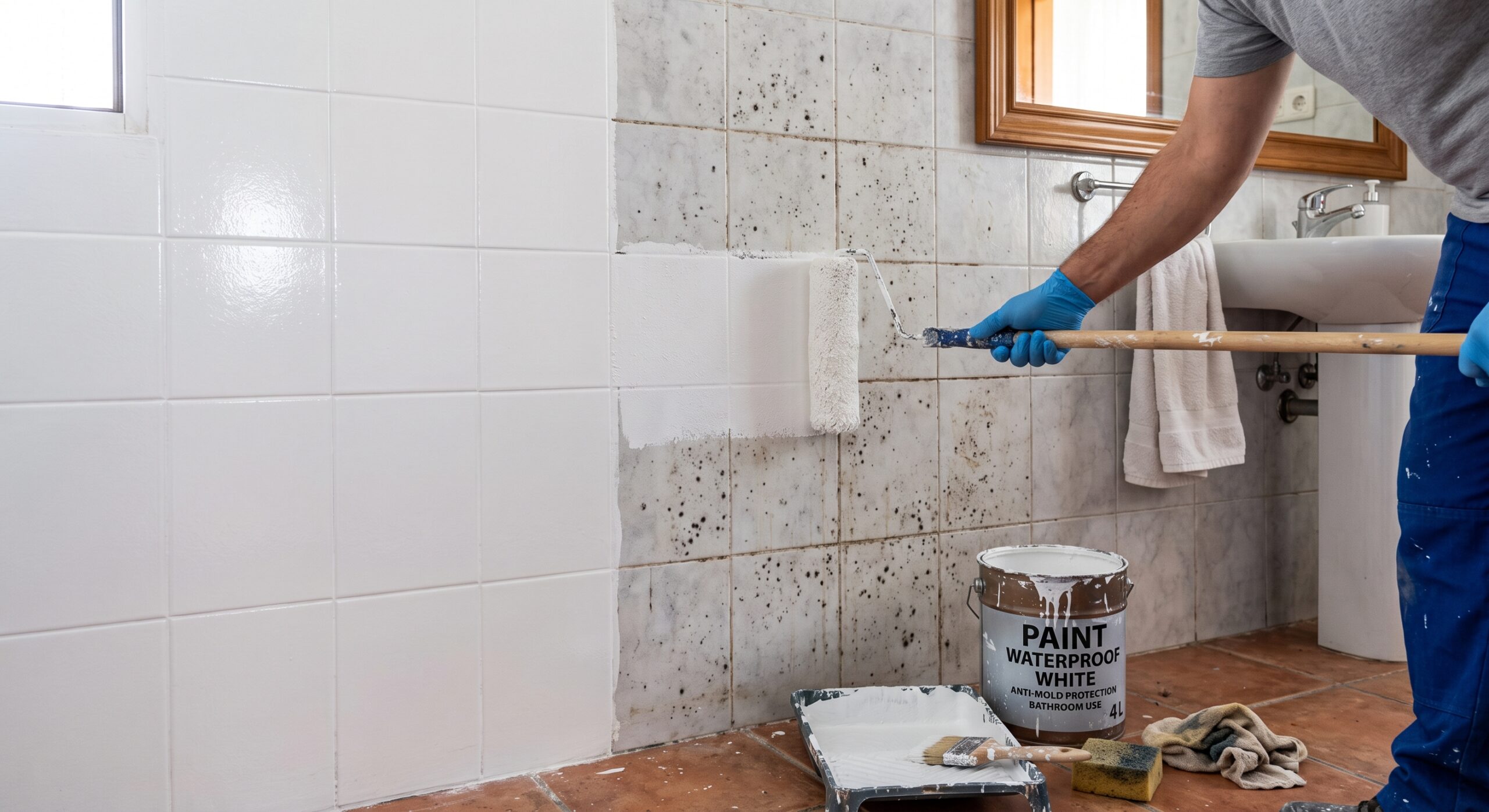
- Apply the primer. Use a mold-resistant or stain-blocking primer, following the label. Cover the whole area, plus a margin around it.
- Let the primer dry for the time on the can.
- Apply two coats of mold-resistant paint, ideally satin or semi-gloss in bathrooms, letting each coat dry.
- Ventilate during and after painting.
- Keep the room dry. Use exhaust fans and wipe condensation; the paint works best when the room doesn’t stay wet.
How to choose the right product
- Look for “mold and mildew resistant” on the label, and for an EPA registration number if the product claims to kill mold.
- Pick the right finish. Satin and semi-gloss resist moisture and are easier to wipe than flat or matte paint.
- Choose a stain-blocking primer if old mold stains might bleed through.
- Match the surface. Some products are for drywall and wood only; others work on masonry. Check the label.
- Consider low-VOC options for bedrooms and small spaces.
Well-known examples include mold and mildew primers and bathroom paints from major paint brands (check current product names and labels before buying).
Common mistakes
- Painting over mold instead of removing it first
- Painting a damp wall
- Using flat paint in a bathroom
- Skipping the primer on stained or bare surfaces
- Expecting paint to fix a leak or poor ventilation
Frequently asked questions
Can you paint over mold with mold-killing primer?
It’s not recommended. Some primers kill surface mold, but mold growing inside the material will survive and come back. Remove the mold and dry the surface first.
Does mold-resistant paint really work?
Yes, for preventing new mold on the painted surface. It won’t solve a moisture problem or remove existing mold.
What’s the best paint for a bathroom with mold problems?
A mold and mildew-resistant paint in satin or semi-gloss, over a mold-resistant primer, combined with a good exhaust fan.
How long does mold-resistant paint last?
It usually protects for several years, but its effect fades over time, especially with frequent scrubbing. Keeping the room dry matters more.
Can I use mold-resistant paint on a ceiling?
Yes. Ceilings above showers are one of the best places to use it.
Sources
- U.S. Environmental Protection Agency (EPA): A Brief Guide to Mold, Moisture, and Your Home
- Centers for Disease Control and Prevention (CDC): Mold
Last reviewed: October 2026. This article is for general information and is not medical, legal or professional advice.