How to Clean Mold Off Concrete
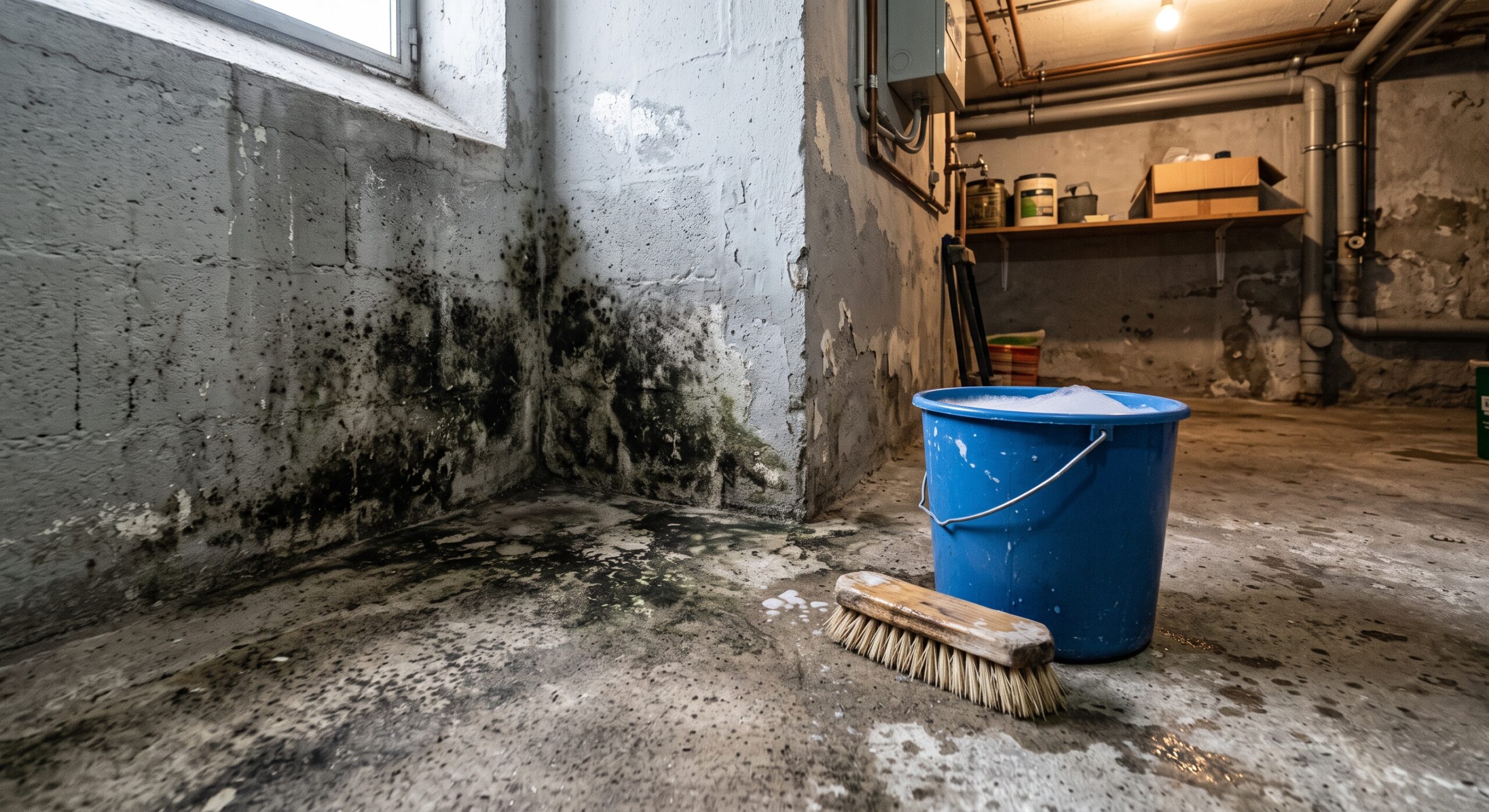
Concrete seems too hard for mold to grow on, but basement walls, garage floors, patios and driveways often end up with dark, fuzzy or slimy patches. Concrete is porous, holds moisture for a long time, and collects dirt and dust that mold can feed on.
Quick answer: to clean mold off concrete, first make sure it’s mold and not efflorescence (white salt deposits that dissolve in water). Then scrub the area with a stiff brush and detergent and water. For stubborn spots, use white vinegar or an oxygen bleach solution, let it sit, scrub again and rinse. Outdoors, a pressure washer helps. Dry the concrete completely, seal it if it stays damp, and fix the moisture source so the mold doesn’t come back.
Why mold grows on concrete
- Concrete is porous. It absorbs water from the ground, rain and humid air, and dries slowly.
- Dirt and dust are food. Mold doesn’t eat concrete, but it feeds on the organic debris, soil, leaves and dust that settle on it.
- Shade and dampness. North-facing walls, shaded patios and basements stay damp longer.
- Condensation. Cool basement floors and walls collect moisture from humid summer air.
- Poor drainage. Water pooling on patios or seeping through foundation walls keeps surfaces wet.
First: is it mold or efflorescence?
White deposits on concrete are often efflorescence, harmless salt crystals left behind by evaporating water. Spray a little water on the spot: efflorescence dissolves within a minute or two, while mold stays. Efflorescence is also dry and crumbly, with no musty smell. If it’s efflorescence, a stiff dry brush is usually enough to remove it.
Best cleaners for concrete
| Cleaner | Best for | Notes |
|---|---|---|
| Detergent and warm water | Light mold indoors | Safe, simple first step |
| White vinegar (undiluted) | Basement walls and floors | Leave for 1 hour; mild and low-fume |
| Oxygen bleach (sodium percarbonate) | Indoor and outdoor stains | Mix with warm water per the label; gentler on plants than chlorine bleach |
| Diluted chlorine bleach | Outdoor stains on patios and walls | About 1 cup per gallon of water; ventilate, protect plants, never mix with other cleaners |
| Concrete or masonry mold cleaner | Heavy or recurring growth | Follow label directions |
| Pressure washer | Outdoor patios, driveways, walls | Use a wide spray tip and keep the nozzle moving to avoid damaging the surface |
How to clean mold off indoor concrete
For basement walls, basement floors and garage floors.
What you’ll need: N95 mask, gloves, goggles, a HEPA vacuum, a stiff nylon brush, a bucket, detergent, white vinegar or oxygen bleach, a spray bottle, rags, fans and a dehumidifier.
- Protect yourself and ventilate. Wear your mask, gloves and goggles. Open windows and run a fan blowing outward.
- Remove items from the area, and throw away moldy cardboard or fabric.
- HEPA-vacuum loose mold and dust.
- Scrub with detergent and warm water using a stiff brush.
- Treat remaining mold. Spray undiluted white vinegar and leave it for about an hour, or apply an oxygen bleach solution and leave it for 10 to 15 minutes.
- Scrub again and wipe or rinse with clean water. Use as little water as possible on walls.
- Dry completely with fans and a dehumidifier for at least 24 to 48 hours.
- Seal the concrete (optional). Once fully dry, a penetrating concrete sealer or waterproof masonry coating reduces moisture coming through.
How to clean mold off outdoor concrete
For patios, driveways, sidewalks, pool decks and exterior walls.
- Sweep away leaves, dirt and debris.
- Wet nearby plants with water and cover them with plastic if you’ll use bleach.
- Apply your cleaner. Use oxygen bleach mixed with warm water, a concrete cleaner, or diluted chlorine bleach for stubborn black stains.
- Let it sit for 10 to 15 minutes. Don’t let it dry out in direct sun; mist with water if needed.
- Scrub with a stiff push broom or deck brush.
- Rinse well with a garden hose or pressure washer. Use a wide-angle tip and keep it moving to avoid etching the concrete.
- Let it dry in the sun, then consider sealing it to make future cleaning easier.
How to keep mold off concrete
Indoors:
- Run a dehumidifier to keep basement humidity between 30% and 50%.
- Seal cracks and apply a waterproof masonry coating to damp walls.
- Keep gutters clean and downspouts extended away from the foundation.
- Store items on shelves, off the concrete floor.
Outdoors:
- Sweep away leaves and debris regularly.
- Trim plants and trees to let in more sunlight.
- Fix drainage so water doesn’t pool on patios.
- Apply a concrete sealer every few years.
When to call a professional
Call a mold remediation company if mold covers a large indoor area or keeps coming back. If water seeps through basement walls or floors, if cracks are growing, or if walls are bowing, call a basement waterproofing or foundation contractor; cleaning won’t fix those problems.
Frequently asked questions
Does vinegar kill mold on concrete?
Yes, undiluted white vinegar works well on many types of mold on concrete. Leave it for about an hour before scrubbing.
Can I use bleach on concrete?
Diluted bleach is effective outdoors on stubborn stains. Indoors, ventilate well, and remember it can’t fix the moisture problem. Never mix it with vinegar or ammonia.
Why does mold keep coming back on my basement floor?
Moisture from the ground and humid air keep the concrete damp. A dehumidifier, sealing and better drainage are what stop it.
Will a pressure washer remove mold from concrete?
It removes surface mold and dirt well outdoors. Pair it with a cleaner for stubborn stains, and don’t use it indoors.
Should I seal my basement concrete?
Sealing helps reduce moisture coming through, but it works best after fixing drainage outside.
Sources
- U.S. Environmental Protection Agency (EPA): A Brief Guide to Mold, Moisture, and Your Home
- Centers for Disease Control and Prevention (CDC): Mold
Last reviewed: October 2026. This article is for general information and is not medical, legal or professional advice.