DIY vs. Professional Mold Removal: When to Call a Pro
When you find mold, the big decision is whether to grab a sponge or pick up the phone. Doing it yourself saves money, but getting it wrong can spread spores, leave hidden mold behind, or put someone’s health at risk.
Quick answer: you can usually remove mold yourself when it covers less than about 10 square feet, it’s on a hard or surface-level material, the moisture source is known and fixed, and everyone at home is healthy. Call a professional when the mold is larger, hidden inside walls, ceilings, floors or HVAC ducts, came from sewage or floodwater, keeps coming back, or when anyone at home has asthma, allergies or a weakened immune system. Many homeowners combine both: they handle small spots themselves and hire a pro for the big jobs.
Quick checklist: can you do it yourself?
Answer these questions. If you answer «yes» to all of them, DIY is usually a reasonable choice. If you answer «no» to any, consider a professional.
- Is the moldy area smaller than about 10 square feet (roughly 3 ft × 3 ft)?
- Can you see all the mold, with no signs it’s inside walls, ceilings, floors or ducts?
- Is it on a hard or surface-level material (tile, glass, sealed wood, painted wall), not soaked into drywall, insulation or carpet?
- Do you know what caused it, and has it been fixed?
- Was the water clean (condensation, a small clean-water leak), not sewage or floodwater?
- Is everyone at home healthy, with no asthma, severe allergies, weakened immune system or lung disease?
- Do you have the right protective gear and feel comfortable doing it?
DIY vs. professional: side by side
| DIY | Professional | |
|---|---|---|
| Typical cost | About $30 – $200 in supplies and gear | Often about $500 – $4,000+, depending on size |
| Best for | Small, visible, surface mold | Large, hidden or recurring mold; contaminated water |
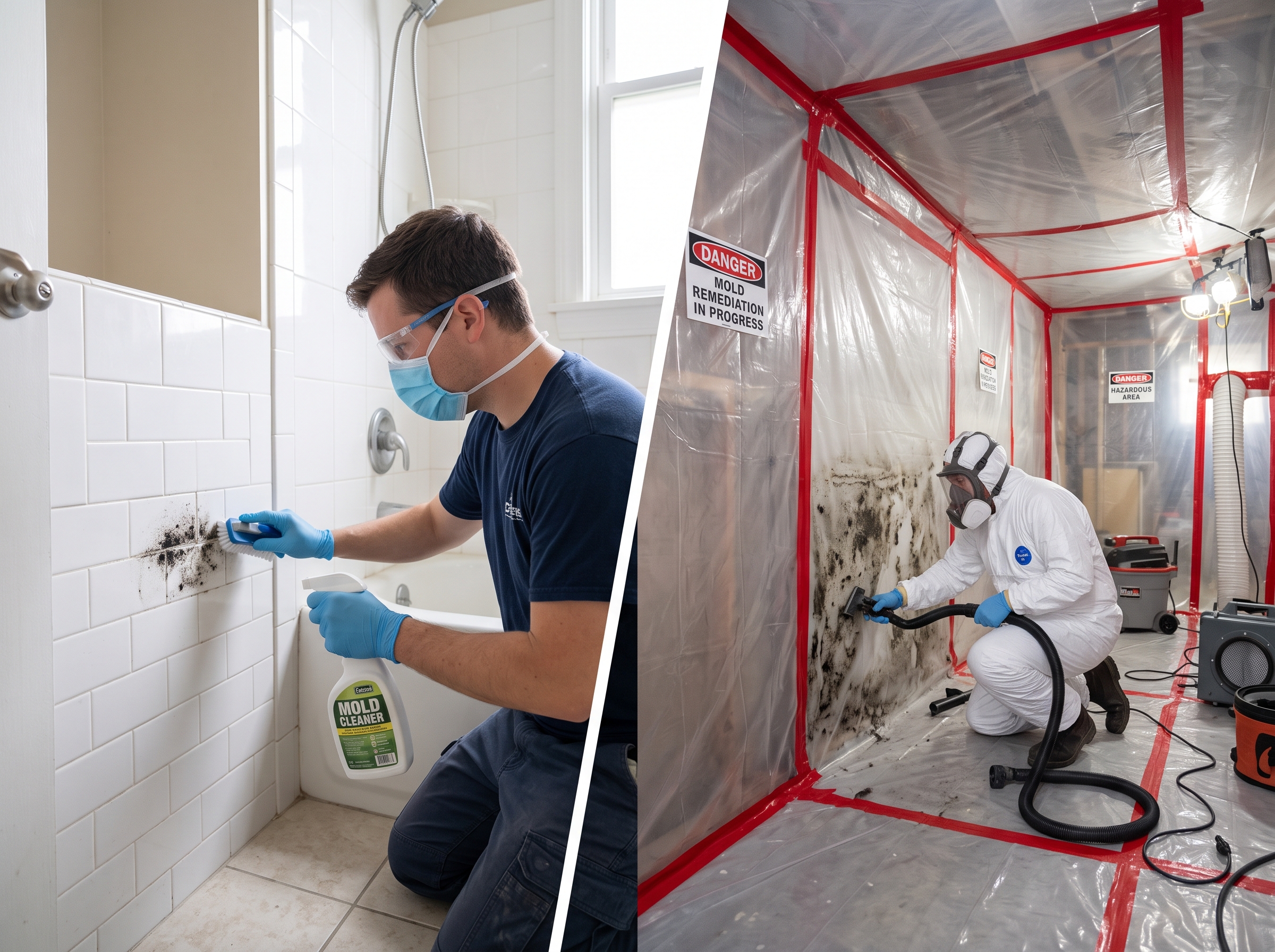
| Containment | Closed door, maybe plastic over doorways | Sealed plastic barriers, negative air pressure |
| Air cleaning | Window fan, maybe a HEPA purifier | Commercial HEPA air scrubbers |
| Finding hidden moisture | Your eyes and nose, maybe a moisture meter | Moisture meters, thermal cameras, sampling |
| Material removal | Small items, small drywall patches | Large drywall, insulation, subfloor and framing removal |
| Health risk to you | Higher if done without proper gear or containment | Lower; trained crews with full protective equipment |
| Documentation | Your own photos | Written reports, useful for insurance and home sales |
| Guarantee | None | Often a warranty on the work |
Common scenarios
| Situation | DIY or pro? |
|---|---|
| Black spots in shower grout and caulk | ✅ DIY |
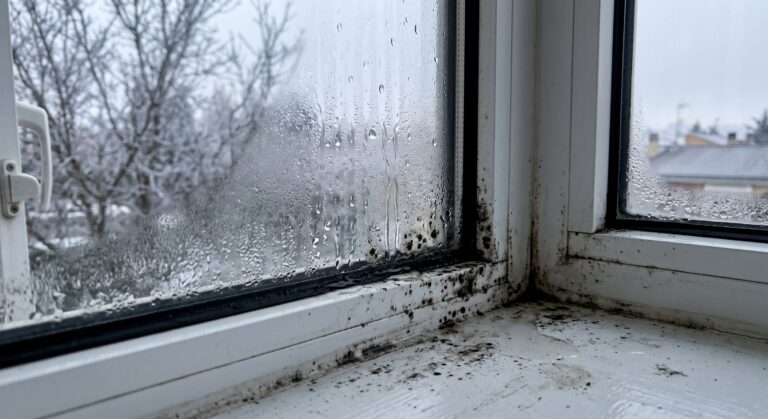
| Mold on window sills from winter condensation | ✅ DIY |
| A few spots on a painted bedroom wall | ✅ DIY (fix the condensation too) |
| Mold on a few basement joists, wood still solid | ✅ DIY, if under ~10 sq ft |
| Moldy clothes, shoes or curtains | ✅ DIY |
| Mold under the kitchen sink after a small leak | ✅ DIY for the cabinet; pro if the wall behind is moldy |
| Musty smell with no visible mold | ⚠️ Inspection first |
| Mold covering a large part of a basement wall | 🔧 Pro |
| Mold inside walls or behind drywall | 🔧 Pro |
| Widespread attic mold on roof sheathing | 🔧 Pro |
| Mold in HVAC ducts or the air handler | 🔧 Pro |
| Mold after a flood or sewage backup | 🔧 Pro |
| Mold in a home with a baby or someone with asthma | 🔧 Pro (or at least someone else does the cleanup) |
| Selling a home with a mold problem | 🔧 Pro, with documentation |
What professionals do that DIY can’t
- Find all the mold and moisture, including inside walls, with moisture meters and thermal cameras.
- Contain the area with sealed plastic and negative air pressure, so spores don’t spread to the rest of the house.
- Filter the air with commercial HEPA air scrubbers during and after the work.
- Safely remove large amounts of drywall, insulation, carpet and subfloor.
- Clean and treat framing and apply encapsulating sealers.
- Dry structures properly with commercial dehumidifiers and air movers.
- Provide documentation and, ideally, clearance testing that the job worked.
The smart middle ground
You don’t have to choose one or the other for everything:
- Clean small surface mold yourself and save money.
- Hire an independent inspector if you’re unsure how big the problem is.
- Hire a remediation company only for the large or hidden parts.
- Handle rebuilding yourself or with a general contractor after remediation (painting, new drywall, flooring).
- Fix the moisture source yourself if it’s simple (gutters, ventilation, a dehumidifier), or with the right tradesperson.
Frequently asked questions
How much mold is too much to clean yourself?
The EPA’s rule of thumb is about 10 square feet (roughly a 3 × 3 ft patch). Above that, or if it’s hidden or on soaked porous materials, a professional is the safer choice.
Is it dangerous to remove mold yourself?
Small jobs are generally safe with an N95 mask, gloves, goggles and good ventilation. The risk rises with larger areas, hidden mold, contaminated water, or if you have asthma, allergies or a weakened immune system.
Is professional mold removal worth the money?
For large, hidden or recurring mold, yes. Professionals find the full extent of the problem, contain spores, and document the work, which helps with insurance and selling your home.
Can I remove black mold myself?
The same rules apply as for any mold: color doesn’t matter. Small surface patches can be handled yourself; large areas or mold in water-damaged drywall need a professional.
Will mold come back if I clean it myself?
It will come back if the moisture problem isn’t fixed, whether you or a professional does the cleanup.