Condensation on Windows in Winter: Causes and Fixes
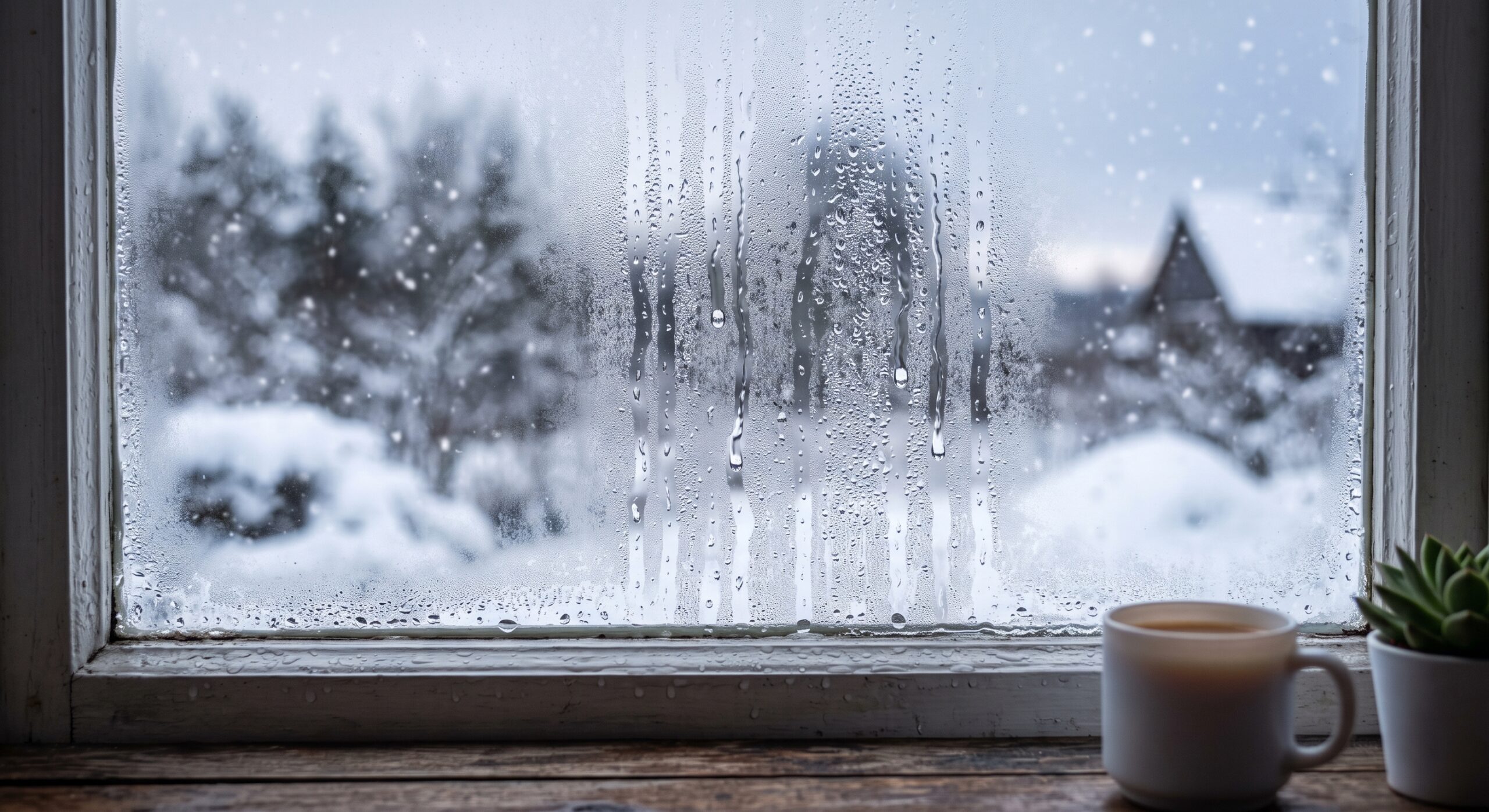
Every winter, millions of homeowners wake up to foggy windows, water running down the glass and puddles on the sill. A little condensation now and then is normal, but if it happens every day, it can damage window frames, peel paint and lead to mold.
Quick answer: window condensation in winter happens when warm, humid indoor air touches cold glass and cools below its dew point, turning water vapor into droplets. To stop it, lower indoor humidity to about 30% to 40% in cold weather, ventilate daily, run bathroom and kitchen fans, open curtains, and keep air moving near windows. Long-term fixes include window insulation film, storm windows or energy-efficient double-pane windows. Condensation between the panes of a double-pane window means the seal has failed and the glass unit needs replacing.
Why windows get condensation in winter
Air always contains some water vapor. Warm air can hold more of it than cold air. When warm indoor air touches a surface that’s colder than its dew point (the temperature at which it can’t hold all its moisture), the extra vapor turns into liquid water on that surface.
In winter, windows are usually the coldest surfaces in a room, especially single-pane or older windows. So they’re the first place where water appears. The colder it gets outside, and the more humid it is inside, the more condensation you’ll see.
Common sources of indoor moisture include:
- Breathing and sweating (especially in bedrooms overnight)
- Showers and baths
- Cooking and boiling water
- Drying clothes indoors
- Houseplants and aquariums
- Humidifiers set too high
- Gas stoves and unvented gas heaters
- A new home or recent renovation, where building materials are still drying
The 3 types of window condensation
| Where it is | What it means | Is it a problem? |
|---|---|---|
| On the inside of the glass (room side) | Indoor humidity is too high for how cold the glass is | Yes, if it happens daily: it can cause mold, peeling paint and rotting frames |
| Between the panes of a double- or triple-pane window | The window’s seal has failed, and moist air got inside the glass unit | The window has lost much of its insulating value; the glass unit needs replacing |
| On the outside of the glass | The outer glass is colder than the outdoor air’s dew point, often on cool mornings | No. It’s actually a sign of an efficient window and dries on its own |
Quick fixes (start today)
- Wipe the windows every morning with a microfiber cloth or a small squeegee, so water doesn’t soak into frames and sills.
- Open curtains and blinds during the day. Closed curtains trap cold air against the glass.
- Ventilate for 5 to 10 minutes in the morning by opening a window, especially in bedrooms.
- Run exhaust fans during and after showers and cooking.
- Turn down or turn off humidifiers.
- Dry laundry outside or in a vented dryer.
- Move houseplants away from windows, or group fewer of them in one room.
- Use ceiling fans on low to keep air moving across windows.
- Keep the heat on at a steady temperature; very cold rooms make glass even colder.
Long-term fixes
- Run a dehumidifier in rooms or basements where humidity stays high.
- Add window insulation film. An inexpensive plastic film kit creates an insulating air layer over the glass for the winter.
- Install storm windows over older single-pane windows.
- Upgrade to double- or triple-pane windows with low-E glass and warm-edge spacers. Their inner glass stays much warmer.
- Seal drafts around window frames with caulk and weatherstripping.
- Improve whole-house ventilation with exhaust fans on timers or a heat recovery ventilator (HRV), which brings in fresh air without losing much heat.
Recommended indoor humidity in winter
The colder it is outside, the lower your indoor humidity needs to be to avoid condensation. As a general guide (indoor temperature around 70°F):
| Outdoor temperature | Maximum indoor humidity |
|---|---|
| Above 40°F | About 45% |
| 20°F to 40°F | About 40% |
| 0°F to 20°F | About 35% |
| Below 0°F | About 25% to 30% |
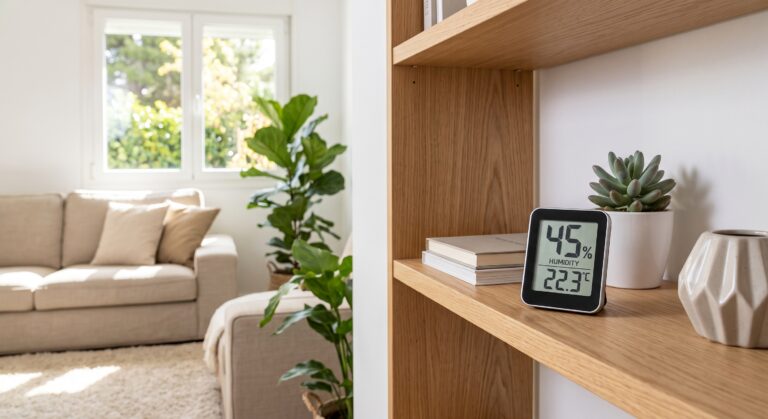
These are approximate. Older or single-pane windows may need even lower humidity; well-insulated windows can handle a bit more. Use a hygrometer, and if you still see condensation, lower the humidity a few points.
When condensation becomes a problem
Occasional light fog that clears by mid-morning is normal. Take action if you notice:
- Water running down the glass and pooling on the sill every day
- Black spots on window seals, frames or the wall below the window
- Peeling paint, swollen or soft wooden frames
- Water stains on the wall or floor under the window
- Condensation on walls, ceilings or in closets, not just on windows
- Fog between double-pane glass that won’t go away
These are signs that moisture is causing damage or that your home’s overall humidity is too high.
Frequently asked questions
Is condensation on windows bad?
A little now and then is normal. Daily heavy condensation can lead to mold, rotting frames and peeling paint, so it’s worth fixing.
Why are my windows wet only in the morning?
Overnight, the outside temperature drops, the glass gets colder, and people breathing in closed bedrooms add moisture. That’s when condensation peaks.
Will a dehumidifier stop window condensation?
It usually helps a lot, especially in bedrooms or basements, because it lowers indoor humidity.
Can I fix condensation between double-pane windows?
The seal has failed, so the glass unit usually needs to be replaced. Some companies offer defogging services, but replacing the insulated glass is the more reliable fix.
Do new windows stop condensation?
Energy-efficient windows greatly reduce it, because the inner glass stays warmer. But if indoor humidity is very high, even new windows can fog up.